Marina Lyubimova
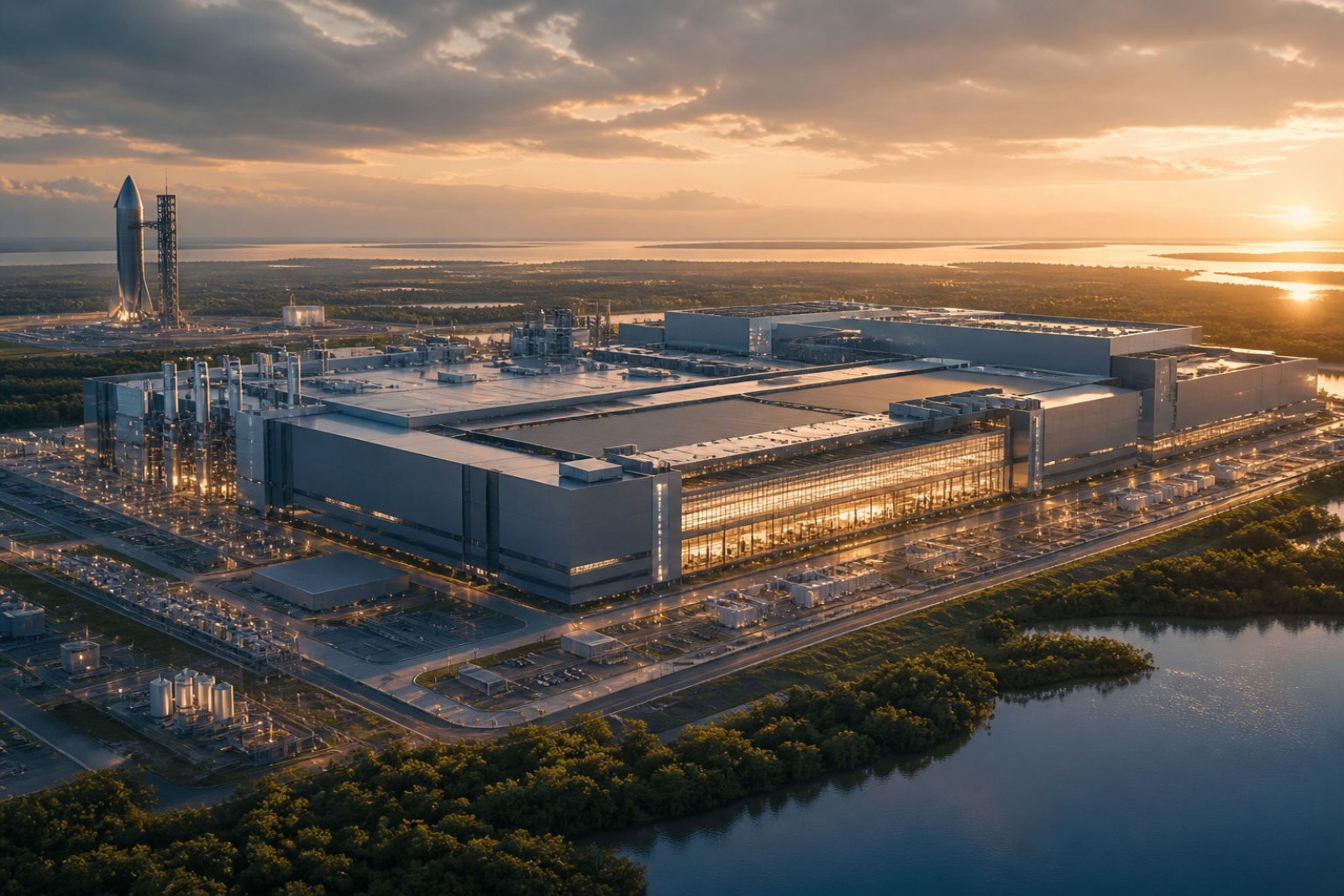
Elon Musk’s SpaceX may be preparing one of the largest semiconductor and advanced computing projects in the United States, according to a newly surfaced public hearing notice filed in Grimes County, Texas.
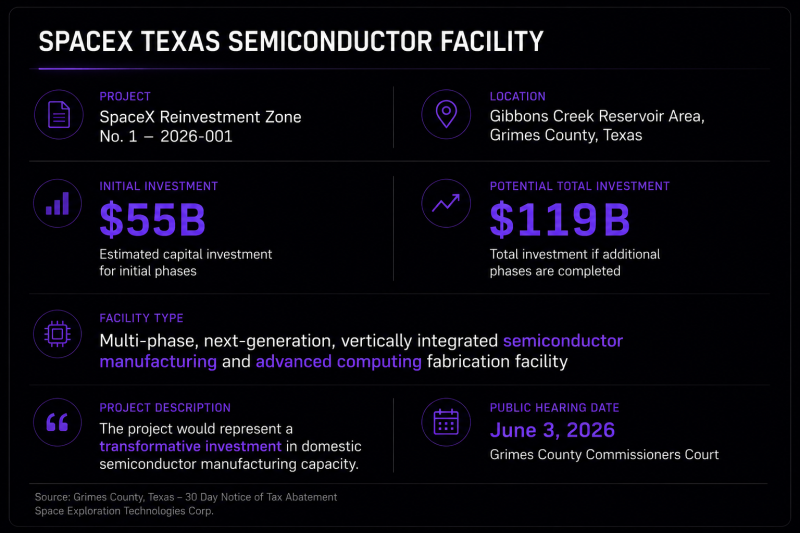
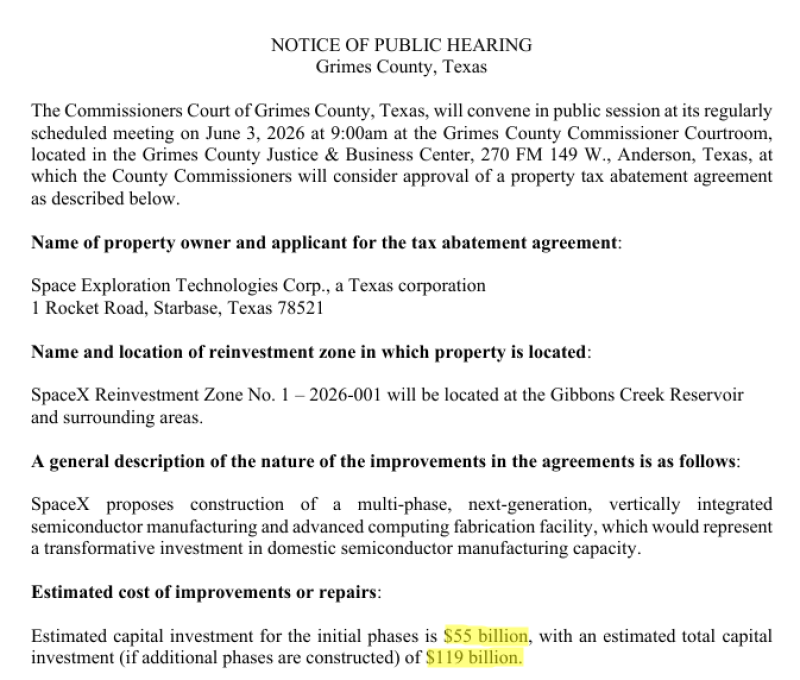
The document states that the Commissioners Court of Grimes County will consider approval of a property tax abatement agreement involving Space Exploration Technologies Corp. during a public session scheduled for June 3, 2026. The filing identifies the project as “SpaceX Reinvestment Zone No. 1 – 2026-001,” which would be located near the Gibbons Creek Reservoir and surrounding areas in Texas.
Most notably, the notice describes the proposed development as a “multi-phase, next-generation, vertically integrated semiconductor manufacturing and advanced computing fabrication facility.” The filing further states that the project “would represent a transformative investment in domestic semiconductor manufacturing capacity.”
According to the document, the estimated capital investment for the initial phases of the facility is approximately $55 billion. If additional phases are completed, the total projected investment could rise to $119 billion, placing the project among the largest private-sector semiconductor expansion efforts ever proposed in the U.S.
The wording of the filing suggests SpaceX may be moving far beyond its traditional aerospace and satellite operations. While the company is best known for rockets, Starlink, and launch infrastructure, the proposed facility appears focused on semiconductor production and advanced computing systems — sectors that have become increasingly important amid the global AI infrastructure race.
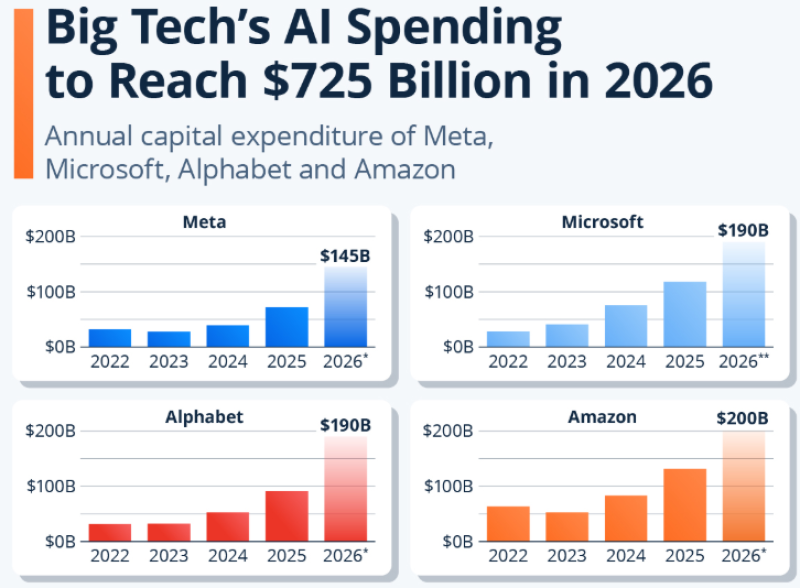
The proposal arrives as demand for AI computing capacity continues accelerating globally. Technology companies are increasingly competing not only in software and AI models, but also in access to semiconductor manufacturing, data center infrastructure, and high-performance compute systems.
The reference to a “vertically integrated” manufacturing model is especially significant. It suggests SpaceX could seek greater control over hardware production, computing infrastructure, and supply chains rather than depending entirely on third-party semiconductor manufacturers. Such a strategy would align with broader trends across the AI and high-performance computing industries, where companies are investing heavily in domestic chip production and compute capacity.
If SpaceX eventually develops in-house semiconductor capabilities, the company could reduce dependence on external chip suppliers while securing long-term computing capacity for Starlink, AI systems, satellite networks, and future autonomous technologies.
Texas has already become a central hub for Elon Musk’s industrial ecosystem through Tesla, SpaceX, Starbase, and xAI operations. Analysts may now view the proposed fabrication facility as part of a larger long-term strategy connecting AI infrastructure, advanced manufacturing, satellite systems, and next-generation computing technologies under a unified industrial network.
Although many operational details remain undisclosed, the filing signals that SpaceX could become a major new player in the semiconductor and AI infrastructure sectors if the project moves forward. The scale of the proposed investment suggests the project is not simply another manufacturing facility, but potentially an attempt to build a strategic U.S.-based computing and semiconductor ecosystem at a time when AI infrastructure is becoming one of the world’s most valuable technological assets.
 Marina Lyubimova