Marina Lyubimova
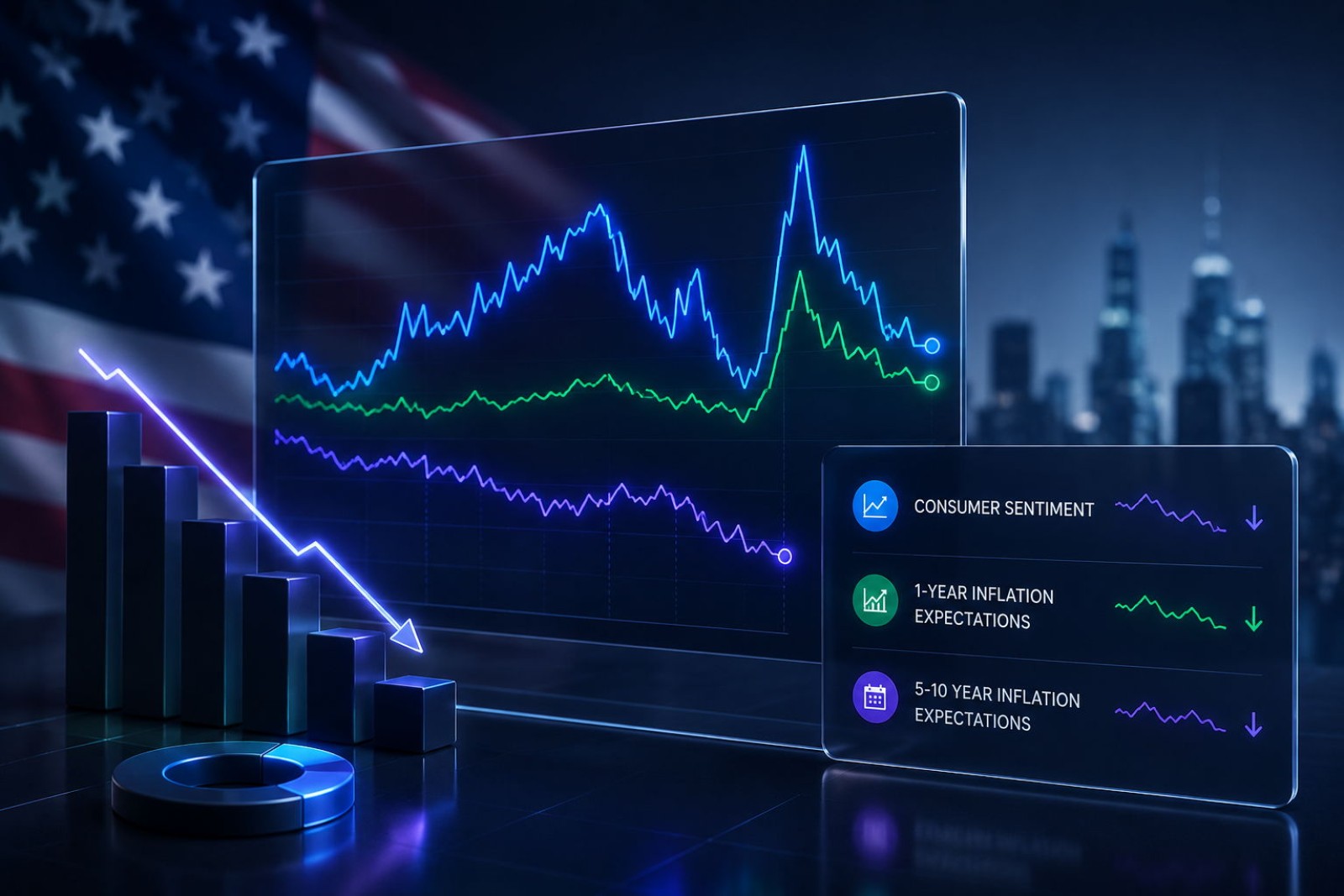
Consumer sentiment fell to 48.2, below expectations of 49.5 and down from the previous reading of 49.8, marking another decline in household confidence as Americans remain cautious about the broader economic outlook.
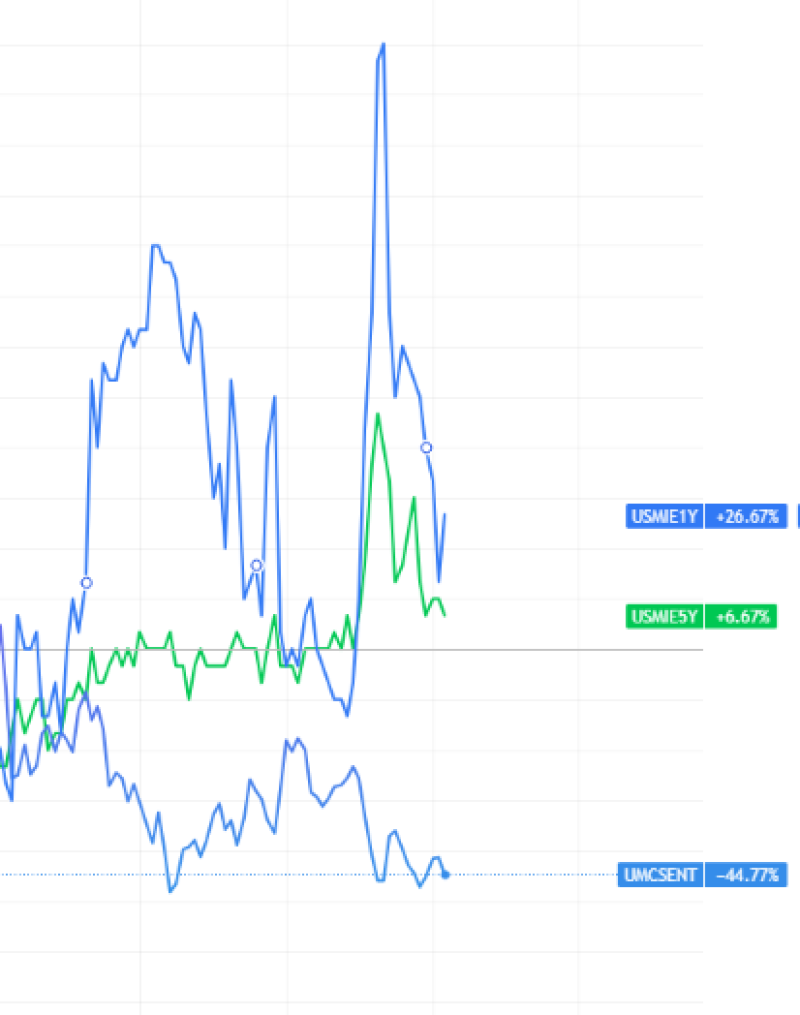
The chart shows consumer sentiment trending near multi-year lows, while inflation expectations have started easing after recent spikes. One-year inflation expectations declined to 4.5% versus expectations of 4.8%, while long-term 5–10 year inflation expectations slipped to 3.4% from the expected 3.5%.
The divergence creates an increasingly important macro signal for markets. Consumers appear less concerned about future inflation pressures, but confidence in economic conditions continues deteriorating.
For the Federal Reserve, softer inflation expectations may support the argument that inflation remains under control despite recent volatility in energy and transportation prices. At the same time, collapsing consumer sentiment could become a warning sign for future spending activity and overall economic momentum.
- Consumer sentiment continues trading near historic lows.
- Short-term inflation expectations are cooling after recent spikes.
- Long-term inflation expectations remain relatively stable near 3.4%.
- Markets may interpret falling inflation expectations as supportive for future Fed easing.
Investors will now watch whether weakening sentiment begins spilling into retail sales, labor market data, and broader economic activity over the coming months.
 Marina Lyubimova