Artem Voloskovets

The S&P 500 continues trading near record highs, reinforcing the broader liquidity expansion behind rising Wall Street compensation expectations.
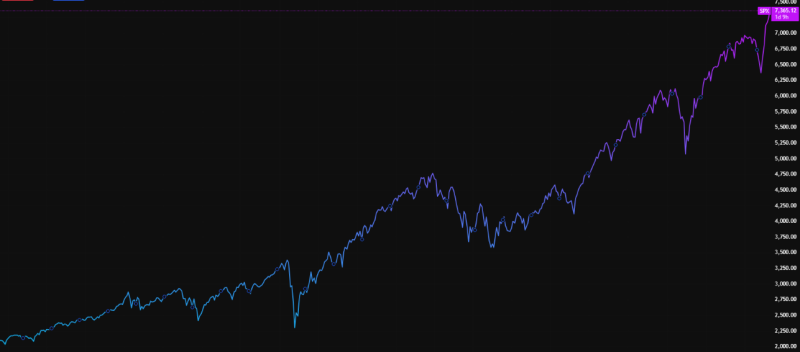
Wall Street bonuses are projected to rise sharply in 2026, with some business lines expected to see payout growth of more than 20% as trading volumes, dealmaking, and underwriting activity continue recovering.
The strongest projected increases are concentrated in investment banking and trading divisions:
| Division | Projected Bonus Growth |
| Investment Banking Advisory | 10%–20%+ |
| Equity Underwriting | 10%–20%+ |
| Equity Sales & Trading | 10%–15% |
| Debt Underwriting | 5%–10% |
| Fixed-Income Sales & Trading | 5%–10% |
| Hedge Funds | 2.5%–10% |
| Asset Management | 5% |
| Wealth Management | 5% |
| Retail & Commercial Banking | 2.5%–7.5% |
Midpoint estimates place advisory and equity underwriting growth near 15%, while equity sales and trading are projected around 12.5%.
The projections follow a massive 2025 Wall Street bonus pool of $49.2 billion, with the average payout reaching approximately $246,900.
The key signal for markets is not banker compensation itself, but what rising bonuses historically represent: stronger financial activity and expanding liquidity conditions.
Large bonus increases usually appear when banks generate more revenue from:
- mergers and acquisitions,
- equity issuance,
- debt underwriting,
- institutional trading,
- hedge fund activity,
- and wealth inflows.
The sharp rebound in advisory and equity underwriting projections is especially important. These divisions tend to strengthen when companies become more willing to raise capital, pursue acquisitions, and take on higher market risk.
Equity trading desks also benefit during periods of elevated volatility and speculative activity. The projected rise in equity sales and trading payouts suggests institutional flows remain strong across equity markets.
Historically, rising Wall Street compensation has often coincided with broader market liquidity expansion. More trading activity generally means higher commission revenue, stronger exchange volumes, larger prime brokerage balances, and increased leverage across financial markets.
For traders and investors, the biggest beneficiaries may extend beyond major banks themselves. Brokerages, exchanges, alternative asset managers, and wealth management firms often outperform during periods of rising market participation and capital flows.
If current trends continue, Wall Street compensation could become one of the clearest liquidity indicators for equities and broader risk assets heading deeper into 2026.
 Artem Voloskovets