Sergey Diakov
The U.S. stock market has entered a phase of heightened uncertainty, with investors increasingly questioning how long the current rally can continue. After months of strong performance driven by optimism around artificial intelligence and resilient earnings, concerns are now shifting toward slowing economic growth, persistent inflation, and the long-term impact of high interest rates. These factors are fueling renewed debate about whether the market is approaching a major turning point.
Stock Market Outlook: Why a 30% Crash Is Being Discussed
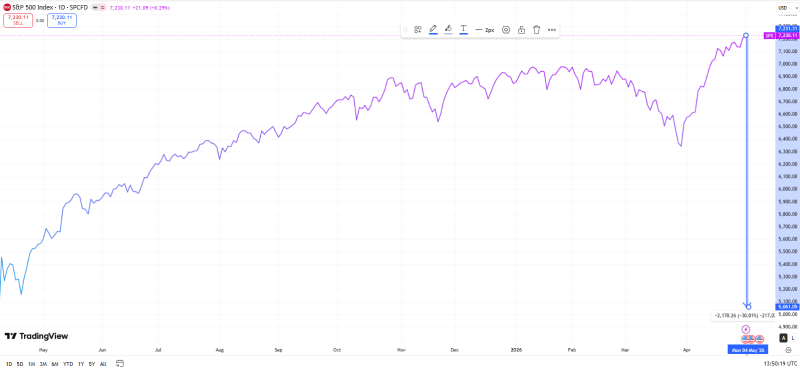
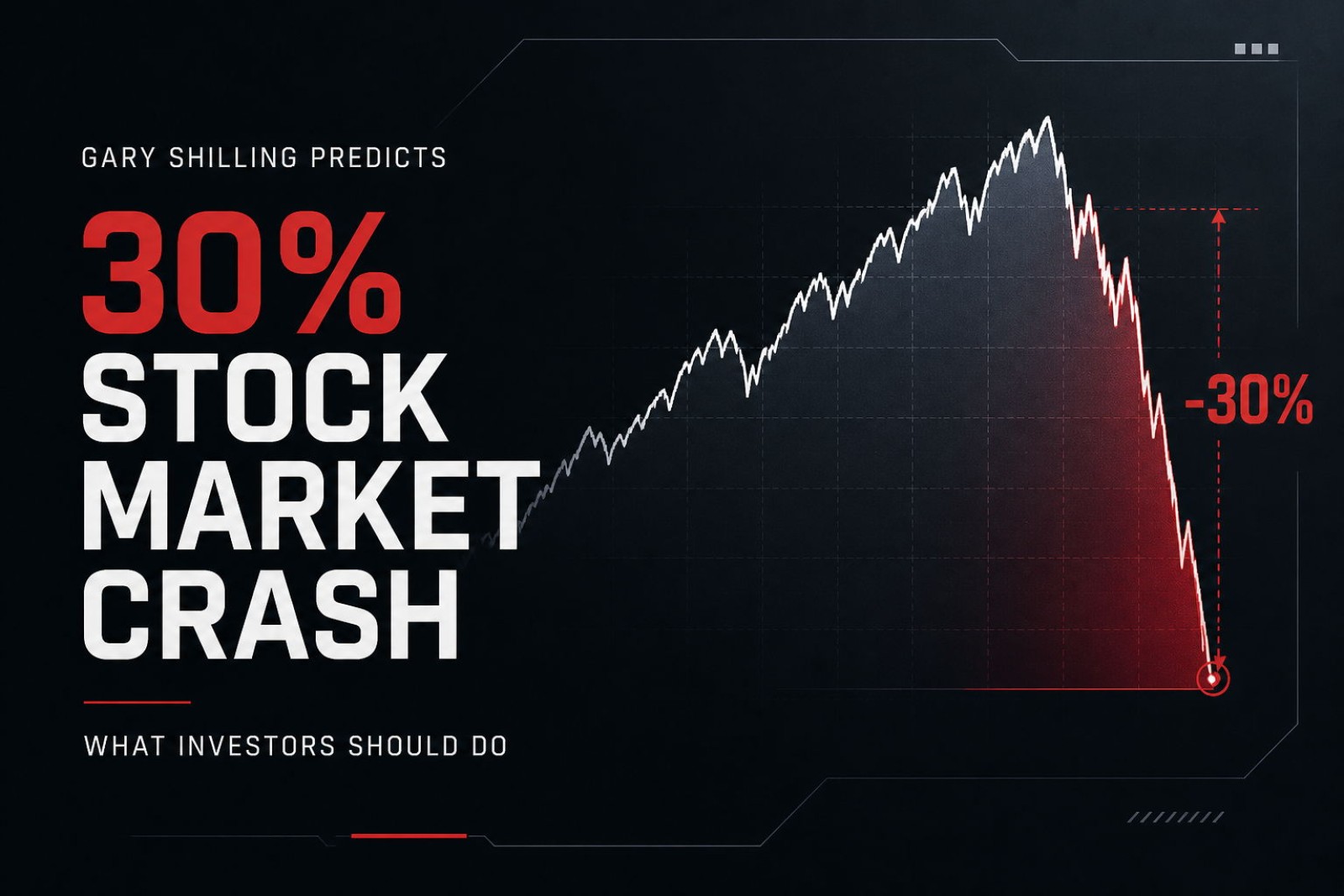
Against this backdrop, economist Gary Shilling has issued one of the more bearish forecasts on Wall Street, warning that equities could decline by as much as 30%. He attributes this outlook to stretched valuations, tightening financial conditions, and rising recession risk. As reported by Business Insider, he stated that “a recession is inevitable, and stocks could fall as much as 30% from current levels.”
S&P 500 performance with a projected 30% downside scenario based on Gary Shilling’s forecast.
The current stock market environment reflects late-cycle dynamics. Valuations, particularly in large-cap technology stocks, remain elevated after a prolonged rally fueled by liquidity and optimism around artificial intelligence. However, as borrowing costs stay high and consumer demand shows signs of slowing, profit margins may begin to compress. This raises the probability of a broader market decline, especially if earnings expectations start to weaken.
Recession Risk and Its Impact on the Stock Market
From a macro perspective, signals from the bond market and leading indicators increasingly point to a potential economic slowdown. A higher-for-longer rate environment continues to reduce liquidity across the system, limiting the upside for risk assets. In this context, forecasts of a stock market crash or sharp correction are gaining more attention, especially as investors reassess recession risk.
In my view, a 30% drop represents a bearish but plausible scenario. Markets often reprice aggressively when sentiment shifts, particularly in environments where positioning is crowded. If leading stocks begin to lose momentum, this could trigger a cascade of selling pressure across indices. At the same time, such a market decline would likely reset valuations and create more sustainable entry points for long-term investors.
What Investors Should Do Before a Potential Market Decline
For investors, the key is preparation rather than prediction. Reducing exposure to highly volatile assets, increasing liquidity, and diversifying across asset classes can help mitigate downside risk. Periods of potential stock market crash often reward disciplined strategies, especially for those with capital ready to deploy during sharp pullbacks.
While the exact timing of a stock market crash remains uncertain, the risks highlighted by Gary Shilling underline the fragility of the current market cycle. A potential 30% correction would be significant, but it could also pave the way for healthier market conditions in the long term.
 Sergey Diakov