Artem Voloskovets
In 2024 the European Union produced 1.0 million tonnes of fish and shellfish from farms and this output is worth €4.6 billion. According to data from Eurostat, the amount plus the price are lower than in the previous year. To show this change, the total amount of fish produced is 3.7% less than before. And the total money earned is 3.6% less, which shows that activity in the industry is slower.
Leading Producers
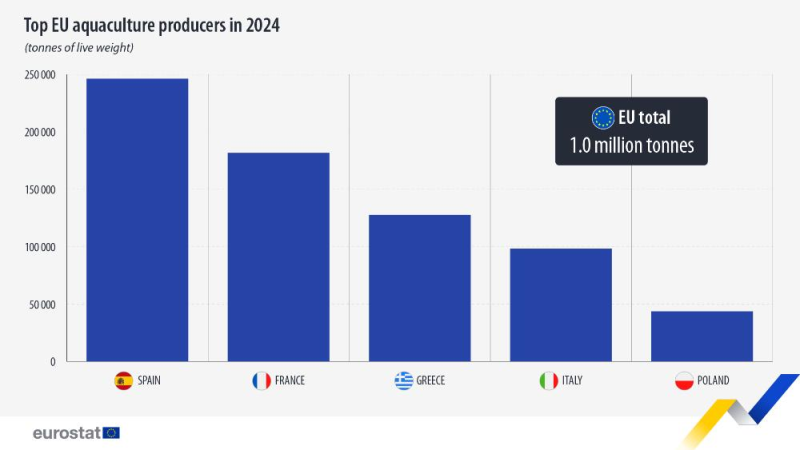
On the topic of production, five countries produce more than two thirds of the total amount in the EU. Spain is the country that produces the most at 246 137 tonnes, which is 24.3% of the total. France is next with 181 434 tonnes or 17.9%. Greece produces 127 493 tonnes or 12.6%. Italy produces 98 051 tonnes or 9.7% & Poland produces 43 554 tonnes or 4.3%.
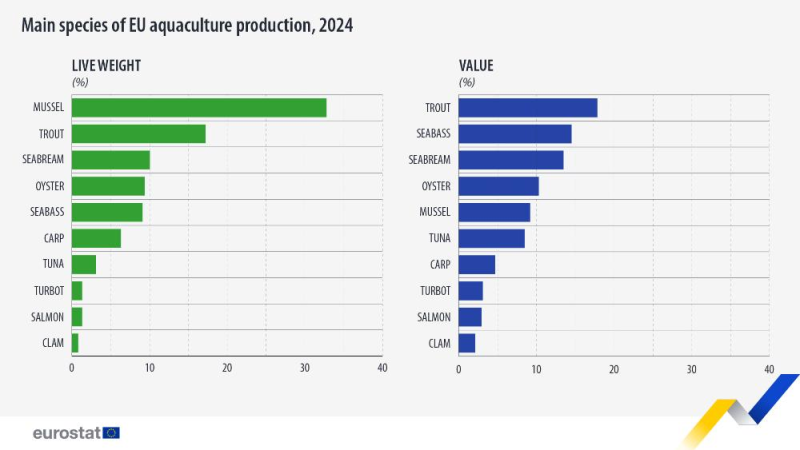
In terms of amount, mussels are 32.8% of the total production. Trout is 17.2% and gilthead seabream is 10.0% - but the money earned from each species is different. For value trout is the species that earns the most money at 17.9% of the total. Seabass is second at 14.5% and seabream is third at 13.5%.
What’s Behind the Decline and Why It Matters
As for why the production is lower, the cause is a mix of long term but also short term factors. Due to higher costs for feed, energy and labor, the money that producers keep is less. With those costs businesses that use a lot of energy are under pressure. At the same time rules about the environment and government laws in the EU make it difficult for farms to grow in certain areas.
If we look at why people buy fish, that also affects production. When people change what they eat or look for lower prices or when fish comes from outside the EU, the motivation to produce fish in the EU is lower.
In a wider context, there are multiple results of this decline. As an example if the EU produces less, it must buy more seafood from other countries. It is possible that this makes the gap between imports as well as exports larger. There is a chance that prices for species like trout and seabass will go up if there is not enough supply.
To maintain profits, it is possible that producers will choose to raise fish that sell for more money - this change is important because it means the EU may focus on the price of the fish rather than the total amount produced in the future.
 Artem Voloskovets