Usman Salis

The US Dollar Index showed unusual weakness as crude oil climbed above the key $90 per barrel level, breaking from a pattern that typically lifts the greenback during commodity rallies. Oil spikes have historically coincided with a stronger dollar. This time, the DXY moved lower instead, suggesting the market may be entering a structurally weaker dollar environment.
In normal macro conditions, rising oil prices tend to support the DXY. Since crude is largely priced in US dollars, higher energy costs increase global demand for the currency and create upward pressure on it. The latest price action flipped that script, with the dollar declining even as oil broke firmly above $90 - a threshold closely watched by currency traders.
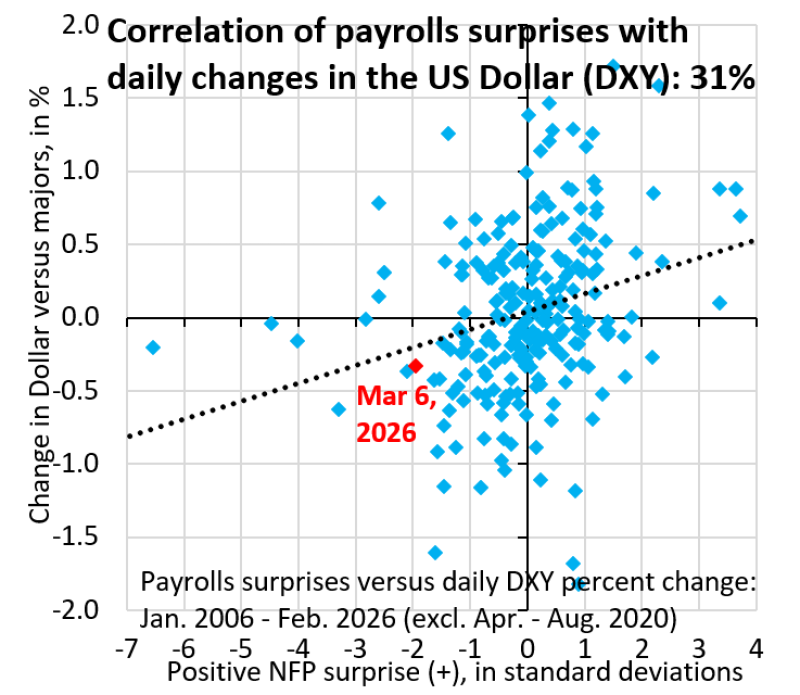
The broader data context reveals just how complex dollar moves can be. Historical analysis of nonfarm payroll surprises against daily DXY changes shows only a 31% correlation, meaning employment data alone explains only a fraction of short-term currency fluctuations. Read more on this trend: DXY drops to 15-year support level as the structural picture continues to weaken.
The divergence between oil and the dollar may mark a broader macro regime change. If this pattern holds, the DXY could face persistent pressure even through strong commodity cycles, potentially rewriting how global markets read macroeconomic signals going forward. Traders are already watching closely: DXY slides into key gap zone after sharp weekly decline, with the next support levels now squarely in focus.
 Usman Salis