Sergey Diakov
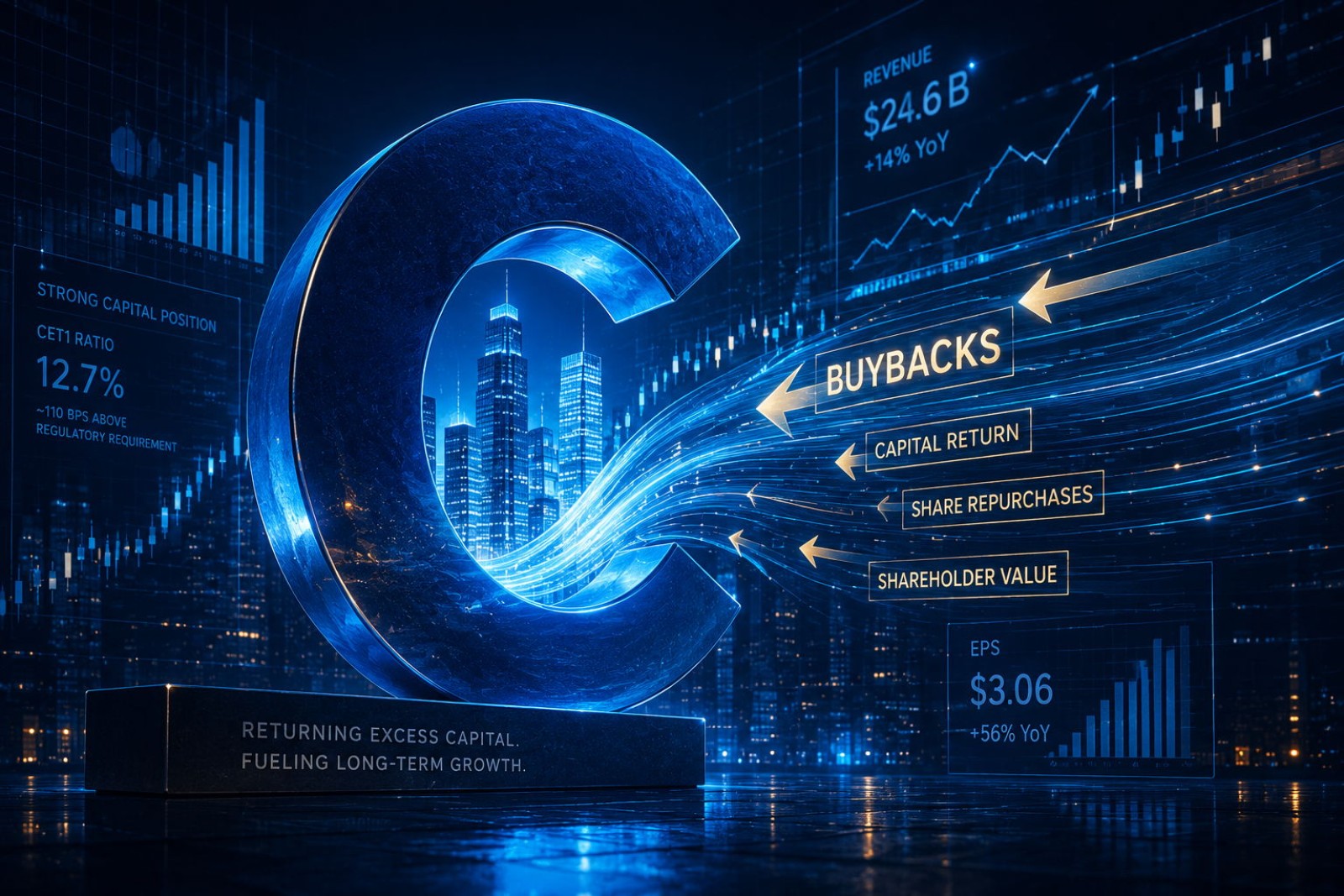
Wall Street’s liquidity cycle is accelerating again, and major US banks are starting to return massive amounts of capital to shareholders as profits rebound across trading, investment banking, and institutional businesses.
Citigroup became one of the clearest examples of that trend after reporting a sharp jump in earnings, rising operating leverage, and billions of dollars in stock repurchases during the first quarter of 2026.
Citi Delivers Strongest Revenue Quarter in 10 Years
Citigroup delivered one of its strongest quarters in years, reinforcing the broader Wall Street liquidity rebound through rising profits, stronger capital levels, and aggressive shareholder returns.
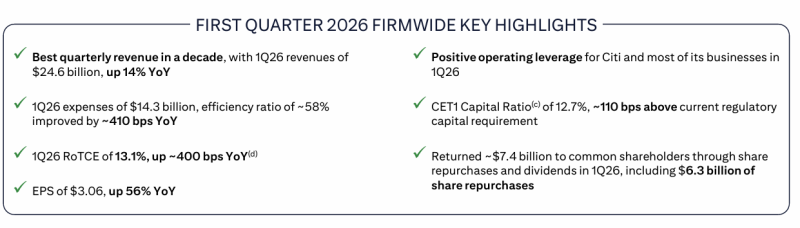
According to Citi’s Q1 2026 highlights, the bank generated:
- $24.6 billion in revenue, up 14% YoY
- EPS of $3.06, up 56% YoY
- RoTCE of 13.1%
- CET1 capital ratio of 12.7%
Most importantly for markets, Citigroup returned approximately $7.4 billion to common shareholders during the quarter, including $6.3 billion in share repurchases.
Why the Buybacks Matter
The buyback scale is significant because it signals more than simple shareholder compensation. Large repurchase programs usually reflect growing confidence in earnings stability, liquidity conditions, and future capital generation.
Citigroup’s results also point to improving operating leverage across major Wall Street businesses. The bank described the quarter as its “best quarterly revenue in a decade,” while efficiency metrics improved sharply year-over-year.
The 56% jump in EPS is especially notable. Share buybacks mechanically reduce outstanding shares, amplifying earnings-per-share growth and increasing shareholder yield even when broader economic conditions remain uncertain.
Buybacks Are Often a Liquidity Signal
For markets, the bigger signal is liquidity.
Banks typically accelerate buybacks when:
- trading activity strengthens,
- capital markets reopen,
- deal flow improves,
- and balance sheets remain comfortably above regulatory requirements.
Citigroup’s CET1 ratio stood roughly 110 basis points above current regulatory capital requirements, giving the bank additional flexibility to continue returning capital.
Wall Street Activity Is Reaccelerating
The timing also aligns with broader signs of accelerating Wall Street activity. Trading desks, underwriting businesses, and investment banking divisions are all showing signs of recovery after a slower period for capital markets.
Historically, aggressive buyback cycles from major US banks have often coincided with stronger equity performance and expanding financial-sector profitability.
 Sergey Diakov