Marina Lyubimova

The U.S. dollar is losing value when measured against other currencies. On that account the Dollar Index (DXY) is moving lower during current trading periods. In the global markets, the mood of participants is changing as investors change what they think will happen with interest rates and how fast the economy will grow.
Market Overview
The DXY is currently at a price of approximately 98.5 - it is lower by about 0.3% today and is near the bottom of the prices it has reached lately. Over the last month, the index fell by about 1.1%. By those numbers the dollar is becoming weaker at a slow but steady rate.
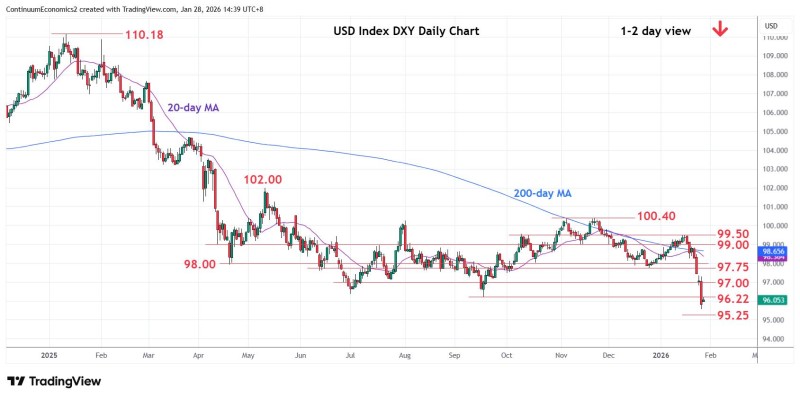
On the chart the price is moving down from the end of March through April. During this time the high prices and low prices are both lower than the ones before them. There are times when the price goes up for a short period - but the increases are not enough to change the general pattern of falling prices.
What's Driving the Move
When the dollar is weak, it is usually because of multiple factors, which include expectations that interest rates will stay low, a higher willingness for investors to take risks and money moving into stocks or the markets of developing nations. As markets expect that the Federal Reserve will raise rates less often, people want the dollar less as an asset that pays interest.
Market Implications
If the dollar is weak, it can help assets that have risks, like stocks and cryptocurrencies. At the same time it helps the price of goods like gold and oil. If this direction stays the same, it could strengthen a general “risk-on” mood across international markets.

Conclusion
As the DXY stays at a level lower than 99, the dollar is still losing value. To see what happens next, markets will look for if the index stays at one level or continues to move down. On this basis the movement of the dollar might decide how different types of assets perform in the coming weeks.
 Marina Lyubimova