Eseandre Mordi

⬤ Broad money supply across Western economies reached $56.7 trillion in 2025, a 10.4% year-on-year increase as of December. The expansion reflects both continued monetary growth and the outsized role of currency movements in shaping aggregate values.
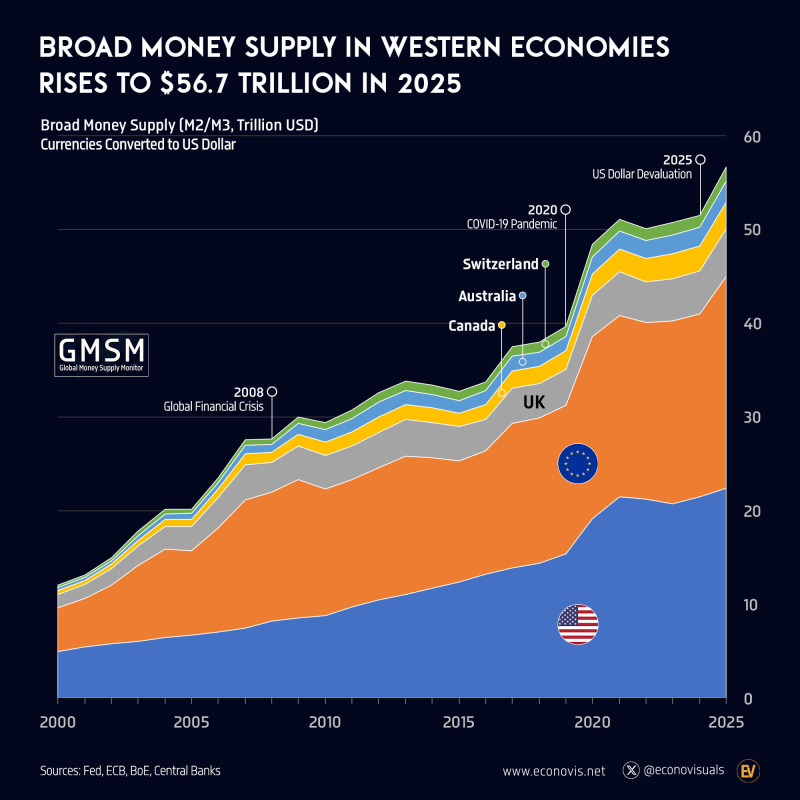
⬤ Long-term M2 and M3 data across the US, euro area, UK, Canada, Australia, and Switzerland shows a persistent upward trend. Liquidity surged during two defining periods: the 2008 financial crisis and the 2020 pandemic. By 2025, total money supply hit a record high, with the US and euro area accounting for the bulk of growth.
⬤ The single biggest driver of the latest jump was a 9.4% drop in the US dollar, which mechanically inflated aggregate totals when foreign currency balances were converted. As detailed in US M2 money supply reaches record levels, expanding liquidity mirrors broader monetary conditions playing out across major economies.
⬤ The takeaway is clear: money supply growth is not a short-term anomaly. Coverage in US money supply hits record levels and global liquidity expansion trends shows that sustained gains in monetary aggregates are reshaping financial conditions globally, with inflation and exchange rate dynamics remaining central variables.
 Eseandre Mordi