Saad Ullah
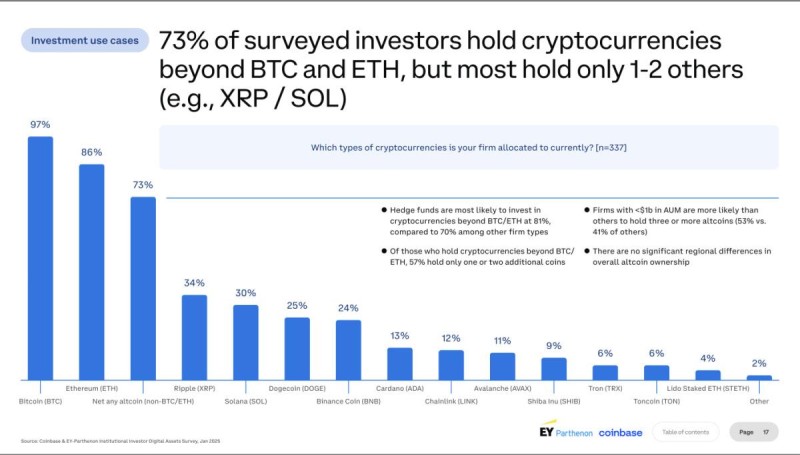
Institutional demand for XRP in 2026 is increasingly backed by measurable data rather than narrative. A survey by Coinbase and EY-Parthenon, covering 351 institutional investors, shows that 18% already hold XRP, while 25% plan to add exposure during the year. At the same time, 65% of respondents cite regulatory clarity as the primary trigger for increasing allocations, directly linking capital deployment to policy outcomes.
This growing interest is also reflected in portfolio composition. A majority of institutional investors are no longer limited to Bitcoin and Ethereum, with 73% reporting exposure to additional digital assets. Within this group, XRP ranks among the most commonly held altcoins, alongside assets like Solana, indicating that it has already moved into the category of actively allocated instruments rather than speculative outliers.
The shift from intent to execution is further supported by market infrastructure. Coinbase has launched XRP futures on its derivatives exchange, giving institutional participants access to hedging and capital-efficient exposure. The expected rollout of Trade-at-Settlement (TAS) functionality reduces execution risk by allowing trades at settlement prices rather than intraday volatility, aligning XRP with institutional trading standards used across traditional asset classes.
At the same time, access preferences reveal how institutions intend to deploy capital. The majority of investors favor regulated vehicles over direct token ownership, reinforcing the importance of ETFs, derivatives and structured products in driving adoption.
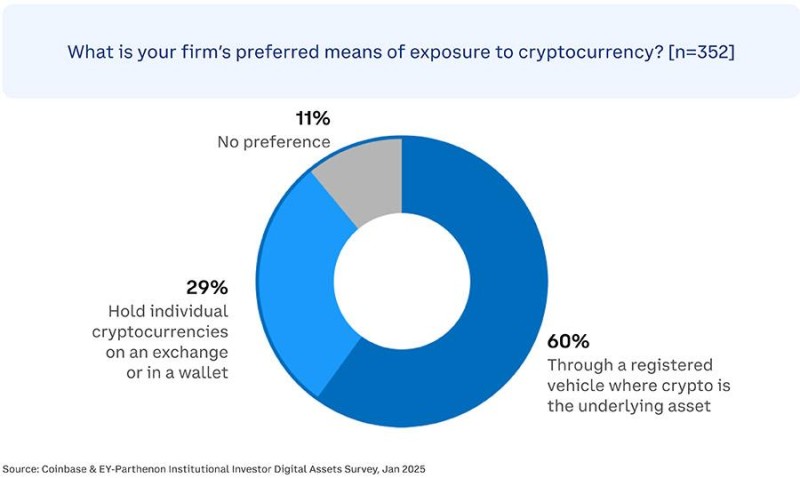
This preference explains the growing pipeline of XRP-linked financial products. Leveraged exchange-traded products and institutional trading tools are being introduced to meet demand for regulated exposure. In parallel, corporate strategies are emerging, with treasury-style accumulation models positioning XRP as part of broader capital allocation frameworks.
Despite these developments, regulation remains the decisive variable. Research from EY confirms that compliance frameworks are the primary determinant of institutional capital deployment in digital assets. As a result, the current setup can be described as partially activated: demand is measurable, infrastructure is in place, and access channels are expanding, but large-scale capital deployment remains conditional.
Conclusion
XRP is progressing through a clear institutional adoption cycle. Survey data confirms demand, portfolio allocation shows real usage, and infrastructure enables execution. The final step conversion into sustained capital inflows - depends on regulatory clarity, which remains the key catalyst for the next phase.
 Saad Ullah