Eseandre Mordi

In 2025 the Federal Reserve reported that it lost $18.7 billion from its operations - this result is the third time in a row that the organization has experienced a negative financial outcome, according to WOLF STREET. By including this amount, the total losses since 2023 are $210.3 billion. For a long time the central bank produced a regular profit but this status has changed.
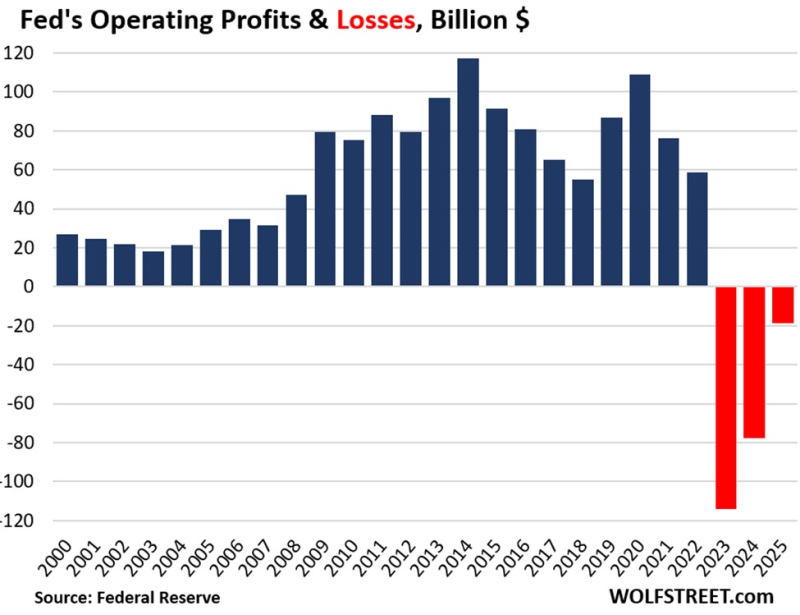
As interest rates rose quickly after a long period of low rates, the financial environment changed. Due to those higher costs for borrowing, the Federal Reserve started to pay more interest to banks for their reserves and to money market funds for reverse repurchase agreements. To pay the expenses, the organization needs more money than it earns from its bonds and mortgage backed securities.
With this imbalance in its financial structure, the central bank stopped sending money to the U.S. Treasury. Between 2008 and 2022, the Fed had sent $1.36 trillion to the government. If the Fed earns money in the future, it will use those earnings to cover the current losses. And because of this process, the organization will not distribute profits for some time.
It is possible that the losses seem large but the Federal Reserve can create money. On that account the bank is not able to run out of money like a private company - but the situation shows that it is expensive to raise interest rates quickly to manage the rising prices of goods.
On a global level, central banks now pay more for their funding. As officials try to manage the risks of inflation, the balance sheet of the Fed shows the costs that occur when a central bank makes money more expensive.
 Eseandre Mordi