Marina Lyubimova

Updated: April 29, 2026
Securities - stocks, bonds, and ETFs - are among the most accessible ways to grow your money over time. This step-by-step guide covers everything a beginner needs to know about how to buy securities in 2026, from choosing a broker to placing your first order.
What Are Securities?
A security is a tradable financial asset that represents an ownership stake, a creditor relationship, or rights to ownership. Securities trade on regulated exchanges, which means you can buy and sell them at any time during market hours.
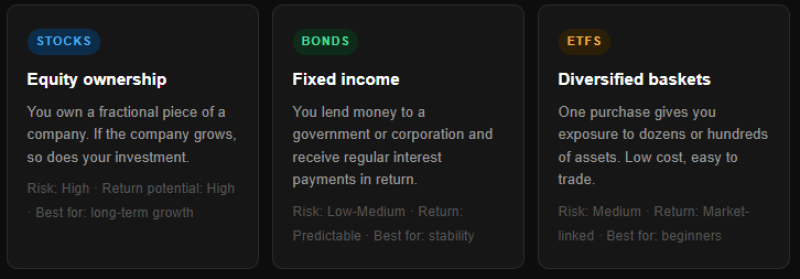
When most people ask how to buy securities, they're talking about three core asset types: stocks (equity in a company), bonds (debt instruments that pay interest), and ETFs. Each serves a different purpose in a portfolio and carries a different risk profile.
Securities are the primary vehicle through which retail investors - regular people like you - can participate in economic growth without starting a business or becoming a venture capitalist. Not sure whether stocks or forex fit your goals better? The Forex vs. Stock Trading guide on The Tradable breaks down the key differences for new investors.
Types of Securities You Can Buy
Step-by-Step: How to Buy Securities
The best way to buy securities is through a licensed brokerage account. Here is the exact process, from account setup to your first purchase.
1. Choose a broker:
Look for a platform regulated by a recognized financial authority - the SEC in the US, the FCA in the UK, or an equivalent body in your country. Key factors: commission fees (many are now zero), asset selection, mobile app quality, and customer support. Popular options in 2026 include Fidelity Investments, Charles Schwab, Interactive Brokers, and eToro..
2. Open an account:
Most brokers let you sign up online in under 15 minutes. You will need to verify your identity (passport or driver's license) and provide proof of address - this is standard KYC (Know Your Customer) compliance required by financial regulators worldwide.
3. Deposit funds:
Fund your account via bank transfer or debit card. Many brokers process deposits instantly. You can often start investing in securities with as little as $10 - some platforms have no minimum deposit at all.
4. Select your securities:
Search for the stock ticker, bond name, or ETF you want to buy. For beginners learning how to invest in bonds or stocks, broad-market ETFs tracking indices like the S&P 500 are the most recommended starting point- one purchase instantly diversifies your holdings across 500 companies.
5. Place an order:
Choose between a market order (executes immediately at the current price) or a limit order (you set the maximum price you are willing to pay). For most beginners buying securities for the first time, a market order is the simplest and fastest option. Review the summary, confirm, and you are invested.
How Much Money Do You Need to Start?

The barrier to entry for buying securities has essentially disappeared. Fractional shares let you own a portion of any stock regardless of its price - so a $400 share can be purchased for as little as $5. ETFs are the clearest entry point for beginners: low cost, broadly diversified, and available on every major platform.
Risks of Buying Securities
Understanding the risks is a critical part of any investment guide. No security is risk-free, but the risks are manageable with the right approach.
Market volatility
Security prices fluctuate daily and can fall sharply in short periods. This is normal - markets have historically recovered over long time horizons, but short-term drops can be significant (the S&P 500 dropped over 30% in 2020 before fully recovering within months).
Macroeconomic risk
Recessions, rising interest rates, and geopolitical events affect entire markets at once. These are risks that even professional investors cannot fully predict or avoid - diversification is your primary defense.
Emotional trading
Panic-selling during a market dip locks in losses permanently. Research consistently shows that investors who react emotionally to short-term news significantly underperform those who hold through volatility and stick to their long-term plan.
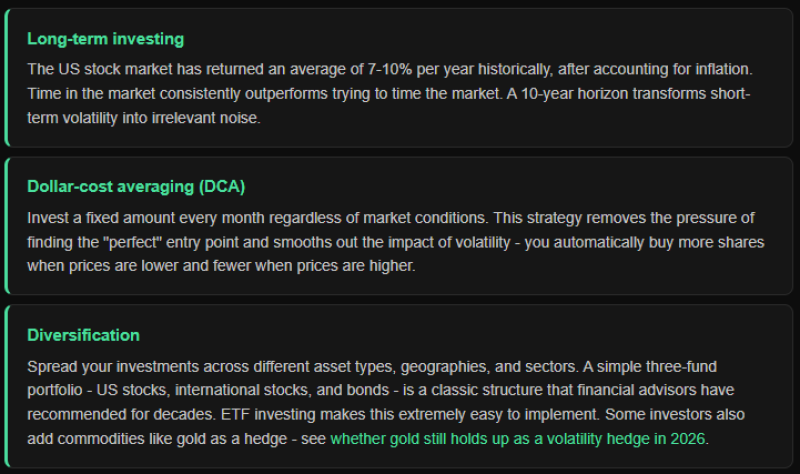
Best Strategies for Beginners
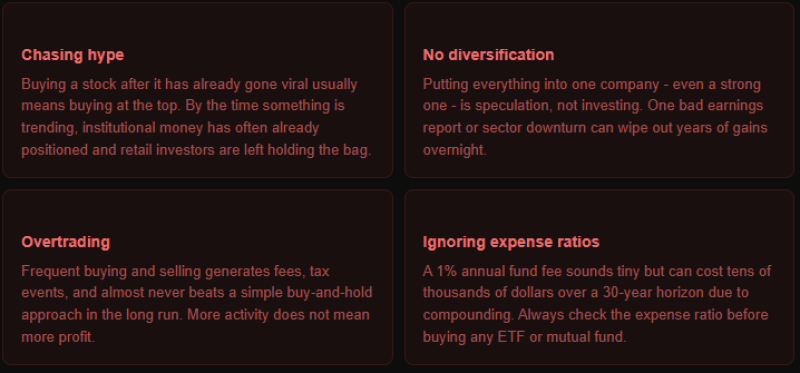
Common Mistakes to Avoid When Buying Securities
How Securities Perform Over Time
~10%Average annual return of the S&P 500 over the past 100 years (nominally). After adjusting for inflation, the real return is approximately 7% per year. To put that in concrete terms: $10,000 invested at 7% annual growth becomes roughly $76,000 over 30 years - without adding another dollar. Compare that to a savings account paying 2-3% interest, which barely keeps pace with inflation. Investing in securities is one of the few tools available to regular people that can genuinely build wealth over time.
Frequently Asked Questions
Is it safe to buy securities?
Buying securities through regulated brokers is generally safe. The main risk comes from market fluctuations, not the platform itself.
What is the best security for beginners?
Most beginners start with ETFs tracking the S&P 500 due to diversification and simplicity.
How much money do I need to start?
You can start investing with as little as $10 thanks to fractional shares.
Author:
Financial Markets Analyst
Covers equities, macro trends, and retail investing strategies.
 Marina Lyubimova