Marina Lyubimova
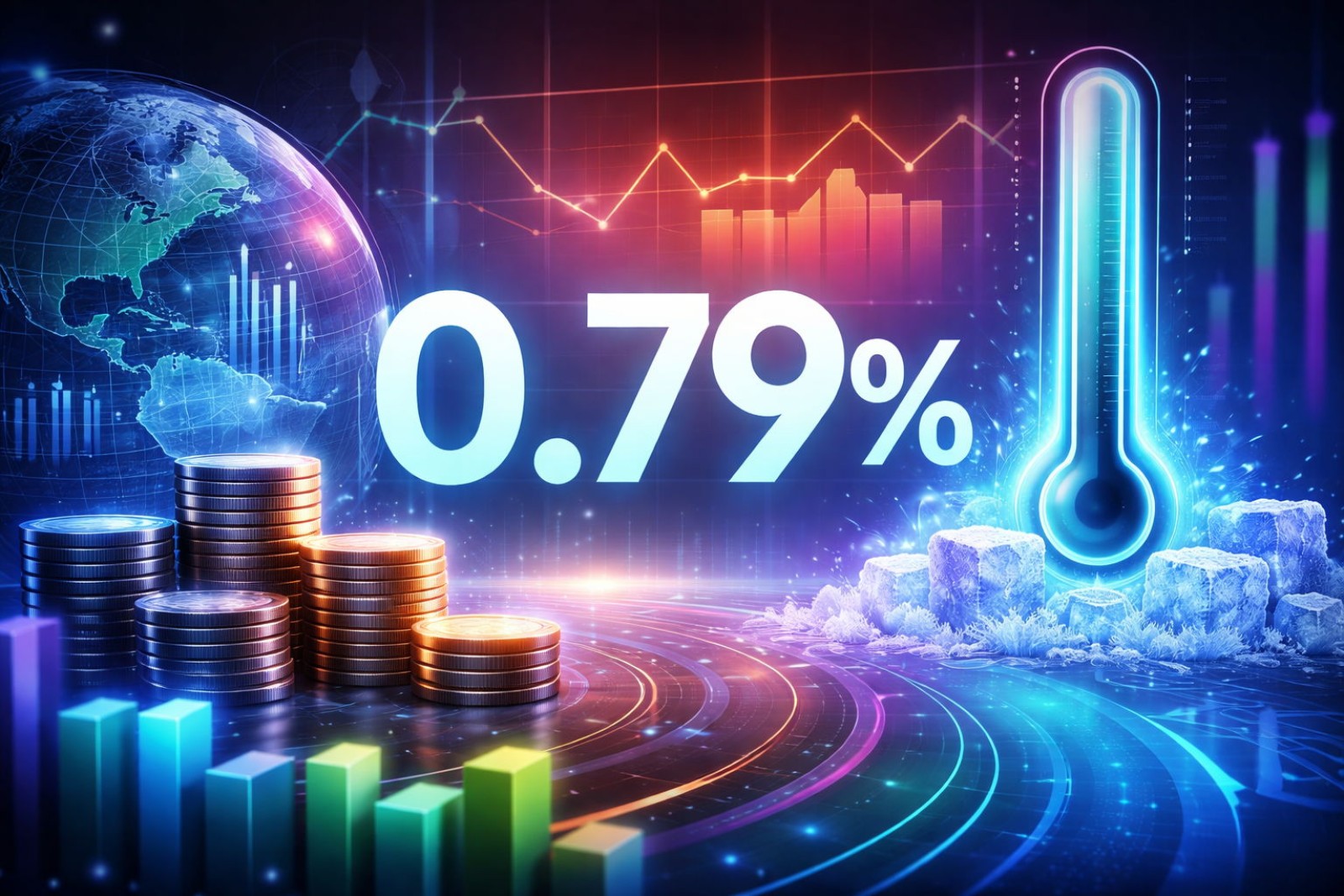
⬤ Real-time inflation monitoring continues to show subdued price growth in the United States, with the Truflation US CPI Inflation Index registering 0.79% year over year, significantly lower than the Bureau of Labor Statistics’ official CPI reading of 2.40% as displayed on the Truflation dashboard. The latest real-time data reveal a steady decline in inflation over recent months, in line with broader cooling trends noted by alternative inflation trackers. Truflation’s daily CPI measure updates continuously using millions of price data points across consumer spending categories, offering a contrast to the slower official monthly releases.
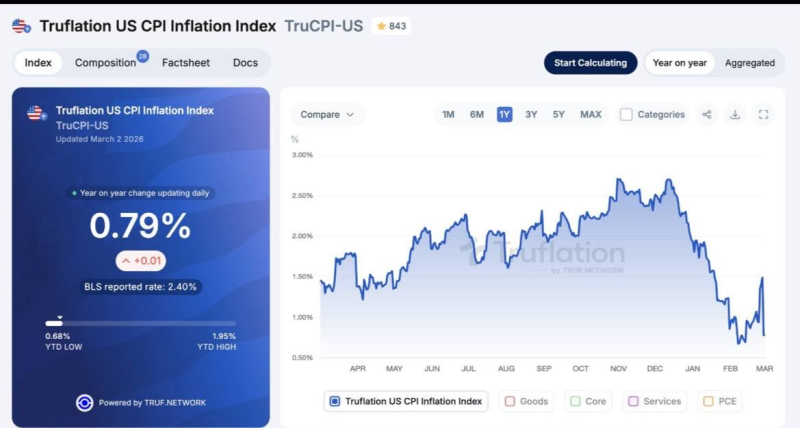
⬤ The Truflation index shows that recent declines in several major components, including housing, utilities, transport, and food, contributed to the drop in the headline reading. This downward trajectory follows a pattern seen in previous alternative inflation reports, where lower year-over-year figures appeared well below official statistics. For instance, earlier Truflation readings showed the CPI as low as 0.72% in mid-February, highlighting persistent downward pressure on prices in real time. This divergence between Truflation data and government metrics remains substantial, with the real-time figures consistently reflecting a more pronounced cooling of price pressures.
⬤ The gap between real-time inflation data and the official CPI underscores ongoing debate about the pace at which price pressures are moderating in the economy. Independent trackers like Truflation have repeatedly shown inflation readings significantly below traditional reports, a theme that has appeared in multiple recent analyses where the index fell below 1% even as official measures stayed elevated. This divergence has been highlighted in earlier coverage showing Truflation readings at around 0.98% while government data remained near 2.7%, indicating differing narratives about inflation dynamics.
⬤ The current real-time inflation picture suggests that price increases across many consumer categories are decelerating more quickly than official data indicate, potentially signaling a broader disinflationary environment. As these alternative measures remain well below traditional CPI rates, market participants and policymakers may weigh the implications for monetary policy and economic projections. The evolving story of inflation measurement highlights how differing methodologies shape perceptions of price stability and economic momentum.
 Marina Lyubimova