Marina Lyubimova
Turkey increases its efforts to change how goods move around the world. It acts as a link between Europe besides Asia while political conflicts interfere with usual paths. As instability makes important sea passages dangerous, officials in Ankara support land based options to change how businesses supply products.
From Closed Border to Global Trade Link
By working to become a central point for international commerce, Turkey presents the Middle Corridor as a more secure path than routes that cross through unstable areas, “We don’t know when the border will open, the date keeps changing”.
To achieve this goal, the government intends to open the border with Armenia which has been closed for a long time - this action creates a path for trade between Europe or Asia. For this purpose workers are now putting equipment at the Alican crossing which was not in use for thirty years. “We don’t know when the border will open, the date keeps changing” a person who guards the border said. “But everyone thinks it will be soon”.
And the plan connects to a project supported by the United States called the “Trump Route for International Peace and Prosperity” (TRIPP) - this project links Turkey next to Azerbaijan - going through Armenia. It is a way to improve transport and is also a method to make the South Caucasus region more stable. “A great honour for me” Donald Trump said when the plan was announced.
A Strategic Bet on Post-Hormuz Trade
On the subject of sea passages, Ankara suggests the corridor is a useful alternative when there are threats to places like the Strait of Hormuz. President Recep Tayyip Erdoğan spoke about the situation and said: “Turkey stands out as an island of stability and a safe haven” He also stated: “We wholeheartedly believe that this global crisis will open new doors for our country”.
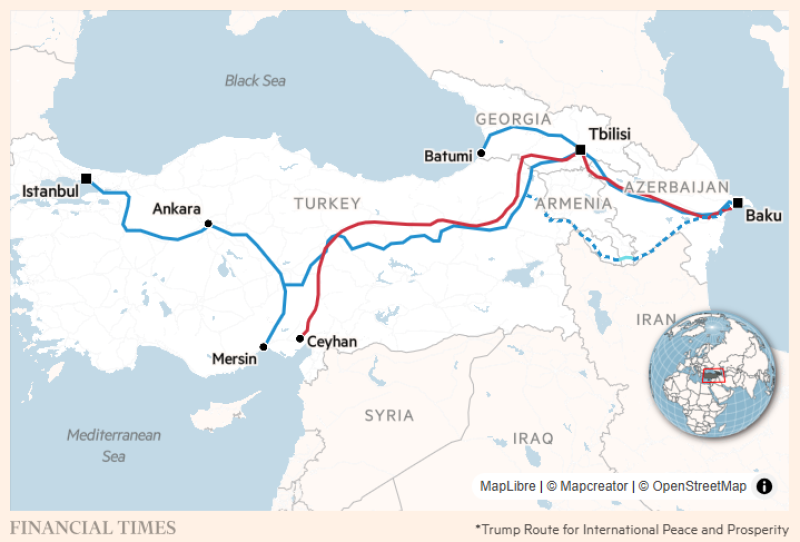
In economic terms, the reasons for the path are clear - the value of trade between Europe besides Asia is approximately $3 trillion each year and ships carry 90 % of those goods - but the Middle Corridor is faster because travel takes 12 - 15 days, while ships take about 40 days.
If the project is to succeed, it must overcome difficult problems. The route is reliant on ferries that cross the Caspian Sea, train tracks that are not uniform and many different rules at borders. As a person who manages logistics said, “The problem with the TRIPP is that it forms one of several transport options”.
Due to political risks, the future of the route is uncertain - the path does not go through Iran but it is near areas where there is conflict. Russia shows concern that trade in the Caucasus is changing. There are analysts who say that the Middle Corridor is not but ready to be as successful as older routes.
With its specific location, Turkey maintains a useful advantage. As a diplomat from the West said, the position of the country “condemns the country to geopolitical significance” - this ensures that the nation is part of how energy and goods move between Europe or Asia in the future. For more on shifting global routes, see global trade route disruption.
 Marina Lyubimova