Usman Salis

Global oil supply logistics shifted dramatically in March 2026 as Saudi Arabia moved to redirect crude exports away from the Strait of Hormuz, leaning on an alternative corridor that had long sat in reserve. The scale and speed of the adjustment caught markets off guard.
Exports from the Red Sea port of Yanbu surged to around 4.19 million barrels per day, up from below 800,000 bpd before the disruptions began. Saudi Aramco activated the East-West pipeline, a 1,200-kilometer route designed precisely to bypass Gulf chokepoints, rerouting shipments within hours and coordinating tanker flows toward the Red Sea to keep supply chains intact.
Yanbu Flows Bounce Back to Near 4M bpd by March 20
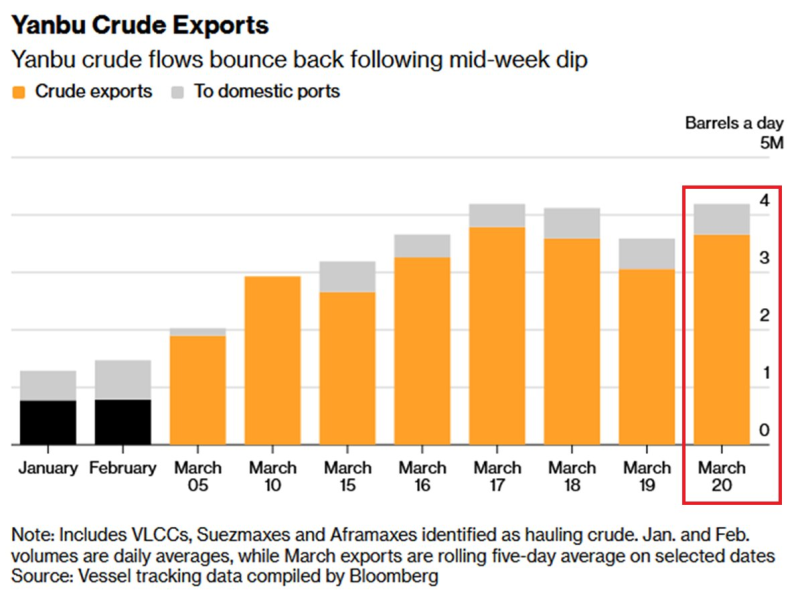
After a brief mid-week dip, Yanbu crude volumes recovered to approach the 4 million barrels per day mark by March 20. The rebound confirmed that Aramco's logistics operation was holding, though the recovery reflects only roughly half of Saudi Arabia's pre-disruption export capacity, leaving global balances tighter than before the crisis.
Crude Prices Hit Multi-Year Highs as Supply Risk Reprices Fast
The rerouting triggered sharp moves across energy markets. WTI crude oil near $95.34 as prices test multi-year highs amid geopolitical tension, with rising risk premium pushing crude toward key resistance levels not seen in years. Physical markets moved even more aggressively, as Brent crude enters record backwardation as markets price supply disruption risks, signaling that traders were paying a steep premium for immediate barrels.
The pressure showed no signs of easing quickly. WTI oil surges above $114 on geopolitical risks, marking one of the largest price spikes since 2022, underscoring how rapidly energy markets can reprice when supply routes come into question. The Hormuz disruption exposed both the resilience of Saudi infrastructure and the fragility of the assumptions underlying global oil logistics.
 Usman Salis