Victoria Bazir

Most economists currently expect U.S. GDP growth to remain closer to the 1.5%–2.5% range amid elevated interest rates, slowing global demand, and persistent inflation uncertainty. If achieved, 4% annual GDP growth would represent one of the strongest expansion rates seen in a developed economy of the United States’ size in recent years.
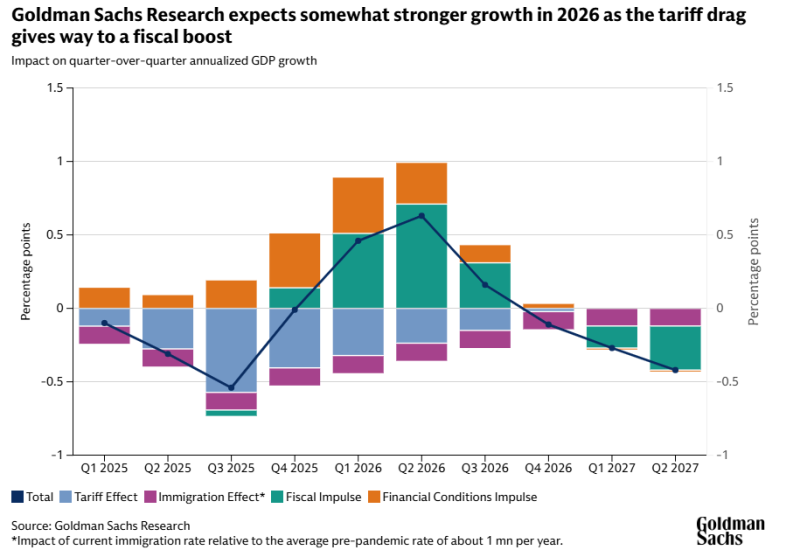
The optimistic forecast aligns with a broader narrative emerging across parts of Wall Street that stronger fiscal stimulus, improving financial conditions, and large-scale investment cycles could support faster-than-expected economic growth into 2026.
Why the 4% Number Matters
GDP growth at that level would imply a much stronger-than-expected combination of:
- consumer spending;
- business investment;
- labor market resilience;
- industrial activity;
- productivity growth.
For financial markets, the implications would be significant.
A 4% growth environment could strengthen expectations for higher corporate earnings, stronger tax revenues, and continued expansion across sectors tied to infrastructure, industrial production, energy, and technology. At the same time, it could complicate the Federal Reserve’s path toward interest rate cuts if inflation pressures remain elevated.
Historically, the U.S. economy rarely sustains growth above 4% outside of post-recession recoveries or major stimulus-driven periods. In recent decades, structural factors such as demographic aging, slower productivity growth, and high debt levels have generally kept long-term economic expansion closer to 2%.
That is why Hassett’s projection stands out.
What Could Drive Faster Growth
Supporters of a more bullish economic outlook point to several factors that could potentially accelerate U.S. growth this year.
One major driver is the continued AI infrastructure boom. Massive capital spending by technology companies on data centers, semiconductors, cloud infrastructure, and power systems has created a new investment cycle across the U.S. economy. Companies including Microsoft, Amazon, Meta, Alphabet, and Nvidia have all significantly increased infrastructure spending tied to artificial intelligence expansion.
At the same time, industrial reshoring and domestic manufacturing investments continue rising. Large-scale semiconductor projects, energy infrastructure expansion, and federal industrial incentives have supported construction activity and capital expenditures across multiple sectors.
Consumer spending has also remained more resilient than many analysts expected despite elevated borrowing costs. A still-strong labor market and wage growth have helped support broader economic activity even as interest rates remain restrictive.

Why Economists Remain Skeptical
Despite the optimism, many economists remain cautious about forecasts calling for 4% growth.
Higher interest rates continue to pressure housing activity, corporate borrowing, and smaller businesses. Credit conditions remain tighter than in previous expansion cycles, while global economic growth has shown signs of slowing in Europe and parts of Asia.
There are also concerns that recent economic strength may reflect temporary fiscal stimulus effects rather than a structurally stronger long-term growth trend.
For the Federal Reserve, a significantly stronger economy could create an additional challenge. Faster growth combined with resilient labor markets may slow the pace of disinflation, potentially forcing policymakers to keep interest rates elevated for longer than markets currently expect.
Markets Are Watching the Data Closely
Hassett’s forecast now places greater attention on upcoming economic releases including:
- nonfarm payrolls;
- retail sales;
- inflation reports;
- manufacturing activity;
- quarterly GDP revisions.
If incoming data begins moving closer toward the 4% growth narrative, expectations across equity markets, Treasury yields, commodities, and Fed policy could shift rapidly.
 Victoria Bazir