Sergey Diakov

The narrative that the US dollar is losing global dominance is not supported by actual transaction data. In fact, the opposite is happening: the dollar’s role in global payments is expanding, even amid geopolitical tensions.
What the data shows
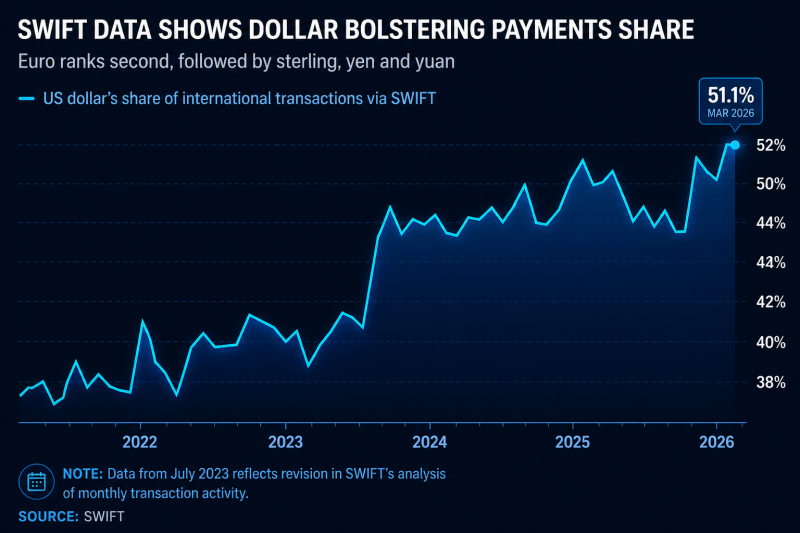
According to SWIFT:
- The US dollar accounted for 51.1% of global transactions in March
- This is up from 49.2% in February
- It marks the highest level since 2023
This means that more than half of all cross-border transactions globally are now conducted in dollars.
This data directly challenges a widely discussed narrative:
That geopolitical tensions (including the Iran conflict) are weakening the dollar’s global role.
Instead, the data shows:
- Rising uncertainty → more demand for the dollar
- Global trade stress → flight to liquidity and safety
- Financial system reliance → continued USD centrality
The real reason alternatives aren’t replacing the dollar
Despite frequent discussions about “de-dollarization,” structural barriers remain:
China (yuan):
- Capital controls limit global usability
- Not freely convertible at scale
Euro:
- Economic stagnation and fragmentation reduce appeal
- Limited unified fiscal backing compared to the US
Other currencies:
- Lack liquidity and global infrastructure
Meanwhile, the dollar benefits from:
- Deep capital markets
- Global trust
- Dominance in trade settlement
The key takeaway is simple: markets vote with transactions, not narratives. Right now, global financial flows point in one clear direction - continued reliance on the US dollar. There is no meaningful shift away from dollar-based settlement, and instead of erosion, the data suggests a reinforcement of the dollar’s role as the world’s primary reserve currency.
Despite ongoing discussions about the decline of US dollar dominance, the latest SWIFT data tells a different story. The dollar is not weakening - it is strengthening its position as the backbone of global trade.
 Sergey Diakov