Peter Smith

It has been a rough stretch for XRP investors. This week, on-chain data captured one of the most dramatic loss events the token has seen in years, and the numbers are hard to ignore. According to Santiment network metrics, XRP's weekly realized losses reached approximately $1.93 billion — a level not seen since late 2022. A single-day price drop of 4.65% added fuel to the fire, deepening the sell-off and rattling confidence across digital asset markets.
What $1.93B in Realized Losses Actually Means for XRP Holders
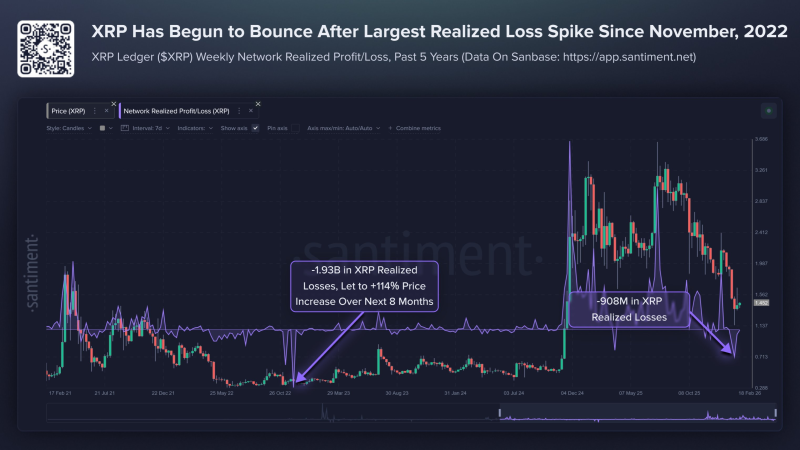
Realized losses happen when investors sell tokens below what they originally paid — locking in the damage rather than waiting it out. The sheer scale of this week's spike suggests a wave of capitulation, where holders who had been sitting on losses finally gave up and sold. Monthly declines approaching 30% clearly wore down patience, and the on-chain chart tells the story bluntly: a sharp plunge in the realized profit and loss line, one of the steepest moves in recent memory.
Large realized loss events often reflect emotional extremes in the market — moments when fear peaks and weaker hands are flushed out, potentially setting the stage for stabilization.
History offers some context worth keeping in mind. When Bitcoin held key support during a similar loss realization period, it preceded a broader market recovery. For XRP specifically, Santiment data shows that a comparable $1.93 billion realized loss spike in late 2022 was followed by a rally exceeding 100% over the next eight months. That doesn't make a repeat guaranteed, but it does put the current event in perspective.
Is XRP's Sell-Off Running Out of Steam?
The logic behind watching capitulation events closely is straightforward: once the sellers who are willing to take a loss have already sold, there are simply fewer of them left. That shrinks the pool of future selling pressure. Ethereum showed a similar dynamic when on-chain metrics improved following its own network loss events, and analysts are now watching XRP's next moves carefully. Whether this marks a genuine turning point or just a pause depends on how macro conditions evolve — but for now, the worst of the panic selling may already be in the rearview mirror.
 Peter Smith