
 Saad Ullah

⬤ Large Cardano holders have quietly added to their positions over the past six months while the token's price sharply declined. Wallets holding between 100,000 and 100 million ADA accumulated roughly 819.4 million additional ADA, worth about $213.9 million, during a period when Cardano price dropped more than 71% from about $0.90 to $0.26. This data highlights sustained accumulation among key whales and sharks amid broader selling pressure.
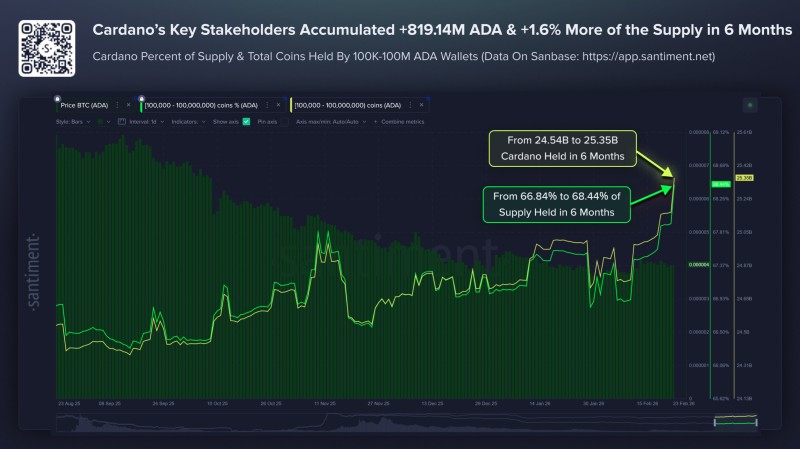
⬤ According to on-chain metrics, the total amount of ADA held by these large wallets climbed from approximately 24.54 billion to 25.35 billion tokens over the last six months. Their share of the total ADA supply held also increased from around 66.84% to 68.44%, a net gain of roughly 1.6% of circulating supply. This suggests that despite the bearish price trend, major stakeholders have been adding to their holdings rather than distributing. ADA's price action has remained subdued, consolidating in lower ranges while accumulation continued.
⬤ The divergence between price movement and accumulation stands in contrast to some past whale behavior. On-chain data in other periods showed variable whale activity, including large sell-offs of 100 million ADA that coincided with price declines and support tests. In other cases, whales added 70 million tokens as prices dipped to key support levels. These mixed behaviors emphasize that while accumulation can signal confidence, it doesn't always align directly with bullish price momentum in the short term.
⬤ The increase in ADA held by major wallets matters because shifts in supply concentration can influence liquidity, volatility, and investor sentiment. A higher share of the supply held by large wallets may reduce circulating liquidity, potentially impacting price dynamics during future market swings. As Cardano continues to evolve its ecosystem and staking incentives, whale and large holder behavior remain critical for understanding how smart money allocates capital even amid prolonged price weakness.
 Saad Ullah



