Artem Voloskovets

⬤WTI crude oil (XTI/USD) sold off hard and fast. A single large bearish candle wiped out days of price stability in minutes, triggering what traders immediately recognized as a rapid repricing event. The catalyst was direct: Donald Trump confirmed a temporary halt in planned strikes on Iran's energy infrastructure and signaled that diplomatic talks were underway to reduce tensions between Washington and Tehran.
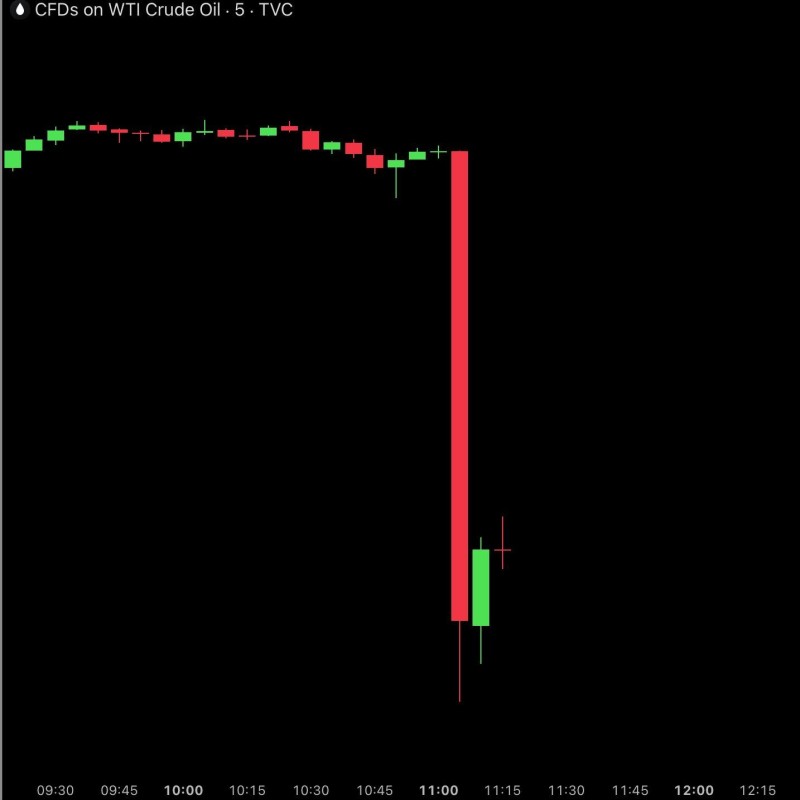
⬤The chart pattern tells the story clearly. A relatively stable structure gave way to a near-vertical drop, the classic signature of a fast liquidity-driven sell-off. Oil markets had been pricing in escalation risk for days. Once that premium evaporated, the unwind was immediate and brutal. Similar dynamics played out previously when WTI crude oil crashed 12% after a strategic reserve shock, where a supply-side surprise triggered an equally sharp bearish reversal.
⬤The speed and size of the move point to forced liquidations and cascading stop-loss activity. Energy markets run on high leverage, and once key support levels broke, the selloff fed itself. A small green candle formed shortly after the bottom, a minor rebound attempt, but no meaningful recovery followed. This mirrors the pattern described in WTI oil dropping 13% in 40 minutes after the IEA release, where leverage and positioning imbalances amplified the initial move well beyond the fundamental trigger.
⬤This episode is a reminder of just how sensitive crude is to Middle East headlines. Geopolitical uncertainty cuts both ways, and as shown when WTI oil broke $84 amid rising geopolitical tensions, perceived supply risk can drive prices sharply in either direction within a single session. Here, easing tensions removed the key driver supporting prices, and the market responded accordingly.
 Artem Voloskovets