Saad Ullah
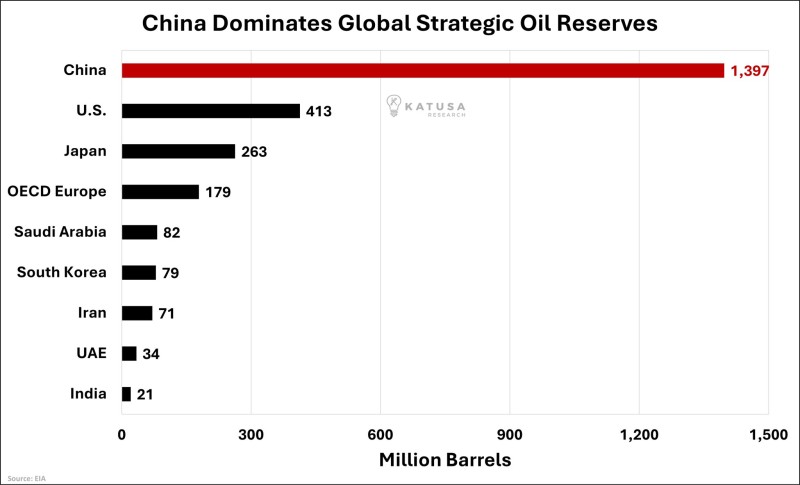
On a global level, China began the present time of political disagreement with a specific benefit. China possesses a large amount of oil that the state collected when prices were low.
By the year 2025 data from Katusa Research shows that China increased its reserves on a regular basis. To build this supply, the state added nearly 1 million barrels every day when market conditions were helpful. As a result the total reserve is now about 1.397 billion barrels - this amount is enough for the country to use for 85 days.
In the United States, the Strategic Petroleum Reserve is different because it holds approximately 413 million barrels. For the United States, this amount lasts for around 22 days because the country uses around 19 million barrels per day. Due to many years where the government removed oil from the supply, this level is half of what the country held ten years ago.
Why This Matters Now
When tension increases near the Strait of Hormuz and other paths for oil ships, those reserves are important. If a country has a large supply, it can manage sudden changes in the oil supply. It is possible for the countries to avoid immediate problems in their economies.
For China, this method is a way to stop sudden price changes from causing damage. It allows China to keep the prices of energy steady and keep factories running when there is stress in the world - this is a priority because China buys more crude oil from other countries than any other nation.
Strategic Shift in Energy Policy
By collecting oil in this way, China shows that energy security is a goal for the government. Instead of only using global markets, the government builds a supply so that events in other countries do not affect them as much.
But the United States has used a different method that responds to events as they happen. In recent years the government used the Strategic Petroleum Reserve to keep fuel prices steady and to stop the general increase in prices. While this works for a short time, it makes the total supply smaller for a crisis in the future.
Market Implications
To understand the global oil market, one must look at those different levels of reserves. If a country has a large supply, it can wait to buy oil when the price goes up - this reduces the immediate need for more oil. And countries with a small supply might have to buy oil sooner, which keeps the prices high. On a broad scale the supplies can change when and how much oil prices rise if the supply stops.
In conclusion the way China collects oil before political risks grow shows that countries are prepared in different ways. With more oil relative to what it uses, China is ready to manage a stop in the supply. At the same time the United States might have more difficulties if the problems continue.
If energy security is a main part of politics again, the ownership of oil is as important as the production of oil.
 Saad Ullah