Usman Salis
Silver is often treated as a safe-haven asset, something investors turn to when broader markets get choppy. But last week showed how quickly that narrative can break down. SLV dropped 14% in just a few sessions, falling from $80.90 to $69.39, a move that raises real questions about what is actually driving prices right now.
From $80.90 to $69.39: What the Chart Is Telling Us
Silver started the week holding near the low-$80 range, but selling accelerated sharply heading into March 19. By that point, SLV had hit $69.39, the lowest level captured in the chart. There was a modest recovery into March 20, but the weekly result remains firmly negative. This was not a slow drift lower. Prices repriced fast, within a handful of sessions, which points to something more urgent than routine profit-taking.
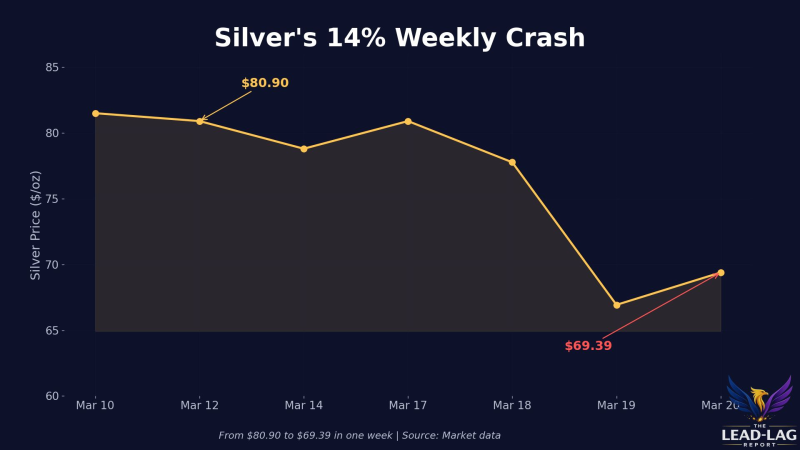
The speed of the decline matters. A 14% drop in a week is the kind of move that historically lines up with forced selling rather than a change in fundamentals. When liquidity gets tight across portfolios, assets that have run up, including Silver ETF SLV, which had been holding 10-day support in a strong uptrend, become sources of cash. The chart reflects that dynamic clearly.
Silver's Hedge Status Under Pressure in 2025
What makes this selloff notable is the context. Silver is typically associated with inflation protection and store-of-value demand. But as this week's action confirms, those qualities offer limited insulation when the broader market is deleveraging. The same pattern has appeared before. Silver plunged 47% in one week when a Bitcoin crash sparked a liquidation theory, and prior analysis documented a 26% historic daily selloff in XAG/USD that rattled the commodity space. Each of those episodes had a similar fingerprint: broad risk reduction pulling Silver lower regardless of its traditional safe-haven status.
The key question now is whether the selling continues. If funding stress eases and broader risk appetite returns, Silver's underlying demand drivers could reassert themselves quickly. But if liquidation pressure persists, last week's 14% decline may turn out to be the beginning of a larger repricing rather than an isolated event.
 Usman Salis