Marina Lyubimova

The latest oil-market data points to a growing disconnect. As Solix Trading noted, crude inventories fell by 0.9 million barrels last week, alongside a 6.3 million drop in gasoline and a 3.1 million decline in distillates. At the same time, total petroleum product supplied is running 5.6% higher year over year - yet the chart shows a broader build in crude inventories pushing sharply higher into April, suggesting pressure is building beneath the surface rather than easing.
The Oil Inventory Trend That Refuses to Ease
The chart shows crude inventories moving higher after a period of relative stability. For much of the past year, stocks fluctuated within a wide range - but recent weeks have seen a clear acceleration to the upside, pushing inventories toward the upper end of the range and approaching levels not seen since earlier peaks.
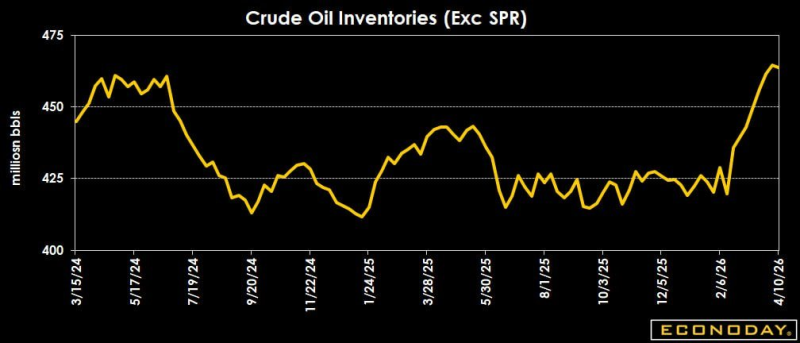
This shift from sideways movement into a rising trend signals a change in structure where accumulation is becoming more pronounced. Rising inventories typically reflect excess supply relative to immediate demand - even when short-term data points appear supportive.
WTI Oil Analysis: Options Skew Hits 4-Year High, Signals Upside Risk for Crude adds the derivatives dimension to the inventory picture, showing how the options market is simultaneously pricing upside risk even as crude stocks build - a tension that reflects the same split between headline inventory data and underlying demand dynamics.
Weekly Oil Draws Tell a Different Story
At the same time, the weekly figures highlight tightening in refined products. Gasoline and distillate draws, combined with stronger year-over-year demand, suggest that consumption remains firm. The layered market dynamic is clear:
- Crude inventories rising on a broader trend
- Gasoline down 6.3 million barrels and distillates down 3.1 million in the latest week
- Product supplied running 5.6% higher year over year
- Refinery utilization slipping to 89.6%
These signals are not contradictory - they reflect different parts of the supply chain reacting at different speeds. Crude is building at the top of the chain while refined products are drawing down at the consumption end.
Where the Oil Imbalance Starts to Matter
The combination of accelerating crude inventory builds alongside firm demand and fuel draws creates tension that historically resolves through sharp price adjustments once one side begins to dominate. WTI Oil Breaks $84: Key Resistance at $87 and $95 Now in Focus shows how quickly oil prices can reprice when supply-demand signals align after a period of mixed data - reinforcing why the current disconnect between crude builds and fuel draws matters for price direction.
WTI Oil CL Futures Signal Corrective Phase After 5-Wave Drop to $65 provides the broader technical context for where oil sits within its price structure, showing that the inventory dynamics playing out right now are happening at a technically sensitive zone where the next directional signal could trigger a meaningful move.
 Marina Lyubimova