Marina Lyubimova

On May 4, markets flipped into a coordinated risk-off move. U.S. equity futures moved lower, led by the Dow Jones (YM), while Treasury yields declined and the U.S. dollar strengthened.
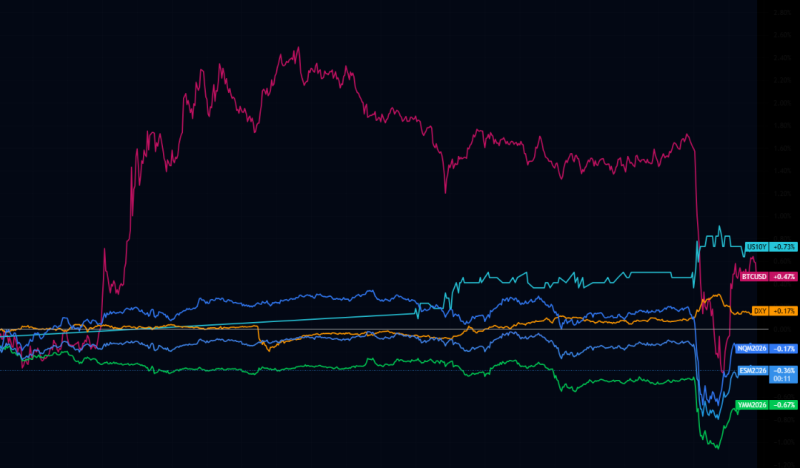
From the chart, US10Y yields reversed lower from around 4.46% to 4.42%, signaling a strong bid for bonds. At the same time, equity futures diverged in magnitude:
- the Dow fell roughly −0.8%
- the S&P 500 (ES) about −0.5%
- the Nasdaq 100 (NQ) closer to −0.3%.
This cross-asset alignment points to a macro-driven move rather than isolated equity weakness.
What triggered the move
The shift was driven by geopolitical headlines tied to the Strait of Hormuz. According to Reuters, Iranian state media reported a potential missile strike on a U.S. warship in the region. U.S. officials later denied the attack, but the initial report was enough to trigger an immediate repricing of risk.

Markets often react to the first headline, not the confirmation. In this case, the location itself, a critical global oil chokepoint, amplified the reaction.
Why yields dropped first
The key signal came from the bond market. A rapid decline in US10Y yields typically indicates:
- rising demand for safe-haven assets
- expectations of slower growth or rising uncertainty
Importantly, yields moved before equities fully extended lower, suggesting the reaction began with macro positioning, not stock-specific selling.
Equity reaction: Dow vs Nasdaq
The internal structure of the selloff matters. The Dow’s deeper decline compared to the Nasdaq suggests concern about the real economy rather than a simple tech pullback. Industrial and cyclical stocks tend to underperform when markets price in geopolitical or growth risks. By contrast, the Nasdaq’s relative resilience indicates that the move was not driven by valuation resets in tech, but by broader macro uncertainty.
Dollar strength and confirmation
The U.S. dollar (DXY) moved higher during the same window, reinforcing the risk-off narrative.
When the market shows:
- dollar rising
- yields falling
- equities declining
it typically reflects a flight to liquidity and safety, often linked to global uncertainty rather than domestic-only factors.
Bitcoin reaction
Bitcoin (BTC/USD) followed equities lower, dropping roughly −1% to −1.5% before stabilizing. This behavior reinforces its role as a risk-sensitive asset during sudden macro shocks. The partial rebound suggests short-term dip buying, but not a full shift back to risk-on sentiment.

Cause and Effect / Key Takeaway
The move followed a clear sequence: geopolitical headlines triggered a risk-off shift, with U.S. Treasury yields falling first as demand for safe-haven assets increased. Equities then declined, led by the Dow, while the U.S. dollar strengthened, reflecting global demand for liquidity. Bitcoin also moved lower, confirming broad risk aversion.
This chain shows a headline-driven move amplified by macro positioning. Even though the reported strike was later denied, the initial news was enough to push capital into bonds, pressure equities, and support the dollar, with the Dow’s underperformance pointing to growing concerns about broader economic risks rather than a short-term reaction.
 Marina Lyubimova