Saad Ullah

When Coinbase CEO Brian Armstrong announced plans to reduce the workforce by about 14%, the move looked like another tech layoff headline. But the decision makes far more sense when you look at the data behind the business.
The key is simple: Coinbase doesn’t operate in a stable market. Crypto remains one of the most volatile asset classes, and that volatility directly shapes how companies like Coinbase perform. Price cycles drive trading activity, and trading activity drives revenue, as seen in recent cryptocurrency market trends.
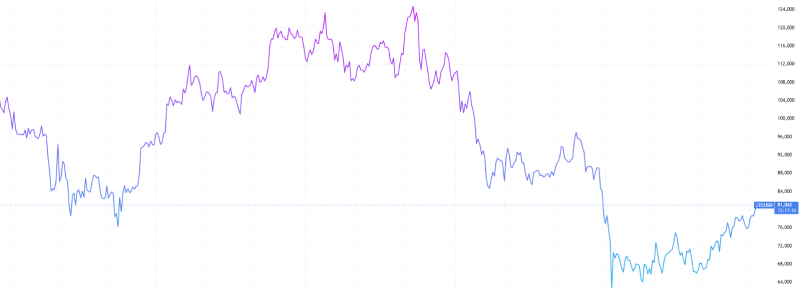
Bitcoin price volatility over time (Source: TradingView)
The chart shows a familiar pattern - sharp rallies followed by deep corrections. These cycles are not just market noise; they define the environment Coinbase operates in. When prices rise, trading activity surges. When markets cool, volumes drop quickly.
That dynamic feeds directly into the company’s financials.
Revenue Doesn’t Grow in a Straight Line
Coinbase’s revenue reflects these cycles almost perfectly. Periods of rapid expansion are followed by contraction, with no consistent upward trend, as highlighted in Coinbase financial performance data.
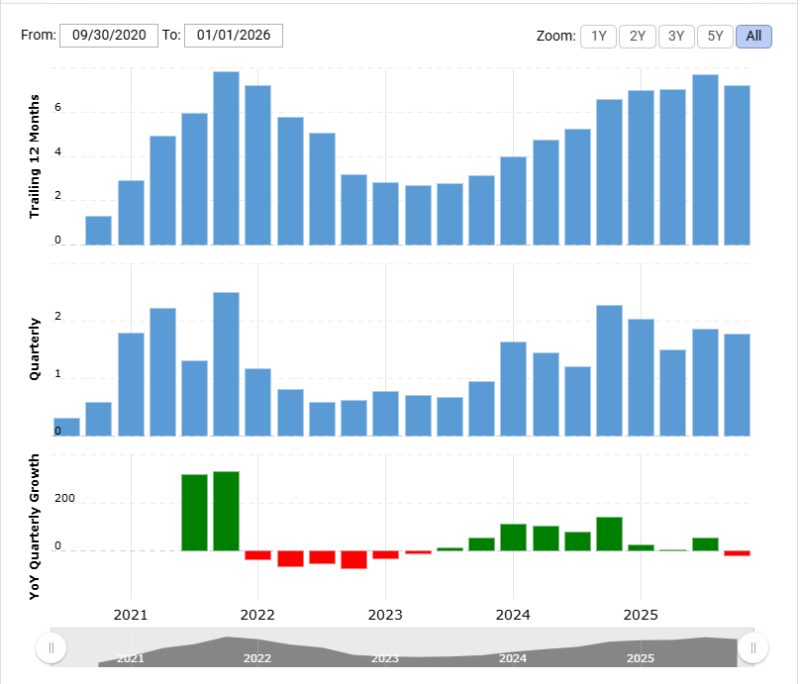
Coinbase revenue and quarterly performance (Source: Macrotrends)
During the last major bull cycle, revenue surged alongside the market. But as conditions weakened, growth turned negative, and revenues declined across multiple quarters. Even during recovery phases, the pattern remains uneven, with fluctuations rather than stability.
This is the core challenge. A business tied so closely to market activity cannot rely on steady income. That makes large, fixed cost structures difficult to sustain over time.
Profitability Pressure Forces Action
Revenue volatility is only part of the story. The impact becomes clearer when you look at profitability.
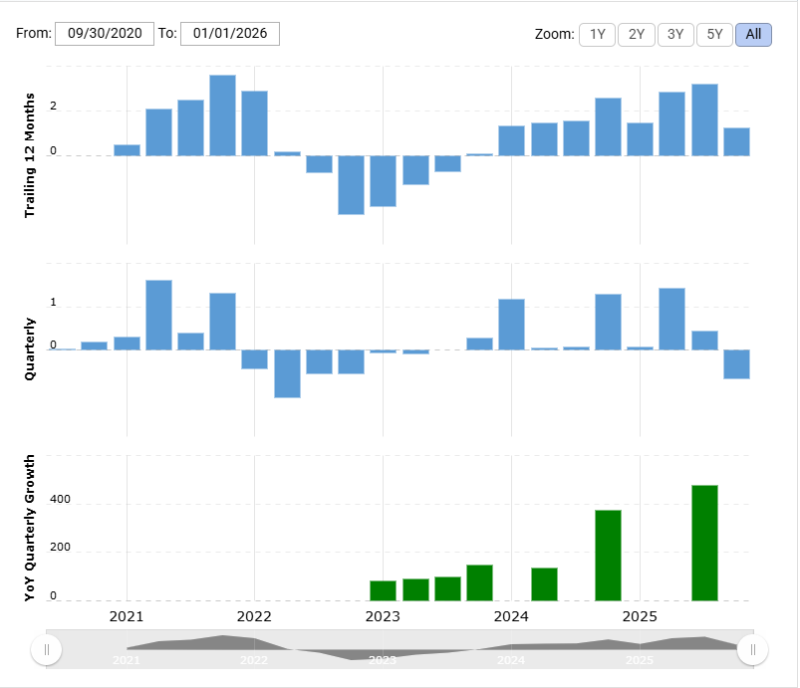
Coinbase net income and profitability trends (Source: Macrotrends)
The chart shows how quickly profits can swing from strong gains during peak market conditions to sharp declines during downturns. Even as revenues recover, profitability does not always follow at the same pace, reinforcing concerns around crypto exchange profitability trends.
This creates pressure on the company’s operating model. When income fluctuates but costs remain high, margins compress. Over time, that forces companies to adjust either by improving efficiency or reducing expenses.
Why the Layoffs Make Sense
This is where the workforce reduction fits in.
Cutting around 14% of staff is not just a reaction to short-term conditions. It reflects a structural reality: Coinbase operates in a cyclical, unpredictable market, where revenue can expand and contract quickly.
At the same time, another shift is underway. Armstrong has pointed to artificial intelligence as a driver of increased productivity, meaning smaller teams can achieve more output. That further reduces the need for large headcounts.
Together, these forces are pushing the company toward a leaner model:
- lower fixed costs
- higher efficiency
- greater flexibility across market cycles
Conclusion
The charts tell the story clearly. Crypto markets are volatile. Coinbase’s revenue follows those cycles. Profitability swings even more sharply. Against that backdrop, the layoffs are not surprising they are a rational response.
 Saad Ullah