Victoria Bazir
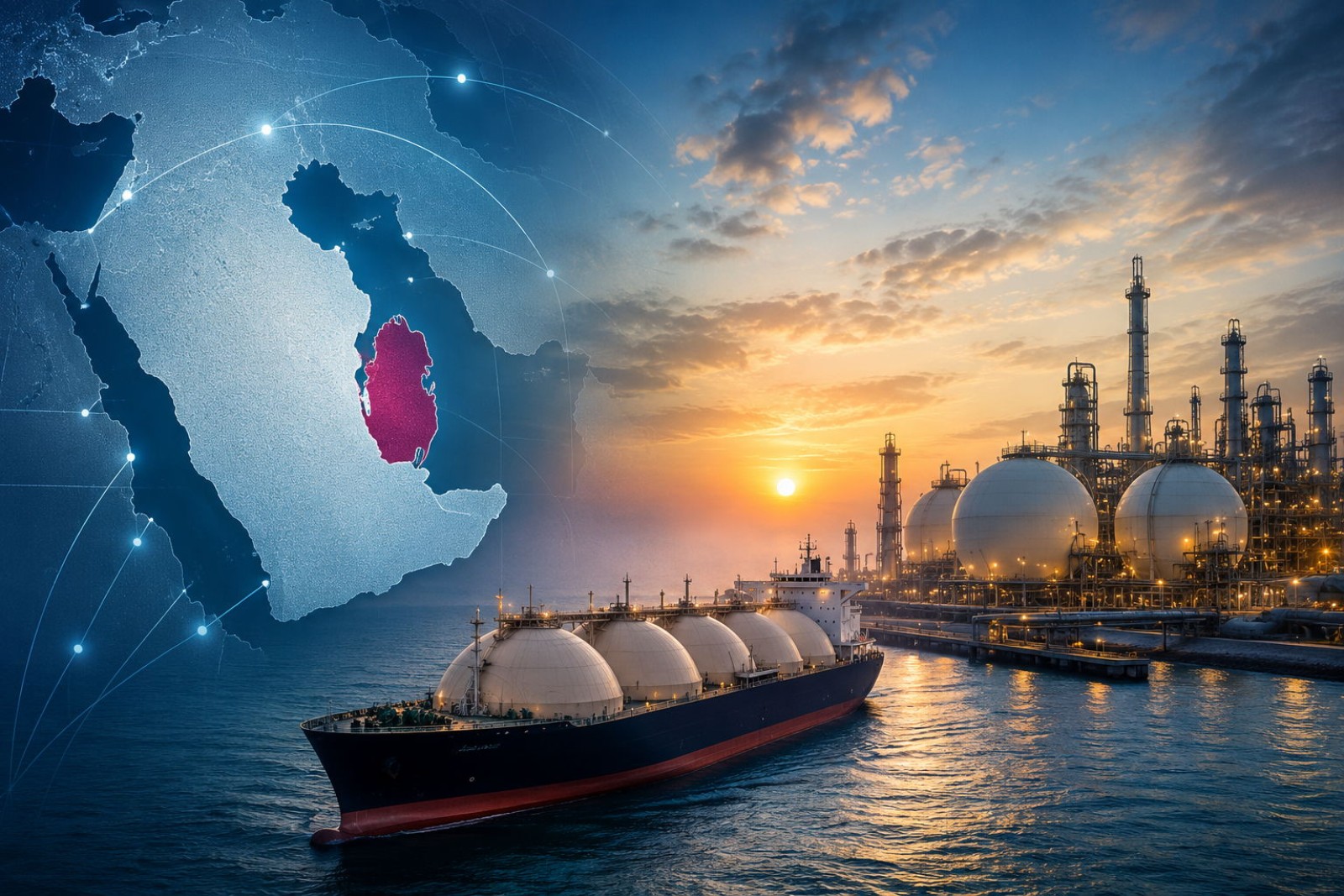
Qatar offers a useful example of this reality. The country's economic performance, infrastructure investments, and long-term development strategy are all built around one assumption: demand for natural gas is likely to remain significant for decades.
The World Still Runs on Fossil Fuels
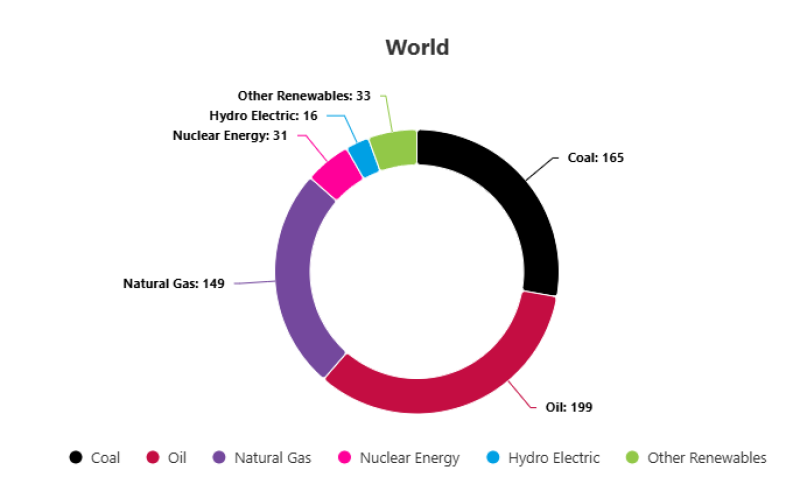
Despite years of investment in renewable technologies, the global energy system remains overwhelmingly dependent on conventional fuels.
According to the chart, oil accounts for 199 exajoules (EJ) of annual energy consumption, while coal and natural gas contribute another 165 EJ and 149 EJ respectively. Together, these three energy sources represent more than 500 EJ of global consumption.
By comparison, nuclear energy contributes 31 EJ, hydroelectric power 16 EJ, and other renewable sources 33 EJ.
The data suggests that the energy transition is progressing, but from a much lower base than many public discussions imply. Renewables are growing quickly, yet oil, coal, and gas continue to provide the vast majority of the energy required to power industries, transportation networks, manufacturing facilities, and cities around the world. For countries that export hydrocarbons, this distinction matters.
A Small Country With an Outsized Role in Energy
Qatar's economic model is closely tied to natural gas production. The country controls access to the North Field, one of the largest natural gas reservoirs in the world and the cornerstone of its LNG industry.
Over the past two decades, Qatar has transformed its resource advantage into a global export business. Liquefied natural gas shipments from the country reach customers across Europe, Asia, and the Middle East, making Qatar one of the most influential participants in international gas markets.
This position has become increasingly important as governments seek reliable energy supplies while balancing economic growth with environmental objectives.
Unlike oil, natural gas is often viewed as a transitional fuel because it can provide stable electricity generation while producing fewer emissions than coal. As a result, many countries continue to expand gas infrastructure even as renewable capacity grows.
When LNG Expansion Becomes Economic Policy
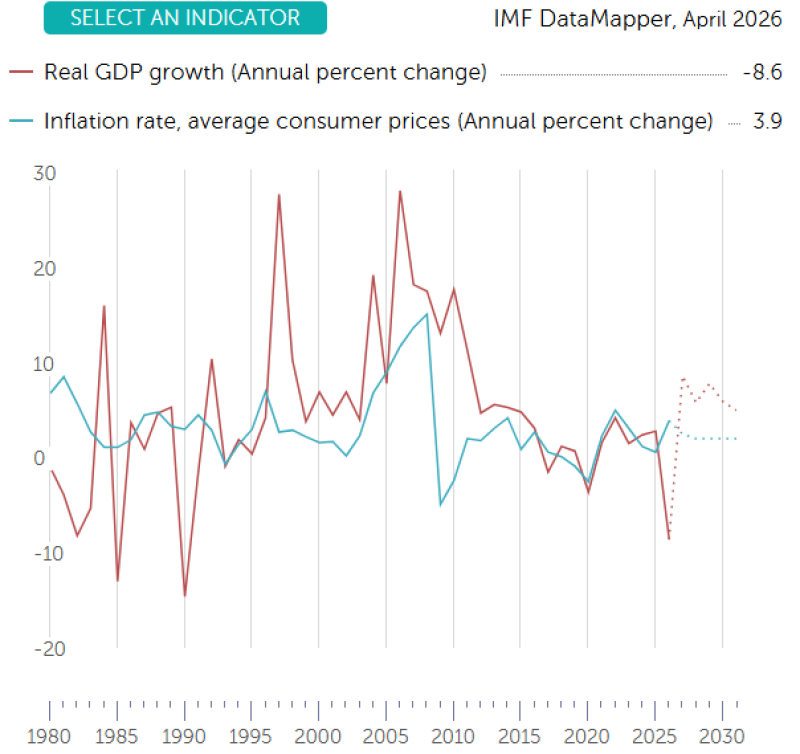
The relationship between energy and economic performance becomes clear when examining Qatar's growth history.
IMF projections show real GDP growth of -8.6% in 2026, while average inflation is expected to remain relatively moderate at 3.9%.
Viewed in isolation, negative growth may appear concerning. However, resource-driven economies often follow a different pattern than more diversified markets. Large energy projects can create periods of rapid expansion during construction phases, followed by slower growth once facilities become operational.
This cycle has been visible throughout Qatar's modern economic history. Major LNG investments, infrastructure projects, and energy-sector expansion have repeatedly influenced growth rates more than domestic consumption trends.
Inflation, meanwhile, has remained comparatively contained despite periods of significant economic activity. This combination reflects the unique characteristics of an economy where export revenues from natural resources play a central role.
The Geography Behind Qatar's Energy Strategy
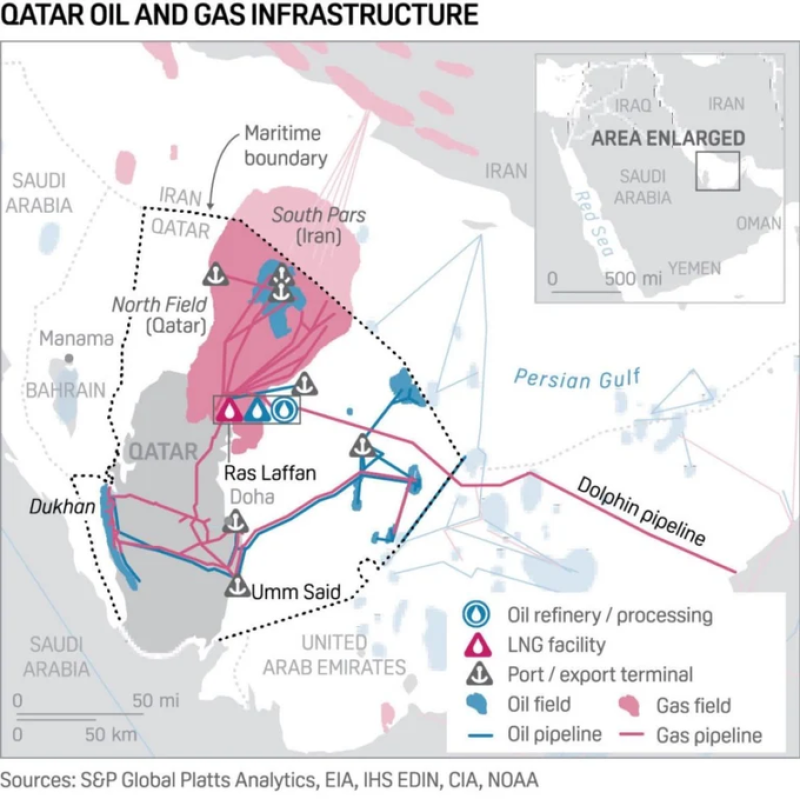
Physical infrastructure often reveals more about long-term priorities than economic forecasts.
Qatar's energy network is concentrated around the North Field and the industrial hub of Ras Laffan. Offshore gas fields are connected through an extensive pipeline system to processing facilities, LNG terminals, and export ports along the country's eastern coastline.
The layout highlights how deeply integrated the gas sector is within the national economy. Production, processing, and export operations are designed to move natural gas efficiently from offshore reserves to international markets.
The presence of export terminals, LNG facilities, and regional pipeline connections underscores Qatar's role as an energy supplier rather than simply an energy producer.
Infrastructure of this scale is typically built with multi-decade demand expectations in mind. The continued expansion of LNG capacity suggests policymakers expect natural gas to remain an important component of the global energy mix well into the future.
Gas Isn't Disappearing From the Energy System
A common assumption is that renewable energy growth automatically translates into declining demand for fossil fuels. The consumption figures tell a more nuanced story.
Global electricity demand continues to rise as economies digitize, artificial intelligence increases data-center capacity requirements, and developing nations expand industrial production. In many regions, natural gas remains one of the most practical ways to meet that demand while maintaining grid reliability.
At the same time, energy security has become a growing concern following supply disruptions in recent years. Governments increasingly value access to stable and diversified energy sources, creating additional demand for LNG exporters.
These trends help explain why countries such as Qatar continue to invest heavily in gas production even as renewable energy deployment accelerates.
 Victoria Bazir