Eseandre Mordi

⬤ Brent crude oil (BRN) futures have moved into record backwardation as energy markets react to growing supply concerns. The six-month Brent calendar spread surged above $25 per barrel, reaching approximately $25.43 on March 9, 2026 — the widest backwardation level ever recorded on the chart. This marks a dramatic tightening in near-term supply expectations across global oil markets.
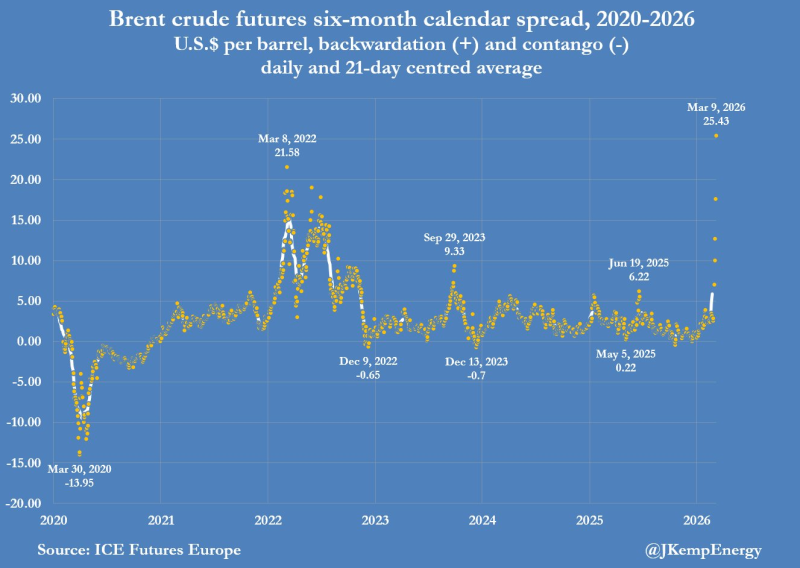
⬤ The calendar spread measures the price gap between near-term futures contracts and those scheduled for later delivery. Backwardation occurs when prompt contracts trade at a premium to forward prices, reflecting strong immediate demand or constrained near-term supply. Previous spikes include $21.58 in March 2022 during the global energy crisis and $9.33 in September 2023, but the current reading surpasses all prior peaks.
⬤ The surge reflects growing market fears over potential disruptions to oil exports from the Gulf region, which supplies a large share of global crude shipments. Market participants are pricing in the possibility that shipping disruptions or geopolitical tensions could constrain near-term supply. Similar risks have historically pushed oil prices sharply higher, with analysts noting that prolonged disruptions in key export routes can rapidly tighten global crude balances.
⬤ Calendar spreads are closely watched indicators of real-time demand for immediate oil deliveries. A record spread at $25.43 signals that traders are pricing in severe and sustained risk, not a temporary blip. When spreads reach extreme levels like this, it highlights how quickly energy markets can reprice in response to geopolitical developments — and how exposed global supply chains remain to disruption in critical export hubs.
 Eseandre Mordi