Eseandre Mordi

Brent crude oil (CO1) has broken below the $100 mark, a key psychological level that has long anchored bullish sentiment in energy markets. The drop from recent highs above $110 to around $98.89 represents a meaningful repricing, and it puts serious pressure on earlier calls for oil to surge toward $150 or even $200. That narrative, which gained traction during periods of tight supply and elevated geopolitical risk, now looks increasingly difficult to sustain.
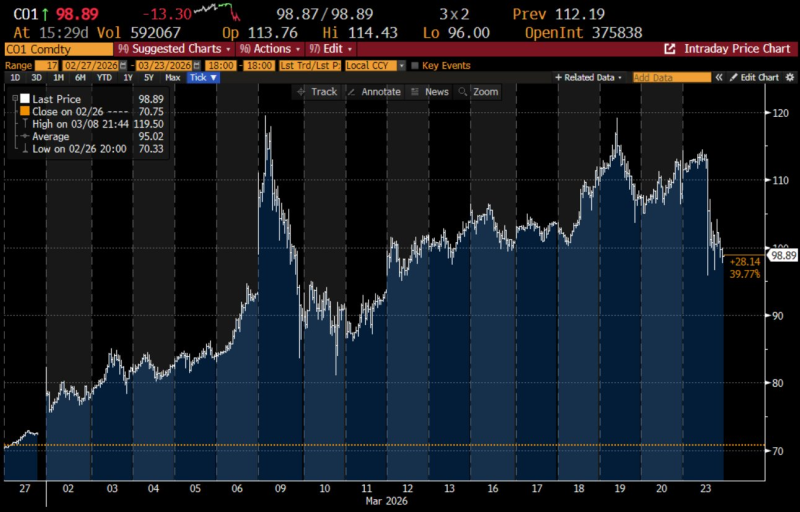
The speed of the current selloff mirrors past episodes where supply-side developments triggered rapid moves. WTI oil price drops 13% in 40 minutes after IEA releases 400M barrels showed just how abruptly sentiment can flip when new inventory data hits the market. Brent is now exhibiting a similar dynamic, with volatility staying elevated and dip-buyers showing little conviction.
Analyst forecasts have been swinging sharply. As recently covered, Oil price forecast: Goldman Sachs warns Brent could hit $100 in 5 weeks -- a call that now looks prescient, though the trajectory has been more bearish than bullish. Meanwhile, the broader setup had looked constructive not long ago: Brent crude holds near $72 as oil benchmarks approach multi-month highs captured a recovery phase that now seems like a distant baseline.
The breakdown below $100 reflects a broader reassessment of supply, demand, and macro conditions. Geopolitical risk premiums appear to be fading, while demand concerns tied to global growth uncertainty are gaining weight. For oil traders, the loss of a three-digit price handle is more than symbolic -- it resets the technical and psychological framework for the next directional move in global energy markets.
 Eseandre Mordi