Marina Lyubimova

The scale of AI-driven investment is entering a new phase. Data from J.P. Morgan, based on 650 Group estimates, shows that capital expenditures by Amazon, Microsoft, Google, and Meta are rising at an unprecedented pace - pointing to a structural shift in how the tech sector deploys capital.
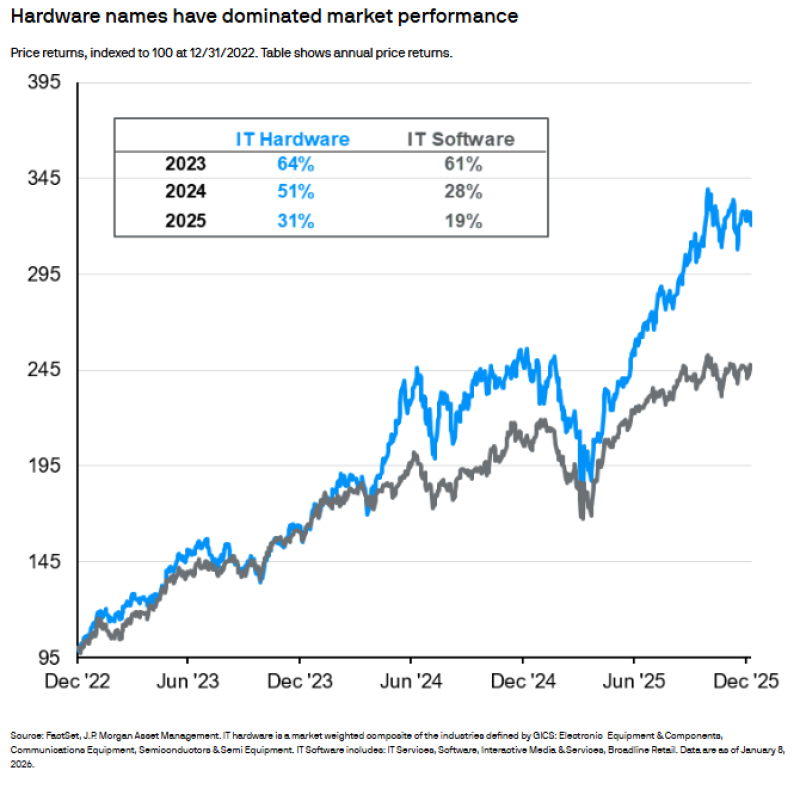
Annual data center capex has expanded from under $50 billion in 2015 to a projected $500+ billion by 2026, marking a more than 10x increase in just over a decade. While growth was relatively steady through 2023, the trend sharply inflects afterward, signaling the start of a new investment cycle.
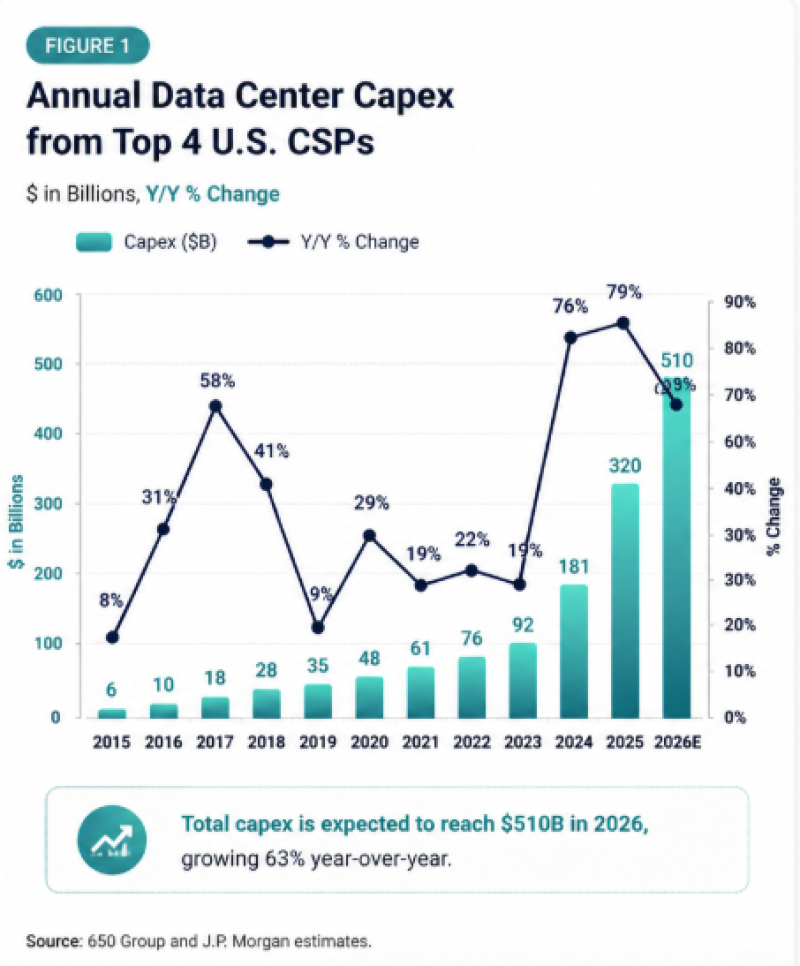
However, the key shift is not just the scale - it is the speed of expansion. Year-over-year growth surged to 76% in 2024 and is expected to remain elevated near 79% in 2025. In absolute terms, hyperscalers are now adding more capex in a single year than they did across multiple years in the previous cycle.
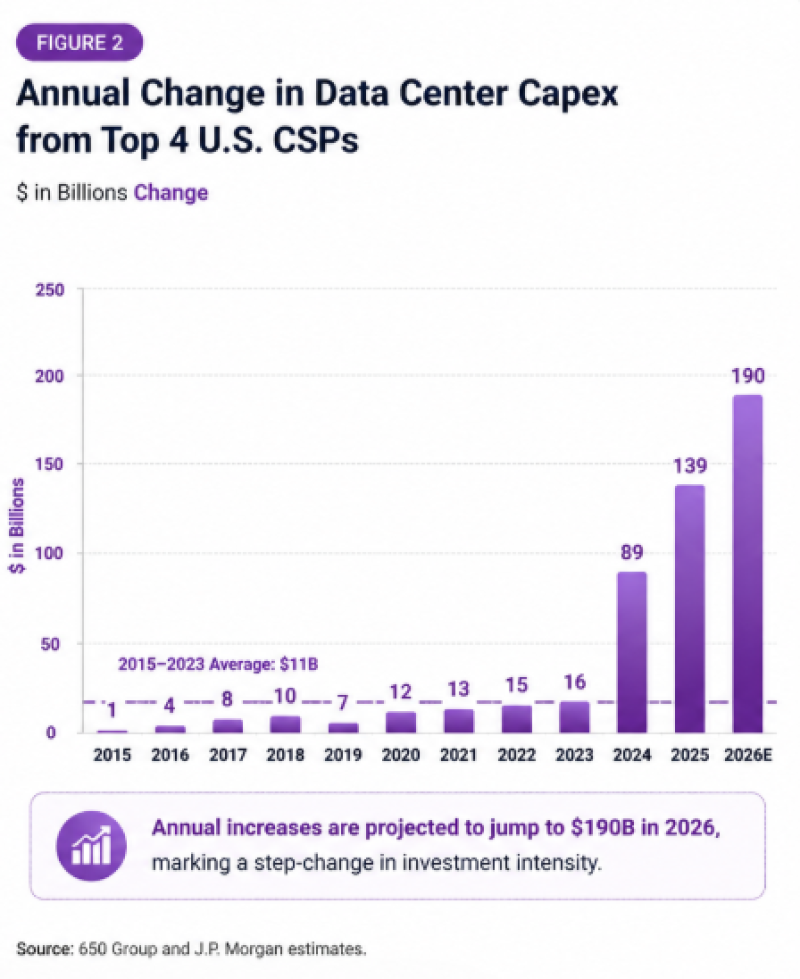
This shift becomes even more evident when looking at incremental spending. For nearly a decade, annual increases remained below $20 billion. Now, capex additions are expected to approach $200 billion per year by 2026, indicating a step-change in investment intensity rather than a continuation of past trends.
At the company level, this acceleration is already visible. Alphabet is targeting $90B+ in AI-related capex, while Microsoft has pushed quarterly spending to around $35B, both reflecting the rapid expansion of AI infrastructure and compute capacity.
The implication is clear: AI is no longer just a software trend - it is a capital-intensive infrastructure buildout. Hyperscalers are effectively in a race to secure compute, power, and data center capacity at scale.
At the same time, this creates a critical risk. If AI demand does not scale as quickly as expected, the industry could face a classic overcapacity cycle, with excess infrastructure and declining returns on capital.
For markets, this shift is becoming a key macro signal. The current capex cycle directly supports sectors such as semiconductors, power infrastructure, and data center real estate, while also making hyperscaler spending one of the most important indicators to monitor.
The data suggests that the industry is entering a new regime where capital deployment is accelerating faster than ever before. The key question is no longer whether AI will drive spending - but whether demand can keep pace with the scale of investment now underway.
 Marina Lyubimova