Sergey Diakov

- Jimmy Carter's First Earnings: The Navy and the Farm
- From Georgia Senate to the White House: Jimmy Carter's Career Path and Earnings
- Jimmy Carter Net Worth After the White House: Books, Land, and a Nobel Prize
- The Humblest President: How Jimmy Carter Lived on $10 Million
- Key Ideas from Jimmy Carter on How to Build a Meaningful Life
Not many people associate Jimmy Carter with wealth. And honestly, that's kind of the point. In a world where former presidents routinely cash in on speaking tours and board seats, Carter was the guy who still lived in the same modest ranch house he built in 1961 in Plains, Georgia — a home worth just $167,000. Yet despite his famously humble lifestyle, Jimmy Carter net worth at the time of his death on December 29, 2024 was estimated at $10 million. So how did a peanut farmer from rural Georgia end up as one of the most respected figures in modern American history — and quietly accumulate a seven-figure fortune along the way?
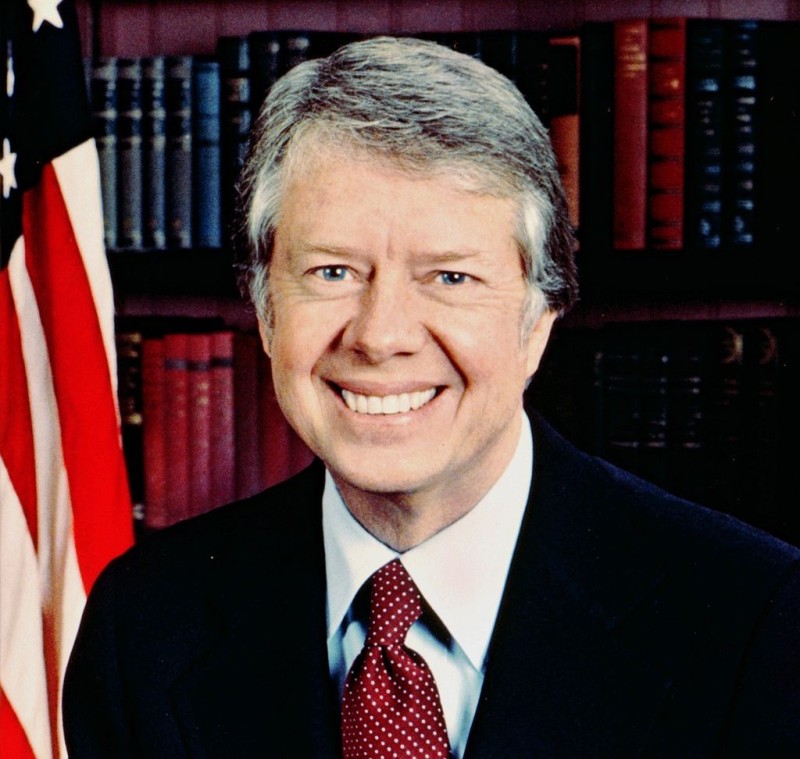
Carter was born on October 1, 1924, in Plains, Georgia, into a family of farmers and community leaders. After finishing high school at the height of the Great Depression in 1941, he worked his way through Georgia Southwestern College and Georgia Tech before landing a spot at the United States Naval Academy. He graduated in 1946 with a Bachelor of Science degree — the same year he married Rosalynn Smith, his sister's best friend.
His first real paycheck came from the U.S. Navy. Carter served as a naval officer and was part of the submarine program, eventually working under Admiral Hyman Rickover on the early nuclear submarine project. It was demanding, technically complex work, and it shaped him in ways that would echo throughout his career. He rose to the rank of lieutenant and seemed set for a long military career — until 1953, when his father died.
Carter left the Navy to take over the family peanut farming business back in Plains. His first year was rough — he made just $200 in profit and lived in subsidized housing. But he didn't quit. Over the next two decades, he turned the farm into a successful operation, eventually owning 2,500 acres of Georgia farmland. That peanut farm was the foundation of his early wealth and the thing that kept him grounded — literally and figuratively.
From Georgia Senate to the White House: Jimmy Carter's Career Path and Earnings

Politics came naturally to Carter. His involvement in the local community drew attention, and in 1962 he was elected to the Georgia State Senate. He served there until 1967, building a reputation for pragmatism and a genuine interest in civil rights and education reform. In 1971, he became Governor of Georgia — a role that paid a modest state salary but came with enormous influence.
In December 1974, he announced his candidacy for President of the United States. Few people took him seriously at first — a peanut farmer from a small Southern town wasn't exactly the profile of a future president. But Carter ran a disciplined, grassroots campaign and won the Democratic nomination, then defeated incumbent Gerald Ford in November 1976.
As president, Carter earned the standard salary of $200,000 per year — a figure that, adjusted for inflation, equals about $1.4 million in today's dollars. He served one term from January 20, 1977 to January 20, 1981, losing his re-election bid to Ronald Reagan. When Carter left office, his peanut farm — which had been placed in a blind trust — was struggling and was eventually sold in March 1981 for $1.5 million.
Jimmy Carter Net Worth After the White House: Books, Land, and a Nobel Prize
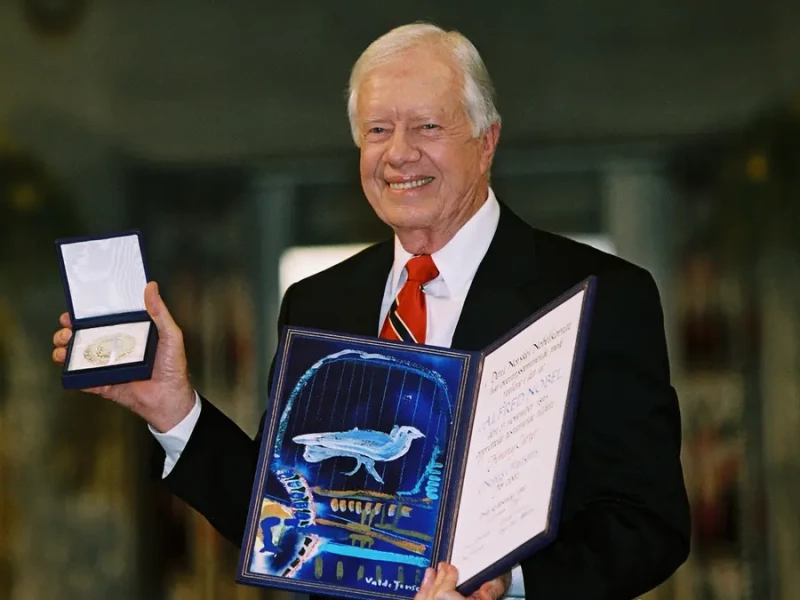
Leaving the presidency didn't slow Carter down — if anything, it was just the beginning of his most impactful chapter. In 1982, he founded the Carter Center in Atlanta, an organization dedicated to advancing human rights, monitoring elections, and fighting diseases like Guinea worm. He also became a professor at Emory University and threw himself into volunteer work with Habitat for Humanity, famously showing up with a hammer himself to build homes for people in need.
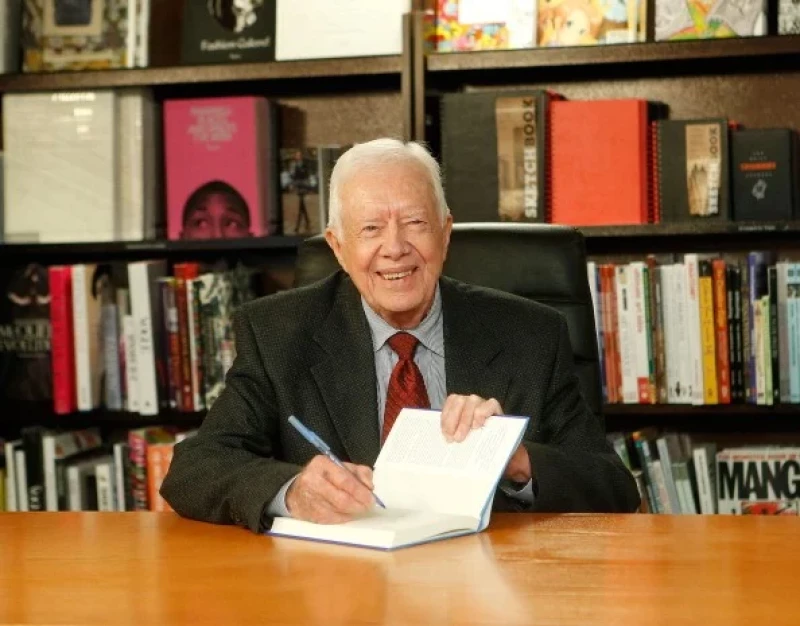
He also became a prolific writer. Over the decades, Carter wrote more than 30 books — everything from political memoirs and poetry to reflections on faith and rural life. Some of his best-known titles include An Hour Before Daylight, Our Endangered Values, Palestine: Peace Not Apartheid, and A Full Life: Reflections at 90. During peak sales periods, his books reportedly earned him somewhere between $250,000 and $500,000 a year, much of which he donated to charity or used to support the Carter Center.
In 2002, he received the Nobel Peace Prize for his decades of work in international conflict resolution, human rights, and social development. As a former president, he also received an annual pension of $207,800, plus $150,000 per year for staff and Secret Service protection, and around $118,000 in additional allowances. Jimmy Carter net worth at the time of his passing reflected all of these streams — the land, the books, the pension, and a lifetime of disciplined, values-driven financial choices.
The Humblest President: How Jimmy Carter Lived on $10 Million
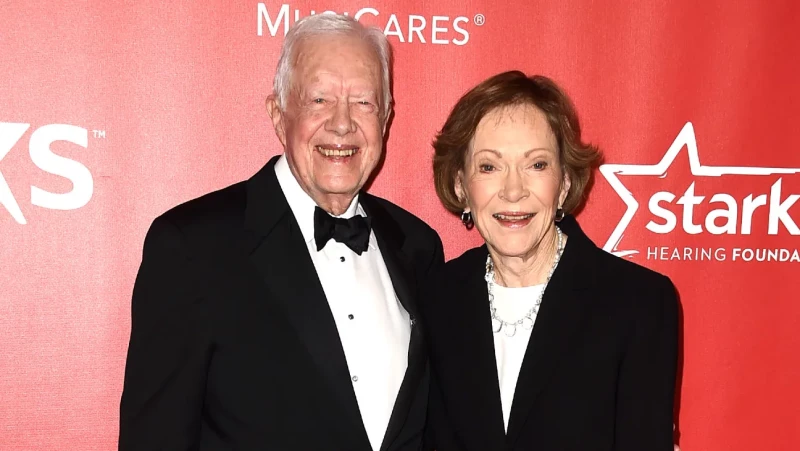
What makes Carter's financial story genuinely remarkable isn't the number — it's the lifestyle. He and Rosalynn famously lived on less than $40,000 a year for much of their post-presidential life. He drove a Ford Escort. He attended the opening of a local Dollar General and bought clothes there. He ate Saturday night dinners with neighbors on paper plates. His home in Plains, Georgia, built in 1961, was assessed at just $167,000.
Compare that to other former presidents: Bill Clinton's net worth is around $120 million, Barack Obama sits at roughly $70 million, and George W. Bush is worth about $40 million. Carter, meanwhile, ranks as the 27th richest president in U.S. history when adjusted for inflation — essentially the second-poorest since the 1950s. And yet no one questions his legacy. If anything, his financial modesty is part of what made people trust him.
Key Ideas from Jimmy Carter on How to Build a Meaningful Life
Carter never wrote a self-help book on getting rich, but his life was a masterclass in building something that lasts. Here's what his story actually teaches:
- Service over salary. Carter had every opportunity to leverage his post-presidential status for big speaking fees and consulting deals. He chose not to. He understood that long-term credibility is worth more than short-term income — and his continued influence into his late 90s proved it.
- Failure isn't the end. His first year running the peanut farm, he made $200. His presidency ended in defeat. He lost his re-election in one of the biggest landslides in modern history. Carter dusted himself off every single time and built something new.
- Diversify your skills. Carter was a farmer, a military officer, a politician, a diplomat, an author, a professor, and a humanitarian. That range of experience made him resilient and gave him multiple income streams throughout his life.
- Live below your means. His famous quote — "We give money, we don't take it" — said everything. Carter was never defined by what he accumulated, but by what he contributed.
- Integrity is its own kind of capital. Carter's reputation outlasted his presidency by decades. Long after the Iran hostage crisis faded from headlines, what people remembered was the man who showed up with a hammer to build houses for strangers. That kind of trust is genuinely priceless.
Jimmy Carter passed away on December 29, 2024, at the age of 100, surrounded by his family at his home in Plains, Georgia. He left behind four children, numerous grandchildren and great-grandchildren, and a legacy that has very little to do with the $10 million figure attached to his name — and everything to do with how he chose to spend his time on Earth.
 Sergey Diakov