Eseandre Mordi

US federal debt has officially crossed the $39 trillion mark for the first time in history. Total obligations have risen by roughly $2 trillion over just eight months, with the upward trajectory nearly doubling since 2018, according to Treasury demand analysis.
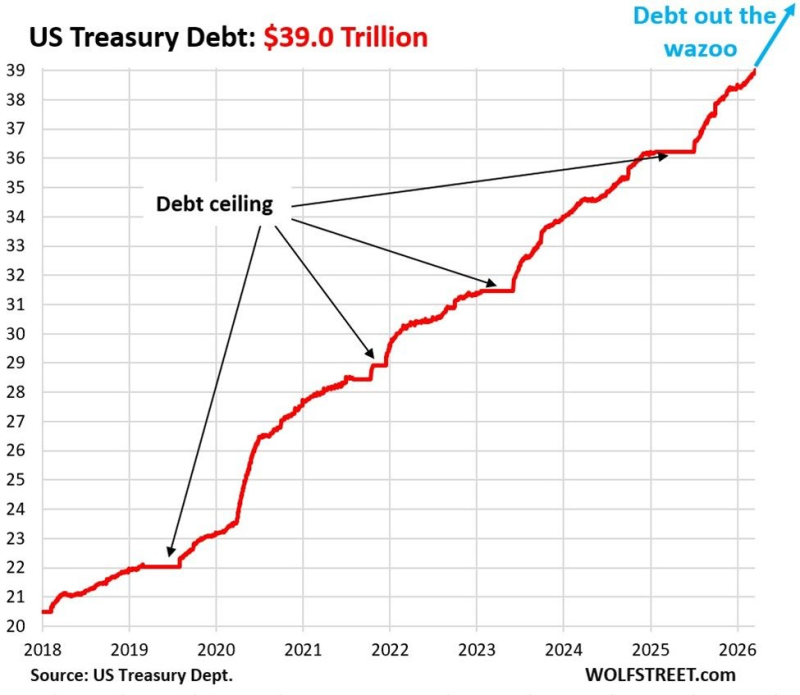
Since the debt ceiling was lifted in early July, US debt has jumped by approximately $2.8 trillion. The pattern is familiar: flat lines during ceiling restrictions followed by sharp vertical climbs once limits are removed, pushing the total to $39 trillion by early 2026.
The US debt-to-GDP ratio has reached approximately 124%, meaning total debt now far exceeds the size of the entire economy. The US Treasury debt buyback and related programs reflect Washington's growing reliance on financial engineering to manage obligations. Congressional Budget Office projections suggest debt could expand by around $2.4 trillion per year over the next decade, with a potential ceiling of $64 trillion by 2036.
This structural borrowing trend continues to shape macro narratives across asset classes. Rising deficits and expanding debt loads are influencing gold prices and dollar policy as investors seek hedges against long-term fiscal deterioration. With no credible path to stabilization, debt dynamics remain a key variable across global markets.
 Eseandre Mordi