Usman Salis
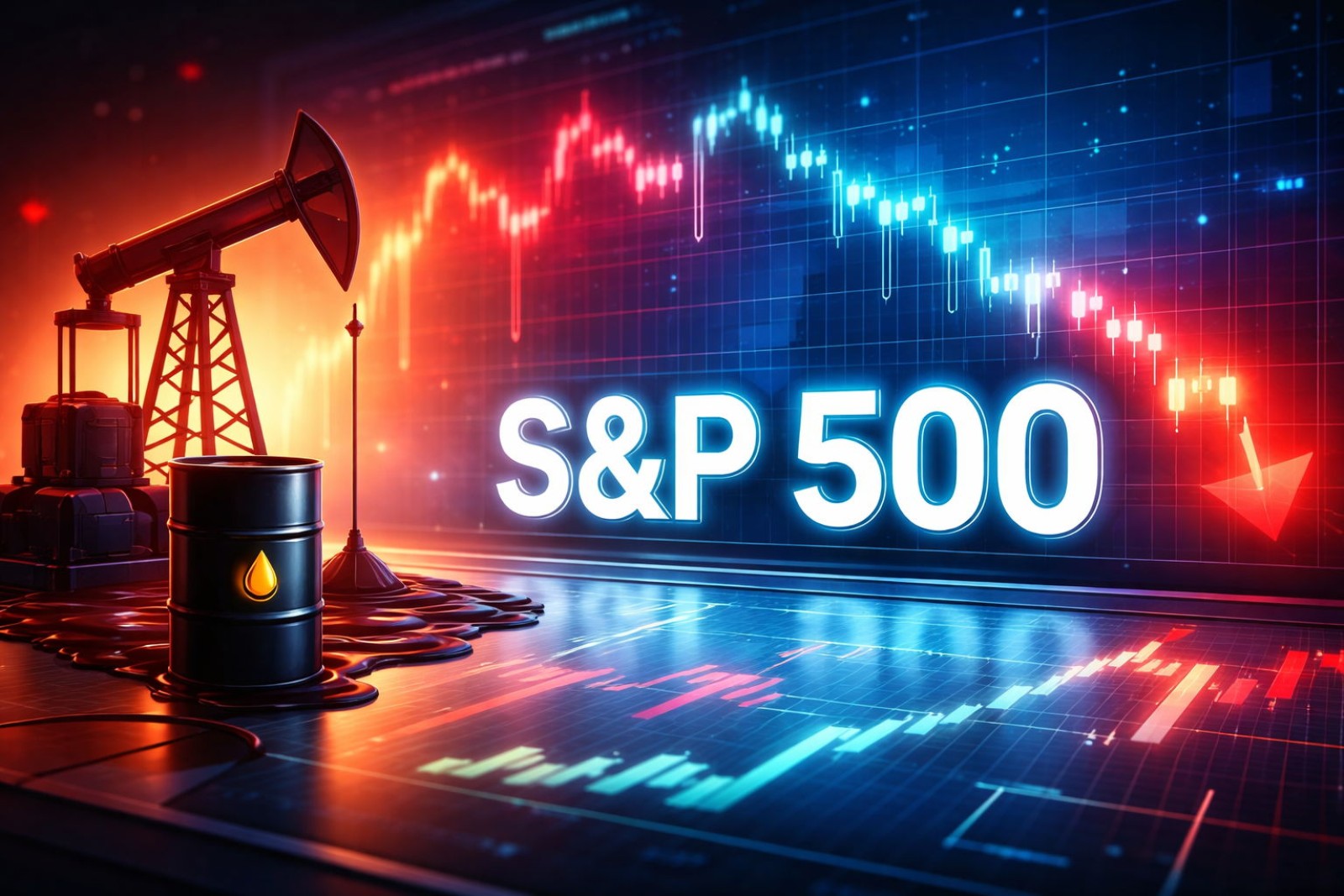
⬤ The S&P 500 faces growing downside risk as energy-driven macro pressures build. Goldman Sachs estimates that in a severe shock scenario where crude reaches $150 per barrel, the index could fall by as much as 19%, dragging it toward the 5,400 level. The projection underscores how sensitive equity markets have become to oil price surges and their impact on stock market valuations.
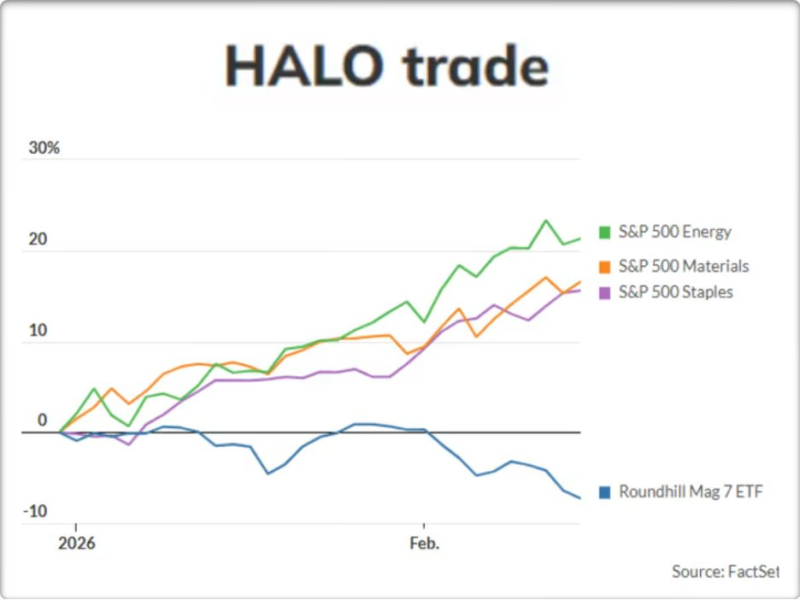
⬤ Market leadership has shifted sharply in early 2026. The so-called "HALO trade" describes a rotation into sectors with heavy physical assets and lower tech-disruption exposure. S&P 500 Energy, Materials, and Staples have gained roughly 10% to over 20% year-to-date, while the Magnificent 7 ETF has dropped nearly 10%. Capital is moving away from large-cap tech into commodity-linked and defensive sectors.
The window for cyclical trades tied to first-half 2026 growth expectations is narrowing. - Goldman Sachs
⬤ Goldman Sachs cautions that the HALO trade's runway is getting shorter. While energy-linked sectors have ridden the commodity wave higher, sustained oil price increases could begin weighing on economic activity and overall equity valuations. Historical patterns show prolonged energy shocks tend to drag broader markets down rather than sustain sector outperformance.
⬤ The current S&P 500 setup marks a critical transition where rising oil, sector rotation, and macro risk converge. With energy markets shaping both inflation and growth expectations, the balance between commodity strength and equity performance is fragile, defining near-term direction across global financial markets.
 Usman Salis