Peter Smith

⬤ Online shopping across the EU stayed strong in 2025, but a notable chunk of consumers hit real friction along the way. According to Eurostat, 35.4% of EU residents who made online purchases in the past three months reported running into problems - whether through a website or an app. The single most widespread complaint? Deliveries arriving later than advertised.
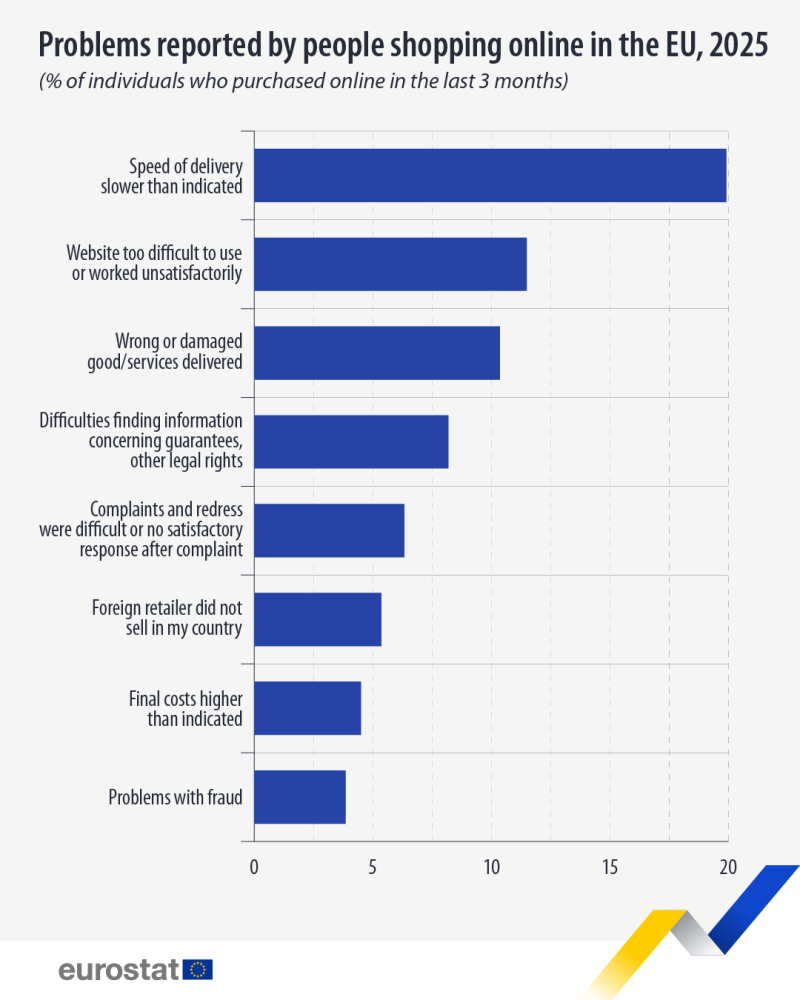
⬤ The numbers break down clearly: 19.9% of shoppers flagged slower-than-expected delivery as their main issue, making it the top complaint by a wide margin. Around 12% said the website was too hard to navigate or functioned poorly. Close behind, roughly 10% received wrong or damaged goods. About 8% struggled to find clear information on guarantees and legal rights.
Delivery reliability remains the clearest operational weakness in the dataset.
⬤ Smaller but still significant shares reported other headaches: about 6% found complaints and redress difficult or unresolved, while roughly 5% said foreign retailers simply wouldn't ship to their country. Final costs higher than shown affected around 4% of buyers, and fraud-related problems were cited by about 3%. Taken together, the data points to logistics, platform usability, and after-sale support as the main pressure points in EU digital commerce.
⬤ These findings land at a moment when e-commerce is increasingly woven into daily life across Europe - which makes the gaps harder to ignore. Shipping reliability keeps surfacing as a weak link, and it's not just a feel-good metric: slow or unreliable fulfillment directly shapes whether customers come back. For a deeper look at how this plays out commercially, see The Impact of Fast Shipping and Fulfillment on Customer Retention.
 Peter Smith