Alex Dudov
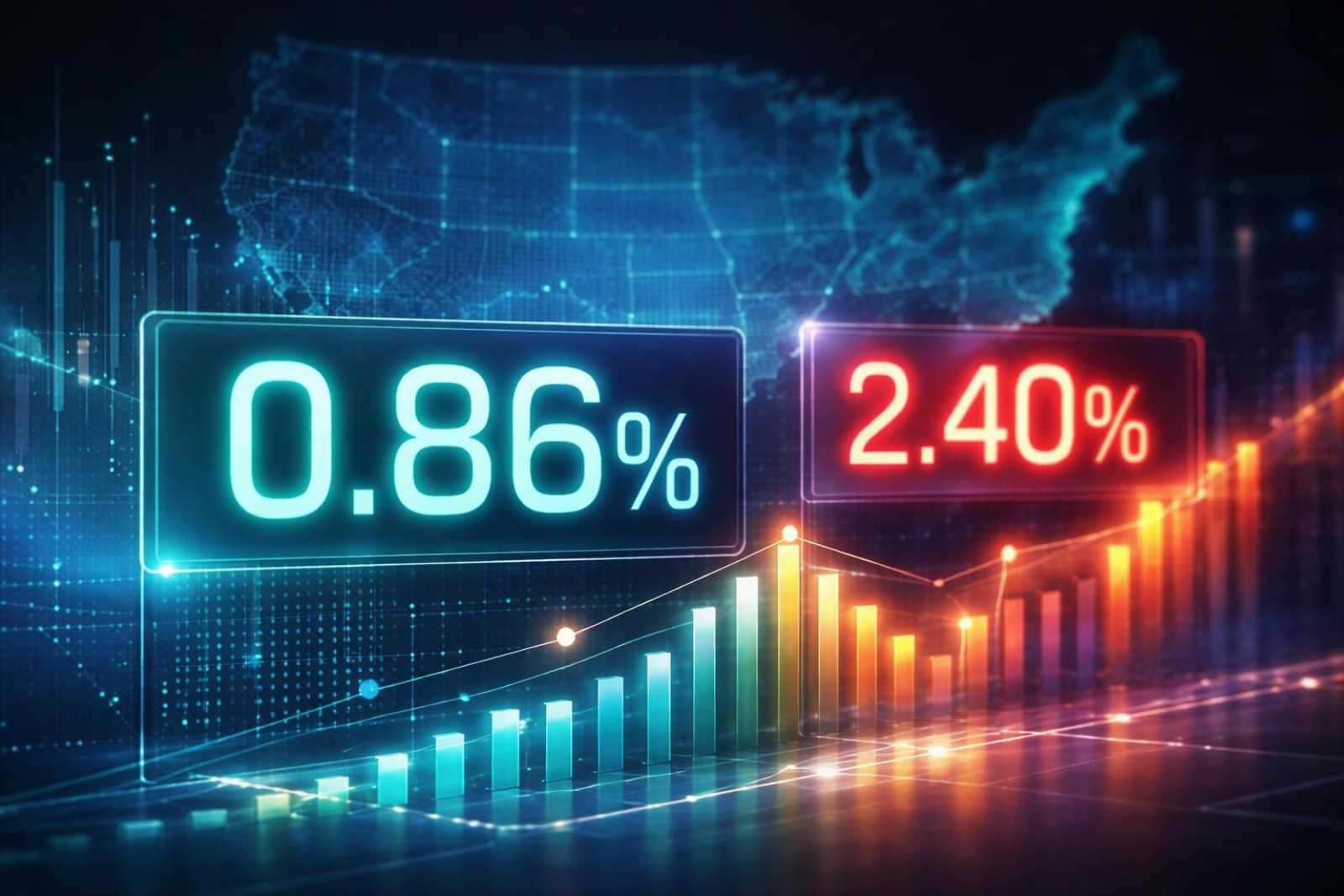
⬤ Inflation in the United States looks remarkably subdued right now, at least according to analysis of US inflation falling to 0.86% on the Truflation index. The real-time dashboard shows price growth running below 1% year over year — a notable divergence from the Bureau of Labor Statistics' official CPI, which currently stands at 2.40%. That's a gap of more than 150 basis points, and it's drawing attention from market watchers who track alternative economic data.
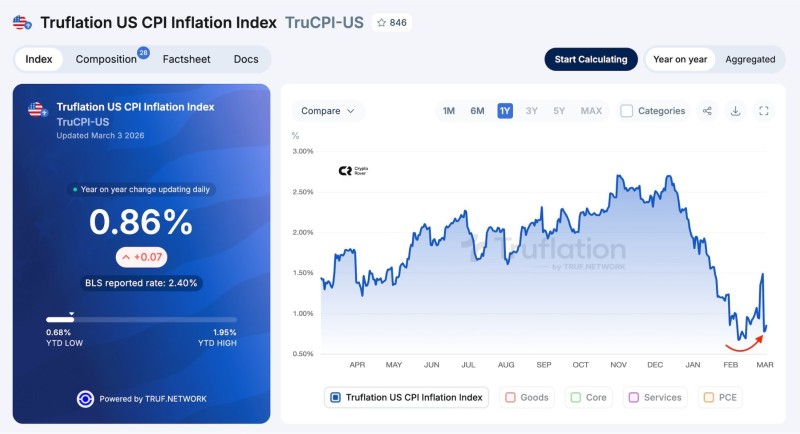
⬤ The Truflation chart tells an interesting story. Over the past year, the index trended steadily downward, hitting a trough near 0.68% before recovering slightly to the current 0.86% level. That bottom-and-bounce pattern is visible across multiple consumer price categories that Truflation monitors on a daily basis — a granularity that monthly government surveys simply can't match. Broader real-time US CPI readings below 1% based on alternative inflation tracking have shown similar cooling trends in recent months.
⬤ What sets Truflation apart from traditional CPI is its methodology. Instead of monthly surveys, the index aggregates live pricing data from thousands of sources every day. That means it can catch shifts in consumer prices earlier — and sometimes well before official reports catch up. It's a different lens on the same economy, and one that increasingly gets cited alongside government data rather than dismissed as fringe.
⬤ The divergence between Truflation and BLS data is the part that's generating the most conversation. The Federal Reserve still officially targets 2% inflation, and the government's current 2.40% reading keeps that target front and center for policymakers. But reports about the widening gap between Truflation data and official CPI statistics suggest timing differences between daily data updates and monthly government releases explain much of the discrepancy — not a flaw in either measure, but a difference in speed.
⬤ Truflation's latest reading: real-time indicators are pointing to an economy where inflation may already be under control. Whether traditional data eventually converges to the same conclusion remains to be seen, but the 0.86% figure is a data point that's hard to ignore as the Fed weighs its next moves.
 Alex Dudov