Usman Salis
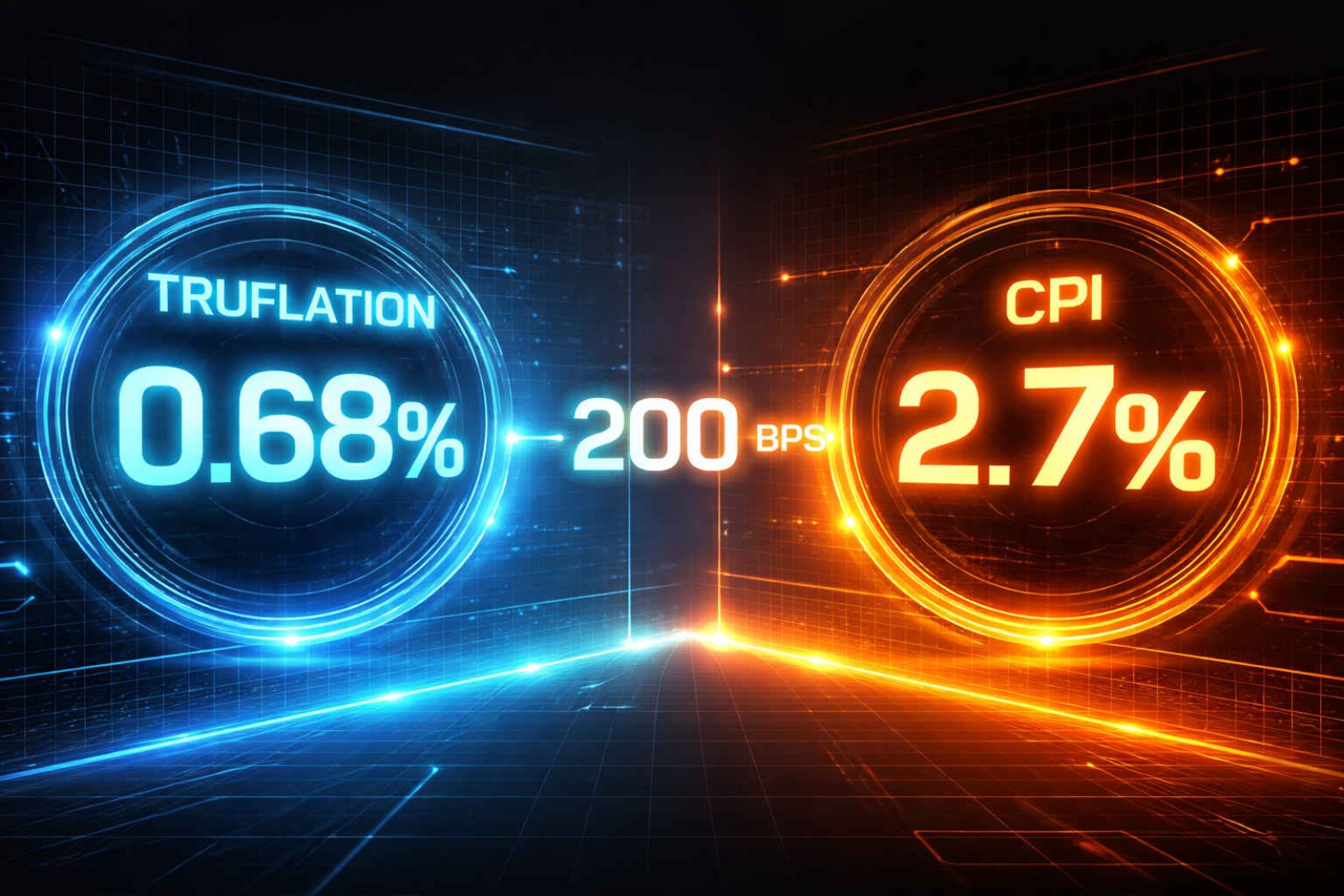
A dramatic divergence between real-time inflation tracking and official government data is capturing attention across financial markets. Truflation's high-frequency inflation gauge has plunged to just 0.68% year-over-year, creating a stark 200 basis point gap with the official Consumer Price Index rate of 2.7%. This split reveals two conflicting narratives about the current state of price pressures in the US economy.
Real-Time Data Diverges Sharply from Official CPI
The gap between inflation measurement systems has widened significantly. As Kyledoops reported, Truflation's daily-updated index currently sits at 0.68% YoY as of February 9, 2026, while the Bureau of Labor Statistics CPI remains anchored near 2.7%. This roughly 200 basis point spread represents one of the widest divergences on record between real-time and traditional inflation metrics.
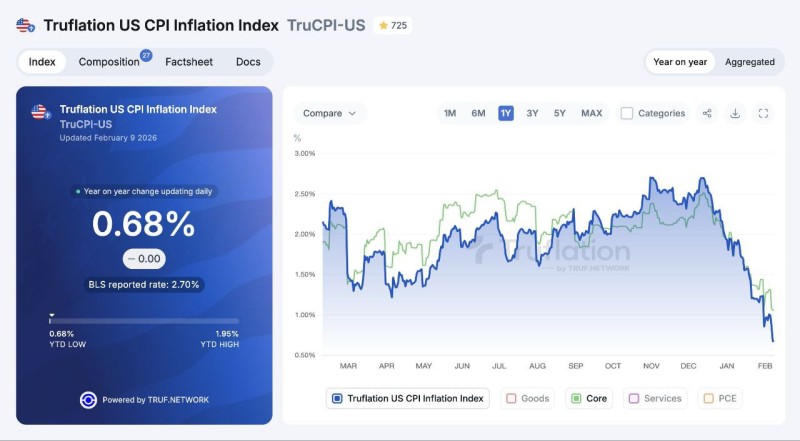
The chart shared by the analyst highlights how Truflation's US CPI Inflation Index has slid dramatically in recent weeks. The platform updates daily using live price data from thousands of sources, while the official CPI reflects survey-based measurements collected during earlier periods and published monthly. This methodological difference explains much of the timing gap.
Two different inflation stories—the faster gauge suggesting rapid cooling while the survey print remains materially higher.
Why the Methodology Gap Matters for Markets
This mismatch has become a recurring theme in inflation coverage. Similar patterns emerged when real-time USD inflation dropped to 0.68% and when US CPI inflation fell to 1.23%, where high-frequency readings diverged sharply from slower-moving official reports. The phenomenon also appeared when US inflation plunged to 1.18%, creating confusion about the true pace of price changes.
The key point isn't that one measure is definitively correct—it's that timing and data inputs differ fundamentally. Truflation captures price movements as they happen, while CPI reflects a broader but slower survey process. Neither approach is inherently wrong; they simply measure different aspects of the inflation picture.
Implications for Fed Policy and Market Sentiment
This divergence carries real consequences because inflation expectations can shift as market participants weigh faster-moving signals against lagging official prints. How the gap resolves—whether through stabilization in Truflation or a lower official CPI over coming months—could materially influence near-term macro sentiment and Federal Reserve policy decisions.
Markets are now watching closely to see if the official data will eventually catch down to real-time readings, or if the high-frequency signals will reverse course and converge upward toward the established CPI rate.
 Usman Salis