Marina Lyubimova
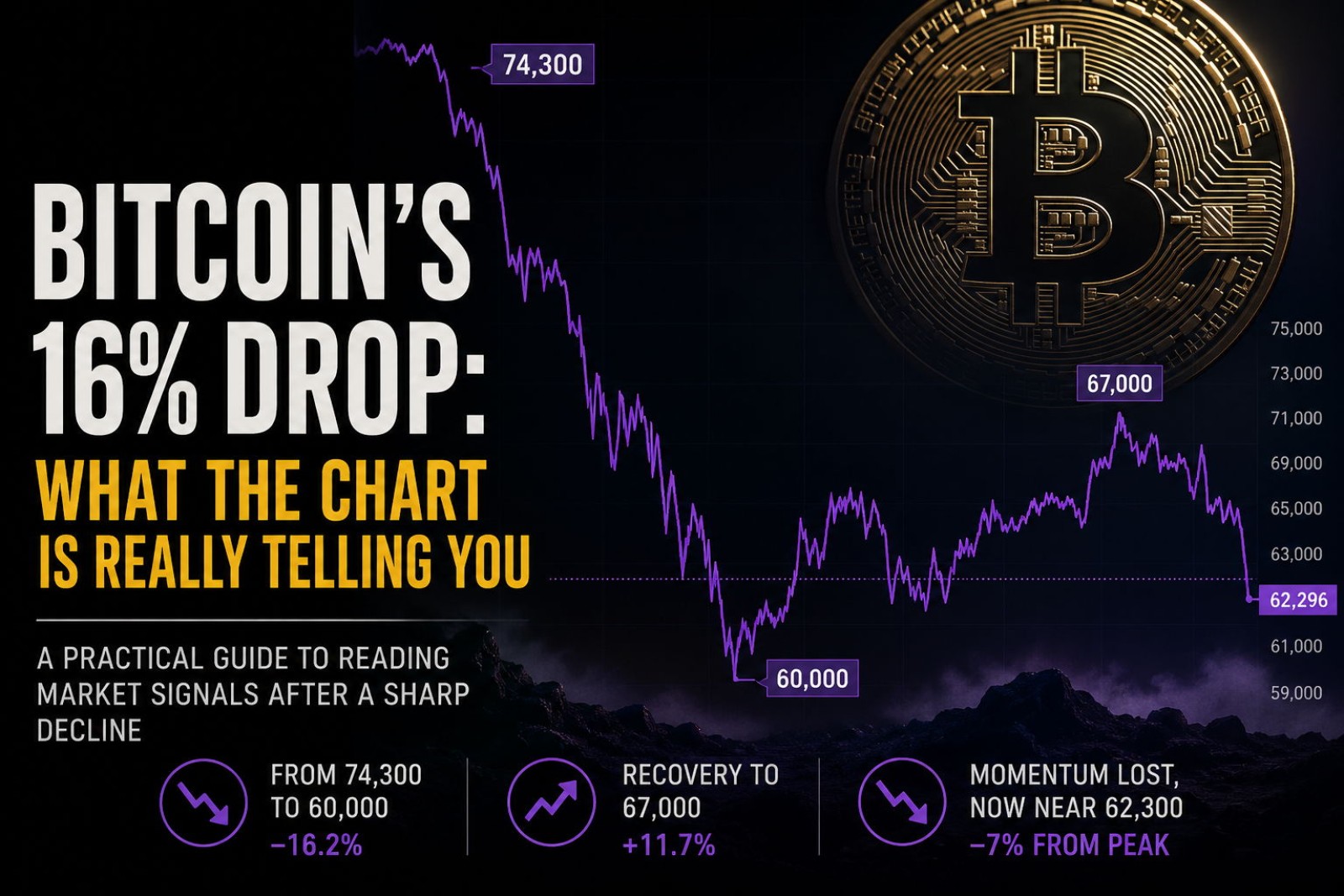
Bitcoin recently fell from approximately 74,300 to 60,000 before recovering toward 67,000. The move contained all the elements typically associated with a market reset: a rapid decline, a relief rally, and a renewed loss of momentum.
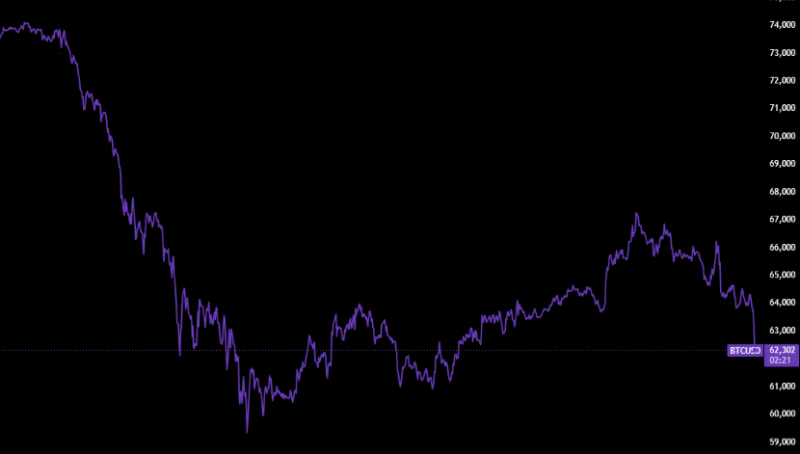
The decline removed roughly 16% from the price and pushed Bitcoin into its lowest range on the chart. Selling pressure eased near 60,000, where buyers finally absorbed enough supply to stop the move.
The rebound that followed added almost 7,000 points, lifting Bitcoin from around 60,000 to nearly 67,000. Under different conditions, that would have been enough to establish a new uptrend. Instead, the rally faded before reaching the previous high.
The most informative part of the chart is not the selloff or the rebound. It is the area between them.
Price recovered sharply from the lows but failed to attract enough demand to continue higher. The advance slowed near resistance and eventually reversed, leaving Bitcoin near 62,300.
The 60,000–61,000 range now carries most of the chart's weight.
That area marked the end of the decline and the beginning of the recovery. As long as it holds, the recent correction can still be viewed as a reset within a broader trend. A break below it would change the interpretation entirely, turning the rebound into a temporary interruption rather than a structural recovery.
The move from 60,000 to 67,000 was large enough to improve sentiment but not large enough to alter the broader structure. Bitcoin remains below both the recovery high and the previous peak, while recent price action suggests diminishing buying pressure.
This distinction matters because strong recoveries tend to expand. They continue producing higher highs after the initial bounce. Weak recoveries tend to stall near resistance and spend more time revisiting support.
So far, Bitcoin fits the second pattern more closely than the first.
The chart does not show a market in freefall. It also does not show one that has fully regained momentum.
It shows a market still negotiating the consequences of a 16% decline.
 Marina Lyubimova