Saad Ullah

⬤ WTI crude oil suffered one of the sharpest short-term selloffs in recent energy market history, collapsing more than 20 percent within hours. The trigger was a report that G7 countries may release roughly 400 million barrels from strategic petroleum reserves. The prospect of a large coordinated supply injection immediately shifted market expectations, sending WTI sharply lower as traders priced in the potential surge in available crude.
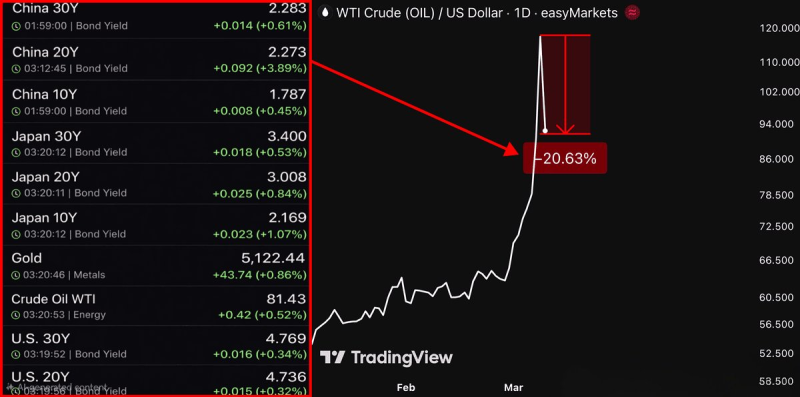
⬤ The chart captures the full brutality of the move: WTI had been climbing toward the upper boundary of its recent range before reversing in a near-vertical drop, with the decline measured at exactly 20.63 percent from peak to trough. Sudden swings of this size are rare in commodity markets and typically occur when unexpected supply news hits during periods of elevated leverage. WTI Crude Oil Hits Five-Month Low Amid Market Pressures shows how previous macro shifts and supply surprises similarly sent crude into sharp breakdowns.
⬤ A likely amplifier of the move was forced liquidation among leveraged traders. When WTI moves hard against open positions, margin calls trigger automated selling as trades are closed en masse. This cascade can drain liquidity fast, accelerating the fall. Oil Price News: WTI Falls Below $60 With Deeper Risks outlines how technical breakdowns and macro pressure have previously combined to produce similar waterfall declines in crude.
⬤ The WTI crash is a reminder of how fast sentiment can reverse in global energy markets when supply assumptions change. Oil prices feed directly into inflation, industrial output, and trade flows. Sharp moves in crude rarely stay contained in the energy complex; they ripple across equities, commodities, and crypto, exposing how deeply interconnected volatility across asset classes has become.
 Saad Ullah