Marina Lyubimova

Gold (XAU/USD) is staging an unusual response to geopolitical stress. Rather than rallying, it has sold off sharply since the Iran conflict began, falling roughly 15% from pre-conflict levels. That diverges from what most market participants expect from the metal during periods of active military conflict and currency debasement risk.
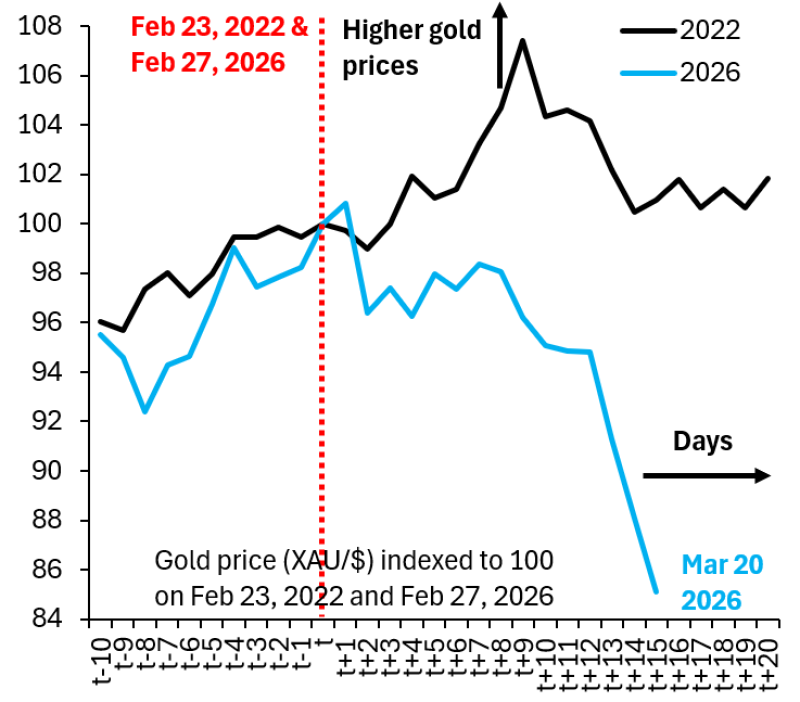
A direct comparison with 2022 tells the story clearly. When Russia invaded Ukraine, gold climbed above the indexed 105 level within the first two weeks before settling into a range. In the current cycle, price held briefly near the baseline then broke lower. By days 15 to 20, gold was sitting in the mid-80s on the same indexed scale, reflecting sustained institutional selling rather than safe-haven buying. The 2022 playbook simply is not repeating.
Price action across recent sessions confirms the downside bias. Gold Drops Below $5,000 as RSI Nears 31 and Bearish Momentum Builds documents weakening structure and lower highs, while Gold Price Analysis: 12% Pullback Shows Signs of Stabilizing places the recent decline among the sharpest corrections in the current cycle. The question of whether any floor exists now falls on one critical area: Gold Tests Critical $4,000 Support as Uptrend Hangs in Balance.
The current XAU/USD move signals a broader shift in market logic. Geopolitical conflict no longer automatically translates into gold demand. Whether this reflects confidence in dollar liquidity, forced selling by leveraged funds, or a genuine repricing of gold's macro role remains unclear. What is clear is that traders relying on historical patterns are getting punished for it.
 Marina Lyubimova