Saad Ullah

Oil and gas markets may dominate headlines, but a longer-term chart tells a different story. According to J.P. Morgan data shared by Solix Trade, global energy intensity peaked in the late 1970s and has been falling ever since. The world is simply producing more economic output per unit of energy than it did 45 years ago.
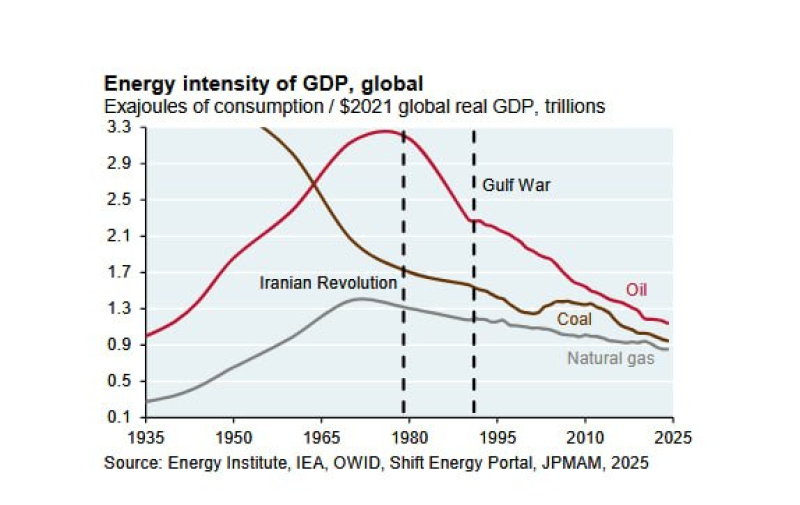
The numbers break down by fuel type. Oil intensity peaked around the time of the Iranian Revolution and kept declining through the Gulf War era. Coal and natural gas followed the same downward curve. Across the board, exajoules per trillion dollars of GDP have trended lower, pointing to a broad, structural improvement in how efficiently economies run.
That structural shift does not insulate markets from short-term shocks. Technology adoption and efficiency gains have reduced energy dependence for growth, yet price sensitivity remains high. Brent oil outlook as Goldman sees $115 amid inflation risks shows just how quickly macro conditions and supply fears can move expectations - regardless of where long-run intensity trends point.
The gap between structural trends and daily market behavior is hard to ignore. While the 45-year efficiency story is clear, traders are still reacting to geopolitics and inventory swings in real time. WTI oil price analysis as crude drops sharply on geopolitical news and U.S. natural gas falls below $3 amid stable supply conditions both illustrate how short-term volatility continues to define energy markets - even as the long-run picture shows growing independence from energy inputs for economic growth.
 Saad Ullah