Marina Lyubimova

⬤ China faces a major heavy oil supply disruption as Venezuelan exports plummet from 389,000 barrels daily in 2025 to an anticipated 74% drop by February 2026. This creates a shortfall exceeding 300,000 barrels per day, forcing Chinese refiners to scramble for alternative discounted heavy crude grades they depend on.
⬤ Iranian crude, once a reliable supply pillar, now carries too much risk. Escalating U.S. sanctions and regional instability make this source increasingly unreliable. With both Venezuela and Iran becoming problematic, China needs stable, non-sanctioned alternatives fast.
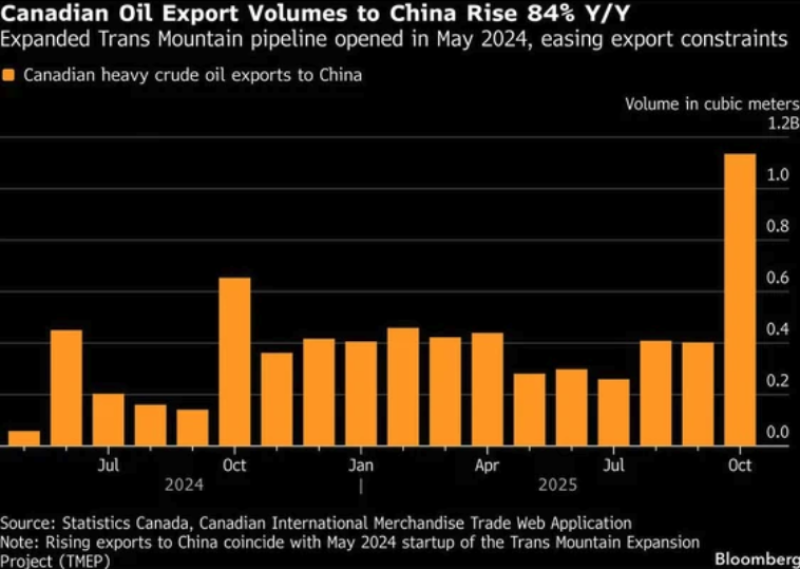
⬤ Canadian heavy crude emerges as the solution. Grades like Cold Lake and Access Western Blend match the specifications Chinese refiners need. This isn't just about filling a gap—it's a strategic pivot toward legally secure, dependable suppliers. Russian and Middle Eastern sources help, but they can't deliver the heavy crude volumes and quality China requires.

⬤ This shift signals China's priority: long-term energy security over short-term deals. Middle East volatility and Iranian supply risks push Beijing toward stable partners like Canada. It's a calculated move to reduce geopolitical exposure while securing reliable heavy crude access for the future.
 Marina Lyubimova