Alex Dudov

⬤Brent crude front-month futures dropped more than $12 per barrel to an eight-session low near $100, following the U.S. decision to extend the deadline for Iran to re-open the Strait of Hormuz. The move created fresh uncertainty around global supply flows, triggering a fast reversal after prices had spiked to $110-$112 in March 2026. For earlier context on Brent Crude Holds Near $72 as Oil Benchmarks Approach Multi-Month Highs, geopolitical pressure had already been building for months before the latest surge.
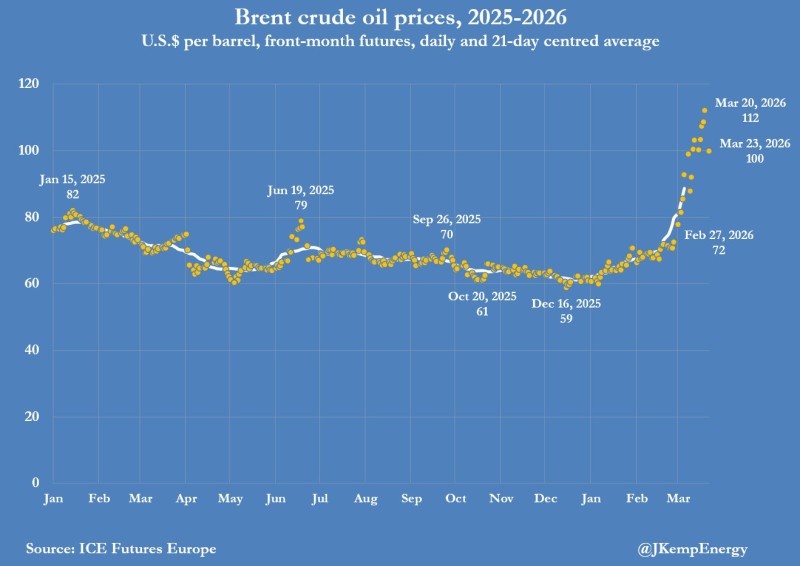
⬤Through 2025, Brent traded in a relatively contained $60-$80 range. Prices peaked near $82 in January, posted a mid-year high around $79, then slid to a December low of roughly $59. That stability broke down in early 2026 as oil climbed toward $72 before accelerating sharply higher into the $110+ spike seen in March."Intra-day volatility has surged to levels not seen since the early stages of the COVID-19 pandemic."Market Analysis, March 2026
⬤The break below $100 marks a meaningful shift in sentiment. As covered in Brent Crude Oil Falls Below $100, Weakening Bullish Case for Rally, this level had served as a key reference point for bulls expecting a sustained move higher. The rapid collapse challenges that narrative and signals how quickly positioning can unwind when geopolitical risk escalates.
⬤Despite the dramatic 2026 run-up, Brent's inflation-adjusted levels remain near a 25-year average - a point explored in Brent Oil Up 67% in 2026, Yet Real Prices Stay Near 25-Year Average. Near-term direction will likely stay hostage to Strait of Hormuz developments and any shifts in U.S.-Iran negotiations, keeping volatility elevated and making directional calls particularly difficult.
 Alex Dudov