Alex Dudov
- How the CEO of United Airlines Got His Start: the Pentagon at 21
- From America West to US Airways: United Airlines CEO's Early Career Path
- Scott Kirby Takes the CEO of United Airlines Chair in the Middle of a Pandemic
- United Airlines CEO Salary: $9.8M, Then $18.6M, Then $33.9M
- What Scott Kirby Actually Believes About Getting to the Top
Most airline executives come up through finance or law. Scott Kirby came up through the Air Force Academy, a Defense Department office, and a brief career as a card counter banned from 150 casinos. It is a strange backstory for the man who now runs United Airlines - but once you hear the whole story, it makes perfect sense. Kirby has always been someone who finds the edge that others miss, runs the numbers harder than anyone in the room, and bets on himself even when the odds look rough. That instinct took him from a government cubicle to one of the most powerful seats in global aviation.
How the CEO of United Airlines Got His Start: the Pentagon at 21
Kirby grew up near Dallas, Texas, in a regular middle-class family. From early on, he was the kind of kid his peers naturally looked to - the one who organized things, made calls, pushed the group forward. His plan was always to fly fighter jets. He enrolled at the U.S. Air Force Academy at 17, dreaming of cockpits and afterburners. That dream lasted until an instructor strapped him into an F-4 over the Gulf of Mexico and asked him to close his eyes and fly straight and level. When Kirby opened his eyes, the plane was in a 30-degree left bank.
"He laughed at me and said, 'Well, you're never gonna be a fighter pilot,'" Kirby recalled years later. He was not devastated. He graduated in 1989 with degrees in computer science and operations research, then picked up a Master of Science from George Washington University. At 21, he was assigned to the Pentagon as a budget analyst for the U.S. Secretary of Defense. It was his first real job, his first real paycheck, and his first experience working inside a massive, high-stakes institution - and he stayed for three years.
From the Pentagon, Kirby moved into the private sector, joining Sabre Decision Technologies, an AMR subsidiary that served the travel and transportation industry. Then in 1995, he landed at America West Airlines as Senior Director of Scheduling and Planning. He was 26 years old and already thinking about the airline business like a mathematician thinks about a chess board. Oh, and somewhere during those years, he got himself banned from 150 casinos for counting cards. Not exactly what they teach at the Academy - but very much on brand for Kirby.
From America West to US Airways: United Airlines CEO's Early Career Path
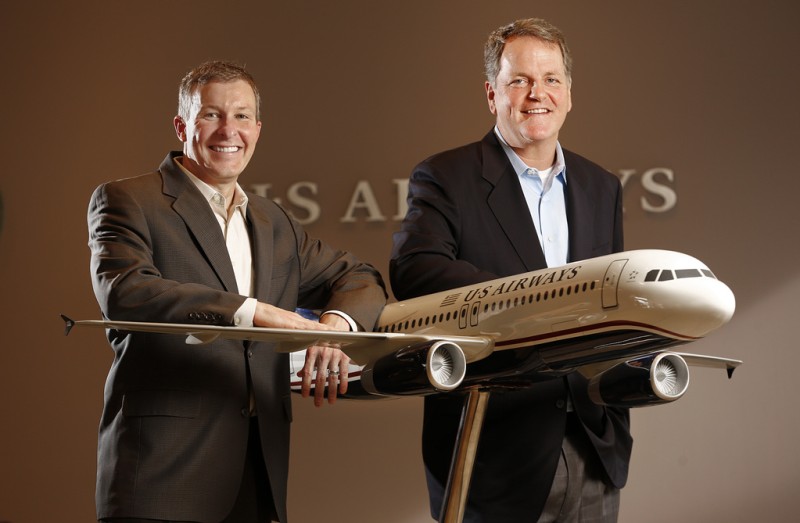
Kirby did not stay a director for long. By 1997 he was VP of Planning at America West. By 1998, VP of Revenue Management. In 2000, Senior VP of e-business. He was climbing fast, and when America West merged with US Airways in 2005, Kirby was one of the people handed the keys to the combined operation. In 2006, he was named President of US Airways - overseeing nearly 36,000 employees and around 3,800 flights per day.
At that point, his annual compensation hit $2.7 million plus stock options. A long way from the Pentagon. The job was genuinely brutal - merging two airline cultures, combining reservation systems, repainting fleets, managing labor disputes. Kirby compared the process to watching a child grow: slow, messy, occasionally chaotic, but ultimately worth it.
In 2013, he moved again - this time to American Airlines as President, following the carrier's merger with US Airways. His pay climbed further, with salary and bonus around $5 million annually and millions more in stock awards. He was running one of the biggest airlines in the world. But Kirby had a habit of clashing hard with pilot unions, and by 2016, American Airlines and Kirby parted ways. Reports called it a firing. Kirby called it a new opportunity.
Scott Kirby Takes the CEO of United Airlines Chair in the Middle of a Pandemic
In August 2016, United Airlines CEO Oscar Munoz brought Kirby in as President. Four years later, in May 2020, Kirby stepped up to CEO - taking the top job in what was arguably the worst month in commercial aviation history. COVID-19 had essentially shut down the global airline industry. Planes were sitting idle. Competitors were parking jets in deserts and retiring fleets early to cut costs.
Kirby went the other way. He kept United's aircraft. He bet that the recovery would come faster than Wall Street expected, and he prepared United to scale back up quickly when it did. He also made United the first major U.S. airline to mandate COVID-19 vaccines for employees - before even the Biden administration started pushing the policy - and pushed early mask requirements. None of it was universally popular. He did not seem to care much about that part.
"If you stand for something, people will run through walls for you," he told an audience at the Air Force Association conference in 2021. That is pretty much a summary of how Kirby operates. He launched the "United Next" strategy - the most ambitious expansion plan in the company's history - right in the middle of the pandemic downturn. Fleet renewal, hub restructuring in Chicago, Denver, and Houston, aggressive international route growth. In December 2020, he was also elected Chairman of the Star Alliance Chief Executive Board, giving him influence across the broader global aviation alliance.
United Airlines CEO Salary: $9.8M, Then $18.6M, Then $33.9M
When Kirby first took the CEO chair, his total compensation for 2021 and 2022 sat at around $9.8 million per year - $8.7 million in stock awards, $1 million base salary, a bit of other pay. That already put him well above the average airline CEO pay of $4.05 million across the top 14 U.S. carriers. Then 2023 happened: a 90% pay jump took his total to $18.6 million. That included a $1.075 million base salary, $10.7 million in stock awards, and $6.6 million in performance bonuses. Flight attendants picketed over it. Kirby flew on.
By 2024, the number had climbed again. His total compensation reached $33.9 million - $1.175 million base salary, $8.14 million in bonuses, and $24.4 million in stock awards. As of 2025, that package stands at approximately $34 million, placing him comfortably at the top of the airline industry pay table. Delta's Ed Bastian earned around $27 million. American's Robert Isom made roughly $13 million. Southwest's Bob Jordan took home about $6.7 million. Kirby is in a different bracket.
His estimated net worth today sits at $44.1 million. For context: a United ramp agent or gate worker at the top of the pay scale, working full-time, would need 226 years to earn what Kirby makes in a single year. His base salary is just $1.175 million - most of the money comes from equity tied to the airline's long-term performance. Which means his wealth grows when United grows. That alignment, whether you find it inspiring or infuriating, is very much intentional.
What Scott Kirby Actually Believes About Getting to the Top
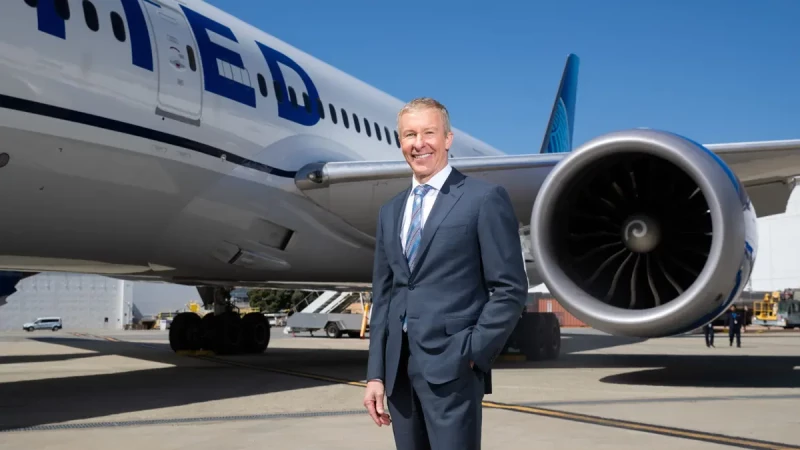
Kirby does not do a lot of vague motivational speeches. When he talks about success, it tends to be specific and a little blunt. A few ideas come up consistently across three decades of interviews and public appearances.
Data beats intuition, but only if you use it right. Kirby's entire career has been built on squeezing insight out of numbers - from Pentagon budgets to airline revenue management to pandemic fleet strategy. His card-counting ban is a funny story, but it is also evidence of something real: he has always been willing to do the analytical work that others skip, and then act on what he finds.
Make a decision and defend it. The vaccine mandate, the fleet retention gamble, the "United Next" expansion during a crisis - these were not safe calls. Kirby made them because the data supported them, and then he stuck with them when the criticism came. His view is that visible, consistent leadership is more valuable than being liked.
Military discipline is underrated in business. Kirby talks a lot about what he learned at the Air Force Academy - not the flying part, but the discipline, the accountability, the "no excuses" culture. He actively recruits veterans into United's management ranks and makes the case that military experience builds a kind of resilience that civilian careers rarely develop.
Never retire the planes early. Okay, that one is specific to aviation - but the broader point is about not overcorrecting in a crisis. Kirby's bet during COVID was essentially: this will end, and when it does, whoever has capacity wins. He was right. The instinct to hold ground when others are retreating has been a theme throughout his career, from the US Airways merger chaos to the pandemic recovery.
Enjoy what you do, and do not pretend otherwise. Kirby has said "I've got the best job in the world" at multiple points in his career - about US Airways, about American, and about United. Whether that is genuine or performance is hard to say from the outside. But it does seem like the man actually likes running airlines. Given what the job involves, that probably helps.
 Alex Dudov