Eseandre Mordi

Amazon's positioning is increasingly being viewed through the lens of AWS. As AustinFindsAlpha noted, the cloud division alone could account for a significant share of the company's total valuation - raising questions about how the remainder of Amazon is priced relative to its most profitable segment.
AWS as a Standalone AMZN Valuation Engine
The core argument focuses on Amazon Web Services as a dominant, high-margin business operating within a broader conglomerate structure. AWS is currently generating around $142 billion in annualized revenue, with a potential path to $185 billion if it achieves 30% growth next year.
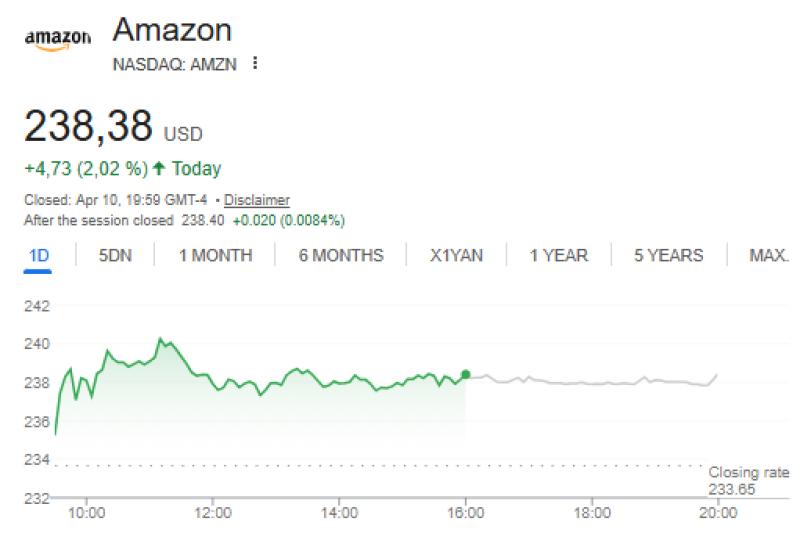
Using forward price-to-sales assumptions, this implies a substantial standalone valuation for AWS. Even when applying a more conservative multiple, the cloud segment alone represents a large portion of Amazon's total market capitalization - which raises an obvious question about what the market is implicitly paying for everything else.
The Remaining AMZN Business at a Discount?
When AWS is isolated within the valuation framework, the remainder of Amazon - including e-commerce, logistics, and advertising - appears comparatively undervalued. This becomes more notable given the scale of the broader business: Amazon recently generated $77 billion in net income on a trailing twelve-month basis, while AWS operates with approximately 35% margins.
The structure the framework reveals:
- AWS carries premium valuation characteristics due to scale and margins
- The rest of Amazon's operations may be implicitly discounted
- The company's structure obscures the relative weight of its most profitable segment
Additionally, Amazon maintains exposure to high-growth areas through its stake in Anthropic alongside expanding capabilities in chips and advertising - assets that may not be fully reflected in how the market currently prices the non-AWS business.
AMZN Stock at Its Cheapest in Over a Decade reinforces the valuation compression argument, showing how Amazon's overall multiples have contracted to historically low levels - which makes the AWS-isolation framework even more striking when applied to current prices.
A AMZN Valuation Gap the Market Is Still Processing
The discussion highlights a potential disconnect between Amazon's internal business structure and how the market values it externally. AMZN Extends Lead in Cloud Revenue as Google Accelerates Growth shows AWS maintaining its scale advantage in absolute terms even as competitors grow faster in percentage terms - reinforcing that the cloud division's premium valuation characteristics are grounded in real competitive position rather than narrative alone.
AMZN Stock News: The Ultimate Growth Name Just Became a Value Play frames the broader shift in how Amazon is being categorized - from a pure growth story toward a value-oriented opportunity as multiples compress across the business.
The current debate around AMZN stock is less about short-term price movement and more about how its components are valued. If the AWS-isolation perspective gains broader traction, the market may need to reassess how it prices the rest of Amazon's business - especially as its ecosystem continues to expand across logistics, advertising, and AI.
 Eseandre Mordi