Editorial staff

In recent years, residence permits have increasingly been viewed not as an immigration tool, but as a mechanism for managing life and capital. They are no longer primarily about entering the labour market or launching a business, but about building a stable personal framework: predictable rules, access to healthcare and education, a clear legal environment, and reduced exposure to economic volatility.
This shift explains the growing interest in residence permits for the financially independent — arrangements that allow individuals to live in a country without employment or local business activity. On the surface, these options may appear similar. In reality, each country embeds its own philosophy into how such residence is granted, ranging from flexibility to strict conservatism.
Portugal

For many years, Portugal was seen as one of the most welcoming destinations for financially independent residents. The country deliberately encouraged foreign settlement, treating residence as a way to stimulate the economy and the real estate market, while maintaining relatively accessible entry conditions.
That model has evolved. Portugal has become more selective, signalling that it is no longer interested simply in attracting capital, but in residents who align with its longer-term priorities. As a result, the country remains appealing to some, but expectations of an “easy entry” no longer reflect reality. Residence is still possible, but it increasingly requires alignment rather than convenience.
Spain
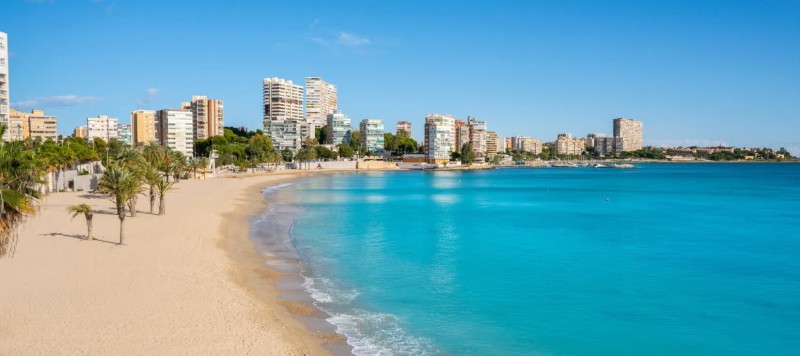
Spain has traditionally taken a more rigid stance. Non-Lucrative residence without the right to work exists as a clearly defined and tightly bounded status: living is permitted, economic activity within the country is not. The distinction is not flexible, nor is it intended to be.
This clarity appeals to those who understand the limits from the outset and have no intention of pushing them. At the same time, it often frustrates applicants who expect gradual flexibility or the possibility of adapting their status over time. Spain’s approach prioritises legal certainty over evolution.
Italy

Italy places less emphasis on formal prohibitions and more on the resident’s way of life. Authorities focus not only on income levels, but on regularity, continuity, and the individual’s connection to a specific place — a region, a home, a community.
This model rarely suits those seeking mobility. It is, however, well aligned with applicants who envision a settled, structured lifestyle. Italy does not aim to attract large numbers of financially independent residents, but those who fit its expectations are often rewarded with long-term stability.
France

France occupies a distinct position, largely because it offers no dedicated programme for financially independent individuals. At first glance, this may seem like a disadvantage. In practice, the absence of a marketed scheme has made the French model one of the most predictable.
Residence for financially independent individuals is typically granted through visitor residence status in France — a conservative framework built on financial autonomy and non-participation in the local labour market. France offers little flexibility, but in return provides legal clarity and institutional consistency. For those seeking long-term certainty rather than adaptability, this approach often proves effective.
Switzerland
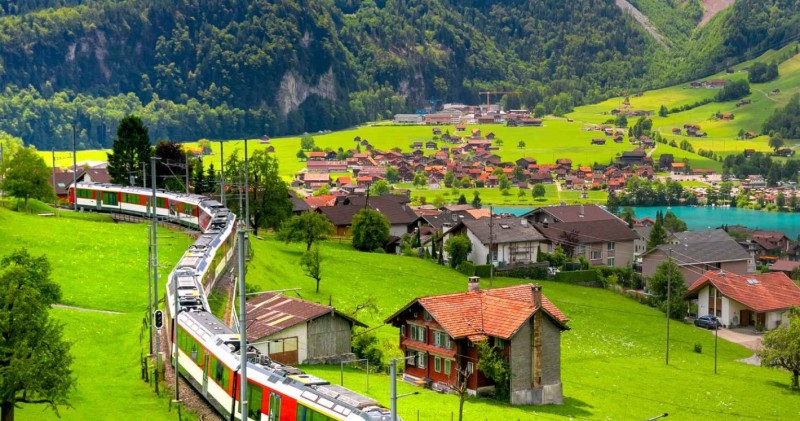
Switzerland represents one of the most selective and discreet options available. Residence is not granted through a standardised process, but through negotiation, often at the cantonal level, with close attention to the applicant’s overall profile.
Financial independence in Switzerland is not merely about income, but about the ability to integrate into a high-cost, tightly regulated environment. This option suits a narrow group of affluent individuals for whom confidentiality, stability, and legal protection outweigh accessibility. Switzerland has never been a mass solution — and does not intend to become one.
Germany

Germany offers little scope for residence without economic activity. Its immigration framework is built around participation, either through employment or entrepreneurship.
For financially independent individuals, this leaves limited room. Germany prioritises contribution over presence, making it a less common choice for those seeking residence without obligations, despite its strong infrastructure and quality of life.
United Kingdom

Before Brexit, the United Kingdom provided certain pathways that allowed residence without a direct link to the labour market. Those options have largely disappeared.
Today, there is no classical form of residence for financially independent individuals within the UK system. Nevertheless, Britain remains relevant not as an immigration destination, but as part of broader financial, educational, and tax planning strategies — increasingly separated from the concept of residence itself.
Monaco
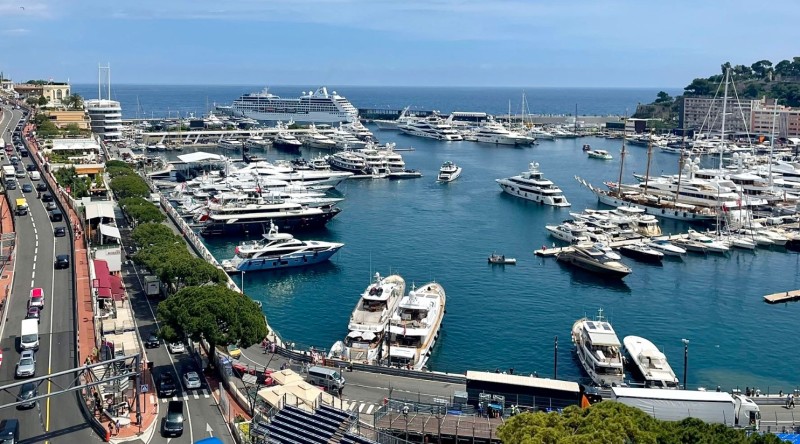
Monaco stands apart. Residence here is based on capital rather than income, and integration into the social or economic fabric of the state is not the objective.
Formally a residence permit, Monaco’s status functions more as financial presence than immigration. It appeals to individuals who already have an established global structure and seek a jurisdiction that will not interfere with it. Monaco is chosen for structure, not transition.
Taxes: the Decisive Factor
Across all jurisdictions, taxation remains the point where expectations most often diverge from reality. A residence permit does not automatically confer tax residency, but over time the two frequently converge.
A common mistake among financially independent applicants is treating residence as separate from tax strategy. As enforcement becomes more sophisticated, discrepancies between lifestyle and tax position are increasingly scrutinised. Today, the choice of country is as much a fiscal decision as a legal one.
Who This Type of Residence Really Suits
Despite its broad appeal, residence for the financially independent is a niche solution. It tends to attract individuals who have moved beyond accumulation and into management: capital holders outside day-to-day operations, families with geographically dispersed assets, retirees with stable income streams, and investors focused on risk diversification.
In such cases, residence becomes part of a wider personal architecture rather than a standalone objective.
Constraints and Trade-Offs
Residence without work comes with strict boundaries. The prohibition on local economic activity is foundational, not symbolic. Any significant change in income structure, source of funds, or living arrangements may trigger reassessment.
Financial independence must be maintained. The loss or transformation of income can jeopardise renewal. The status is stable, but not flexible — a distinction that can be difficult for those accustomed to rapid change.
Why There Is No Universal Answer
The search for the “best” country is usually misguided. States do not offer products; they offer systems, each with its own expectations and limits.
Portugal prioritises integration, Spain formal structure, Italy permanence, France legal coherence, Switzerland selectivity, Monaco capital. These models are not comparable on a linear scale. They correspond to different life strategies.
Instead of a Conclusion
Residence permits for the financially independent are neither privileges nor shortcuts. They represent a conscious agreement with a state, based on acceptance of its rules rather than attempts to reshape them.
For some, this model offers an ideal balance between freedom and stability. For others, it proves too restrictive. Its effectiveness depends not on conditions, but on alignment of expectations — and that is precisely where its value lies.
 Editorial staff