Peter Smith
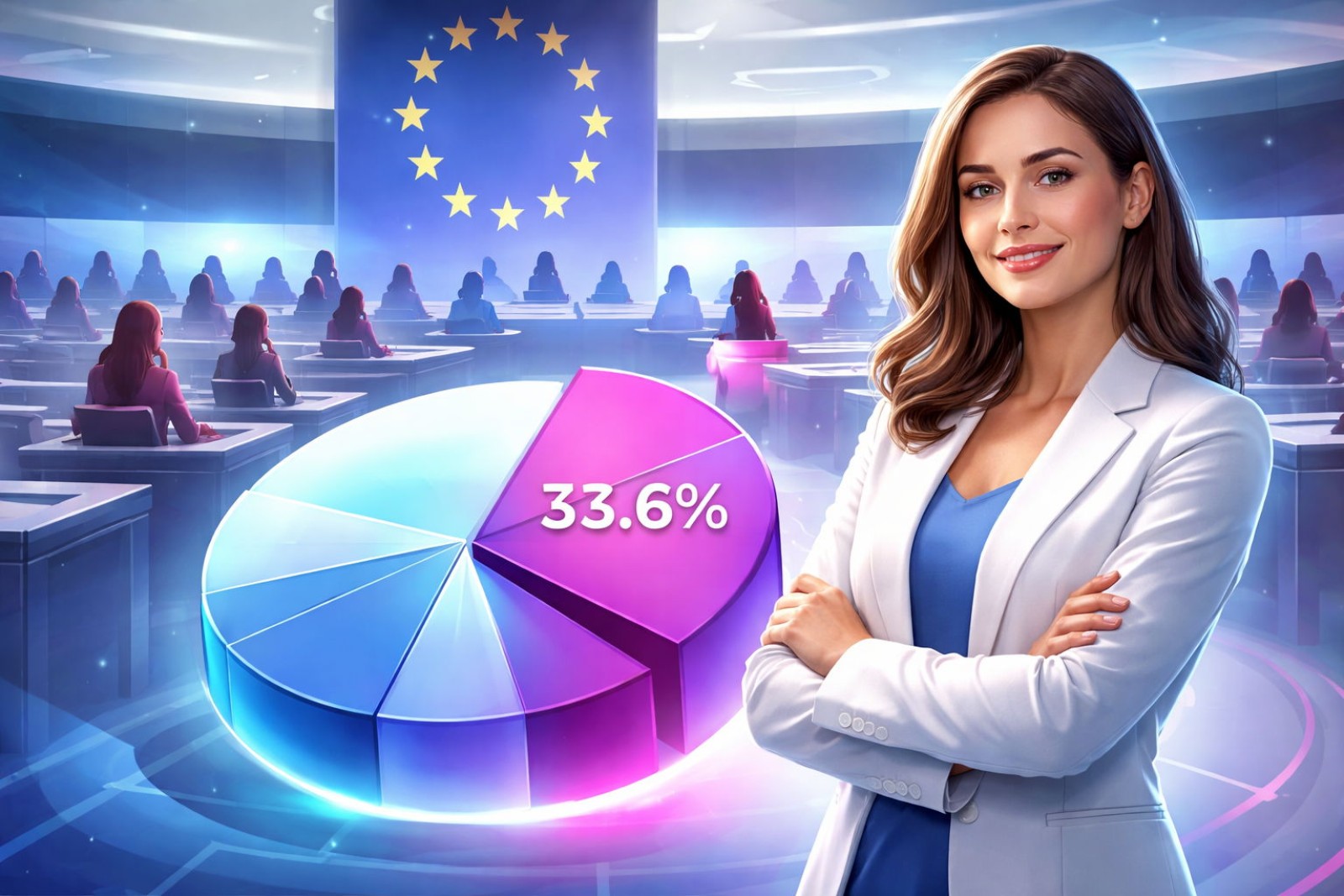
⬤ Women's representation in national parliaments across the European Union has been climbing steadily. According to Eurostat, women held 33.6% of seats in EU national parliaments in 2025, a 5.4 percentage point increase compared with 2015. The figures point to a real, if gradual, shift in gender balance within legislative institutions across the bloc.
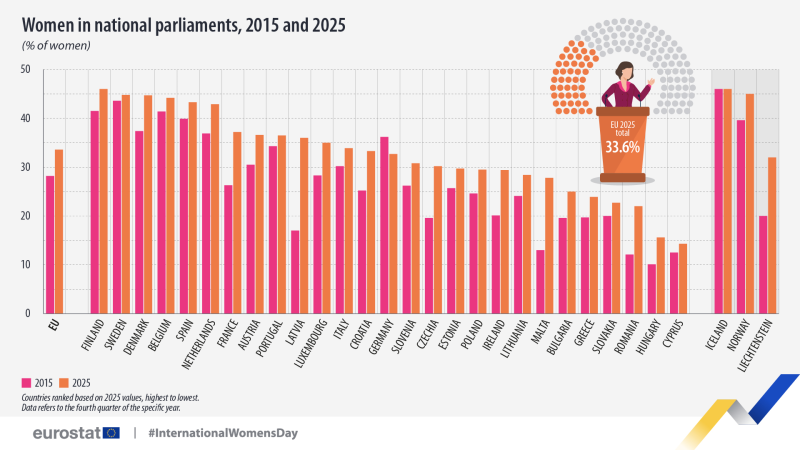
⬤ Country-level breakdowns reveal sharp differences between member states. Finland leads with 46.0% female representation, followed closely by Sweden at 44.8%. Several Northern and Western European countries consistently post strong participation rates, and the decade-long comparison shows many of them made meaningful gains between 2015 and 2025.
The steady rise in women's representation reflects broader institutional and social changes within European political systems.
⬤ At the opposite end, the numbers are far smaller. Cyprus recorded the lowest share at 14.3%, with Hungary close behind at 15.6%, highlighting a near 30-point gap between the EU's top and bottom performers. That divide echoes patterns visible in other gender-related indicators, including the EU Gender Pension Gap, which hit 24.5% in 2024, where disparities between member states were equally pronounced.
⬤ The sustained increase in female parliamentary representation points to deeper structural shifts in European political life. Greater diversity in legislatures can reshape policy priorities and influence how governments respond to economic and social challenges. These participation trends don't exist in isolation either: they intersect with wider forces shaping EU policy debates, from monetary conditions to commodity markets, with Gold breaking above $3,400 amid macroeconomic uncertainty illustrating just how interwoven political and economic dynamics have become across the region.
 Peter Smith