Peter Smith

For years, a persistent narrative has circulated in financial markets: the dollar is losing its grip, fiat currencies are collapsing, and gold is on its way to replacing U.S. Treasuries as the world's go-to reserve asset. The actual data, however, tells a more complicated story, and ignoring it can lead investors to misread where global capital is really going.
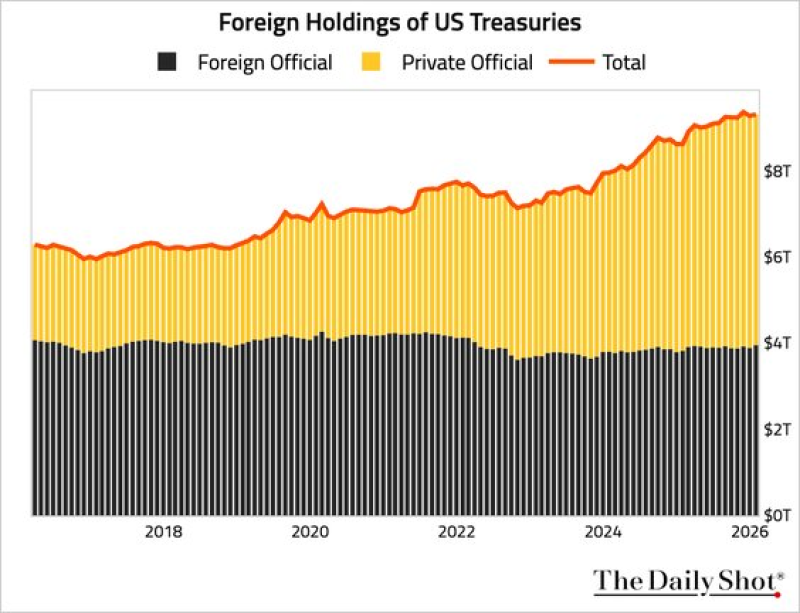
Foreign Treasury Holdings Surpass $8 Trillion
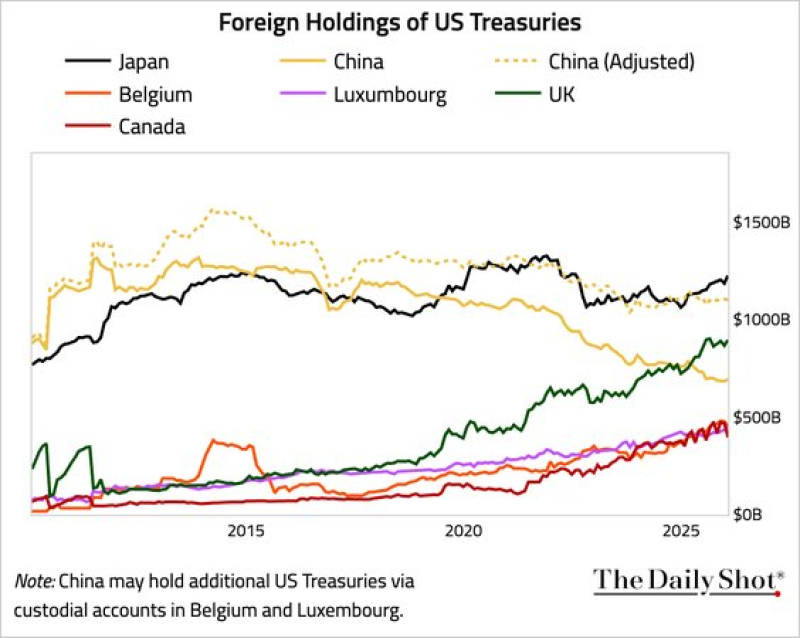
Total foreign holdings of U.S. Treasuries have climbed above $8 trillion, driven largely by private demand rather than central bank accumulation. Official holdings have remained comparatively steady, but the private sector continues to absorb U.S. debt at a significant pace. Japan holds the top spot among identifiable country holders, while China's disclosed position has declined over time. Importantly, China may still carry Treasury exposure through custodial accounts in Belgium and Luxembourg, which means the official country figures do not capture the full picture.
That distinction matters. When analysts point to China's falling Treasury holdings as evidence of de-dollarization, they may be looking at booking changes rather than actual asset exits. Reserve managers do not always hold assets under their own country's name, and reading the headline numbers without that context produces a distorted view of what is actually happening inside global reserve portfolios. China's Treasury cuts and rising gold holdings illustrate how selective the framing can be.
Gold Demand and USD Dominance Can Coexist
Gold remains a widely followed reserve asset, and central banks holding more gold than U.S. Treasuries has been a recurring headline. But the Treasury data shows that global capital has not walked away from U.S. debt markets. Gold buying and Treasury accumulation are not mutually exclusive. Countries can increase gold exposure while simultaneously rolling over dollar-denominated debt, which is precisely what the aggregate data reflects.
Recent XAU/USD gold price analysis confirms that gold continues to respond to macro conditions and sentiment, but it does not show that Treasuries are being abandoned. The broader shift in global reserves is real, but it is gradual, complex, and far from the dramatic breakdown in dollar confidence that some market commentators describe. Investors who anchor their positioning to the collapse narrative rather than the actual flow data risk making decisions based on ideology rather than evidence.
 Peter Smith