Saad Ullah

The debate over what happens to tariff money collected from American consumers is heating up. With over $175 billion on the table and 2026 shaping up as a policy inflection point, speculation around direct stimulus payments - or mass refunds - is becoming one of the more compelling macro narratives of the year.
Trump's $1,200 Stimulus Pitch: Tariffs as a Funding Tool
The idea isn't new, but it keeps coming back. As Bitcoin professor reported, President Trump has repeatedly framed tariff revenue as a potential source of direct fiscal support for Americans - essentially turning a trade policy instrument into a household stimulus mechanism, with 2026 cited as the most likely window for action.
Whether money is distributed as checks or returned as refunds, the end result is a large fiscal transfer that could lift market sentiment.
The logic behind it follows two paths. If tariffs stay in place, the collected revenue funds $1,200 stimulus checks. If tariffs end up being refunded, that same pool of money flows back through reimbursements. Either way, the household gets a check. New York Fed research adds weight to the argument - roughly 90% of tariffs have been paid by U.S. consumers and businesses, meaning the burden is already almost entirely domestic.
$157 Billion Back to U.S. Households - What That Could Mean for Markets
Run the numbers and it gets interesting fast. If $175B+ in tariffs were refunded and 90% of that went back to U.S. entities, you're looking at roughly $157 billion re-entering the domestic economy. That's not a rounding error - it's a liquidity event. Supreme Court action striking down $350B in Trump tariffs has already shown how quickly these decisions can ripple through risk assets.
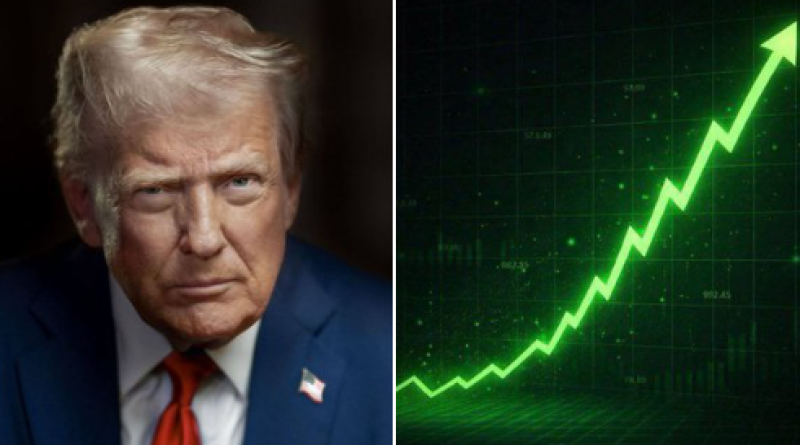
The market implications go beyond just sentiment. If stimulus checks land or refunds accelerate, expectations around domestic liquidity could shift fast - repricing growth outlooks, inflation risks, and policy direction all at once. JPMorgan flagged that a Supreme Court tariff ruling alone could swing the SPX up to 2% - a full refund scenario would be a much bigger jolt.
For now, the scenario stays speculative. No official decision has been announced, and the mechanics of how a refund or stimulus program would actually be implemented remain unclear. But the conversation is getting louder. A $133B Treasury refund is already threatening dollar stability - scale that up and the macro picture changes considerably. Whether it materializes as checks or refunds, the tariff-to-stimulus pipeline is one macro story worth watching closely heading into 2026.
 Saad Ullah