Artem Voloskovets
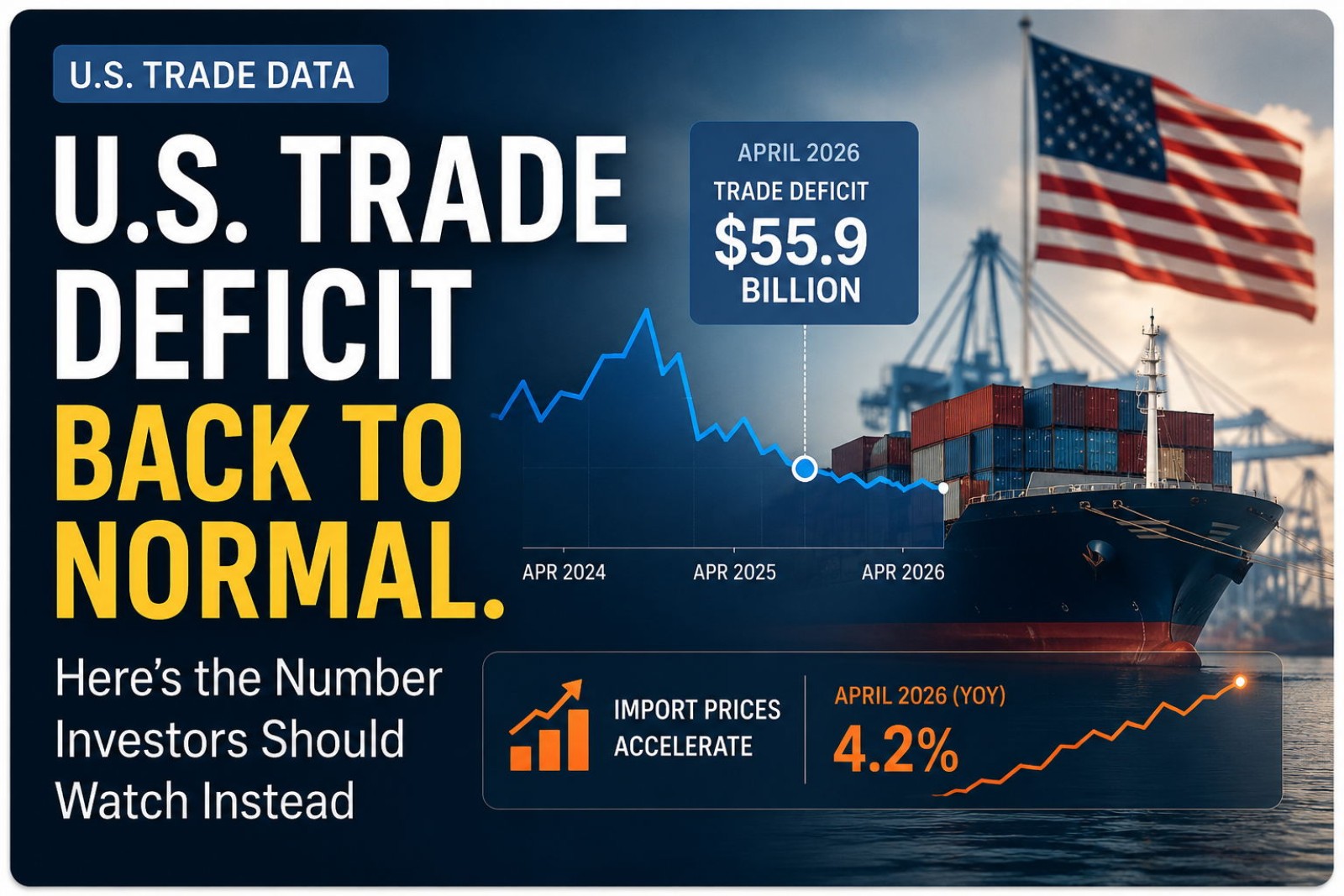
The difference is negligible. The more useful takeaway is that trade flows have stopped producing the extreme swings that dominated economic data a year ago. The latest report is less about the deficit itself and more about what it says about growth, inflation, and the next phase of the economic cycle.
Step One: Look Beyond the Headline
A trade deficit of $55.9 billion does not change the broader picture. The deficit briefly exceeded $130 billion in early 2025 as companies accelerated imports and adjusted inventories. Since then, the gap has moved steadily lower and settled near pre-spike levels.
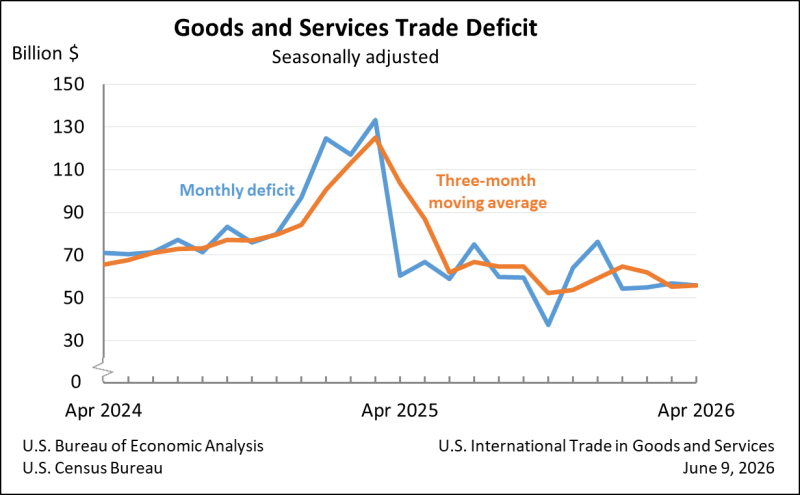
April's figure sits almost exactly on the three-month moving average, suggesting that trade activity has stabilized rather than improved dramatically.
Step Two: Understand What the Deficit Actually Signals
A smaller deficit is not automatically bullish. The number can shrink because exports rise, because imports fall, or because both happen at the same time. That is why professional investors rarely focus on the headline figure alone. The trade balance is most useful when combined with other economic indicators. In April, another dataset provided a clearer signal.
Step Three: Follow Import Prices
While the trade deficit remained stable, import prices accelerated sharply. The U.S. Import Price Index rose 1.9% in April after a 0.9% increase in March. On a year-over-year basis, import prices climbed 4.2%.
Those figures matter because imported goods feed directly into supply chains, manufacturing costs, and consumer prices.
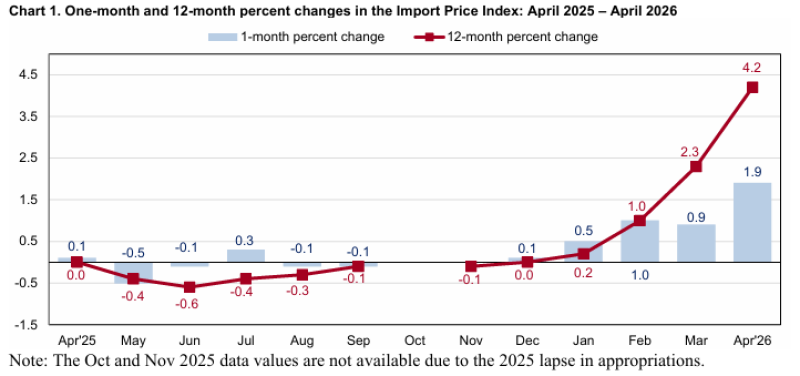
The trend is difficult to ignore. Annual import-price growth was close to zero for much of 2025. It reached 1.0% in February 2026, accelerated to 2.3% in March, and then jumped to 4.2% in April. Monthly growth followed the same pattern, reaching 1.9% in April — the strongest increase shown on the chart.
Step Four: Connect Trade Data to Inflation
The April trade report points to two developments happening at the same time. First, trade flows have normalized. The volatility that distorted growth data in 2025 has largely disappeared. Second, imported goods are becoming more expensive.
That combination shifts attention away from trade balances and toward inflation. Rising import costs do not guarantee higher consumer inflation, but they increase the likelihood that businesses will face additional pricing pressure in the months ahead.
What Investors Can Take Away
The April deficit does not signal a major change in the economy. What it does show is that trade has become a less important source of uncertainty. The deficit is back near its recent average, and the extraordinary movements of 2025 are no longer visible in the data.
The more important number in this release is not $55.9 billion. It is 4.2%. That is the annual increase in import prices, and it may provide a better indication of where inflation and interest-rate expectations are heading during the second half of the year.
 Artem Voloskovets