Artem Voloskovets
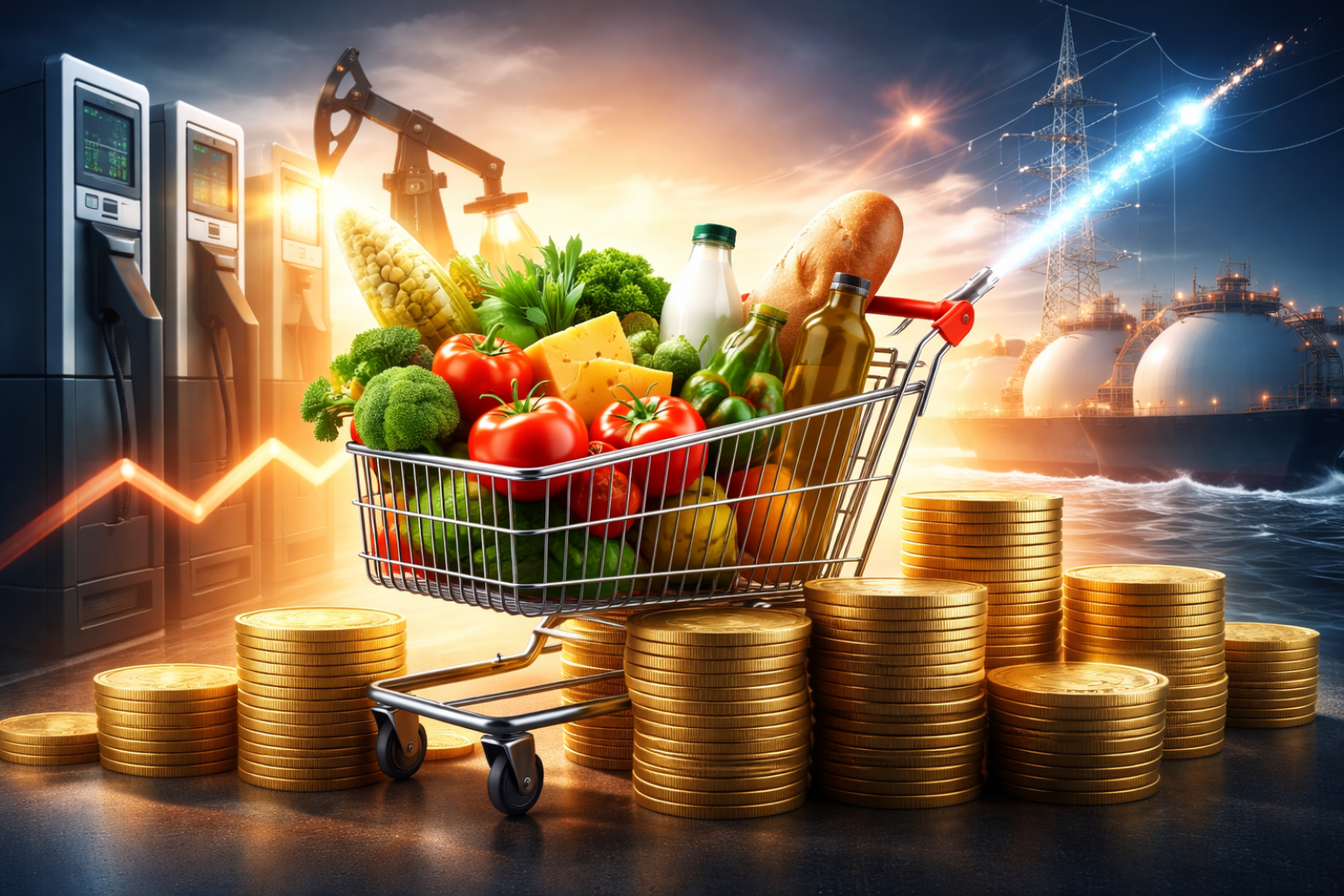
Global food prices are showing renewed strength after months of decline, with the latest data confirming a clear shift in trend. The FAO Food Price Index has turned decisively higher following a prolonged correction phase. According to The Kobeissi Letter, rising energy and freight costs are pushing food prices upward, signaling that inflationary pressures are now spreading across multiple sectors.
Rising energy costs and higher freight prices are now feeding directly into global food pricing - what started in supply chains is becoming a broad inflation story.
A measured rebound in FAO Food Price Index gains momentum
After peaking in 2022, global food prices declined steadily through 2023 and into 2024 before finding a floor. That base has now transitioned into a recovery phase, and the shift is becoming hard to ignore.
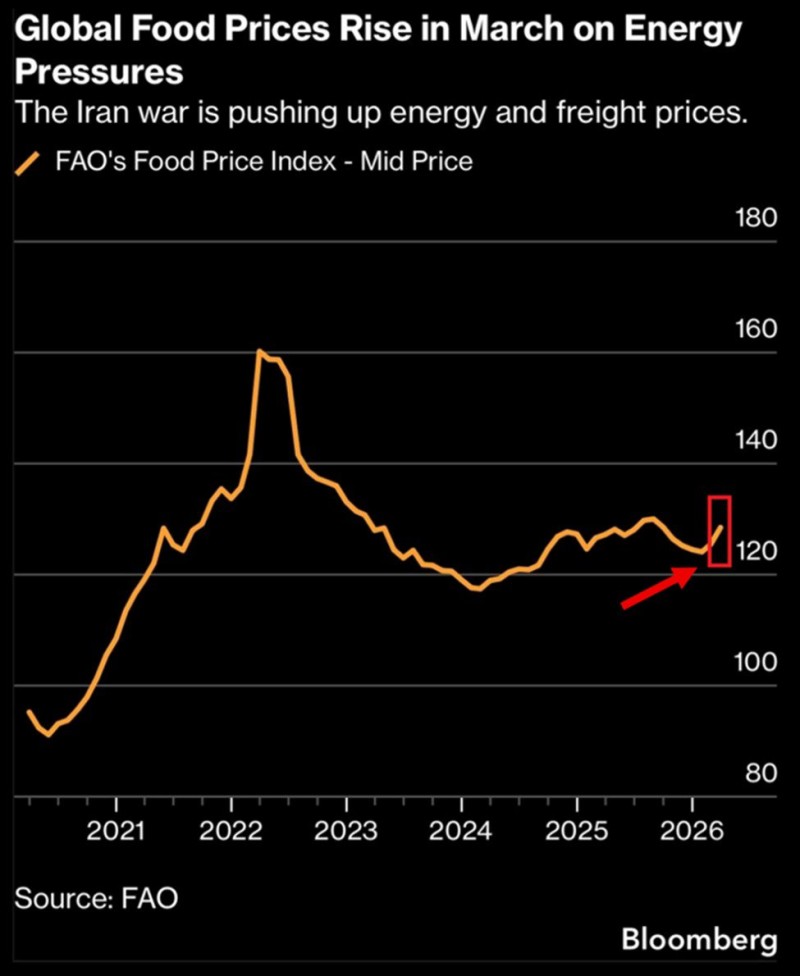
In March, the FAO Food Price Index rose to 128.5 points - up 2.4% from February. This marks the second consecutive monthly increase following a five-month streak of declines, confirming a change in short-term direction.
The index tracks a broad basket of food commodities including grains, sugar, meat, dairy, and vegetable oils, making it one of the most widely watched global inflation gauges.
Energy pressure feeding into food prices across categories
The recent uptick reflects a structural link between energy and food markets. Higher energy costs increase production, transportation, and fertilizer expenses - all of which feed into global food pricing dynamics.
Several key factors are now driving upward pressure across food categories:
- Rising energy costs
- Higher freight prices
- Disruptions in key supply routes
The connection between energy markets and food prices is tightening. When freight and fuel costs climb together, the pressure on global food baskets is almost immediate.
These combined forces are reinforcing the upward shift visible in the FAO data, and the breadth of the move - spanning multiple commodity categories - suggests this is not a single-market anomaly.
FAO Food Price Index breaks above consolidation zone at 120
From a structural standpoint, the index has moved above its recent consolidation zone near the 120 level. That area acted as a base during the stabilization phase, and the break higher suggests strengthening momentum rather than a short-term fluctuation.
The latest push does not yet approach the 2022 peak, but it clearly breaks the pattern of lower highs and lower lows that defined the previous downtrend. That alone marks a meaningful structural shift.
Breaking above the 120 consolidation base is not a minor development. It tells you the market is no longer in a stabilization phase - it is in a recovery phase.
The trend is turning - global food prices begin rising again
The key takeaway from the latest FAO data is the transition from decline to recovery. After months of easing prices, the index is now trending upward again - and the move appears to have structural support behind it.
This shift reflects several converging developments:
- A confirmed reversal in short-term direction
- Broad-based increases across food commodity categories
- Growing linkage between energy costs and food inflation
For now, the move remains in its early stages. But the structure of the data suggests that global food prices are no longer stabilizing. They are beginning to rise again - and the conditions driving that rise are not going away quickly.
 Artem Voloskovets