Eseandre Mordi
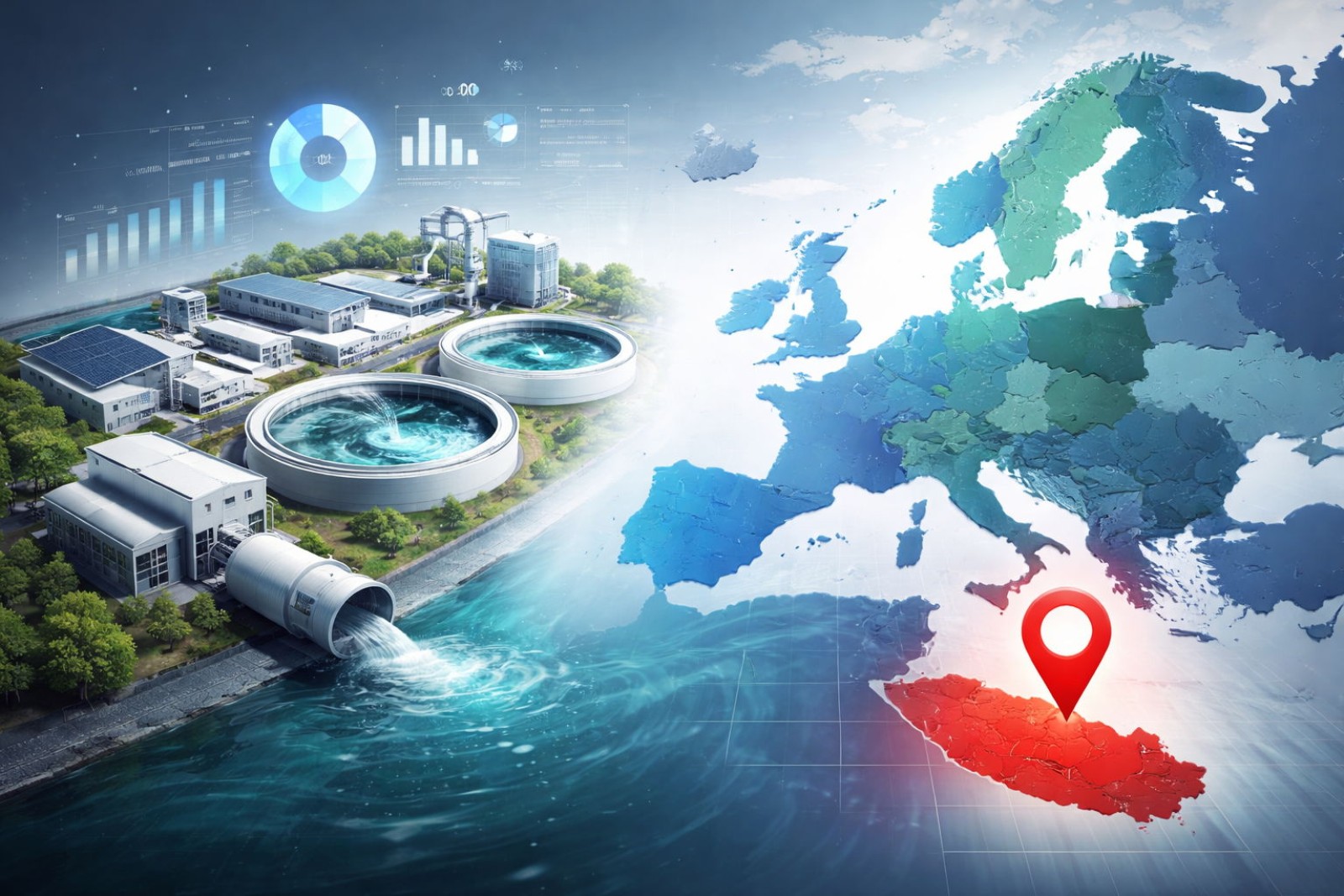
Wastewater infrastructure across the European Union remains a tale of two Europes. While the bloc overall achieved solid coverage in 2023, the gap between its best and worst performers is striking - and raises real questions about the pace of infrastructure development in lagging member states.
Netherlands at 99.6%, Malta at 7.1% - A 92-Point Gap
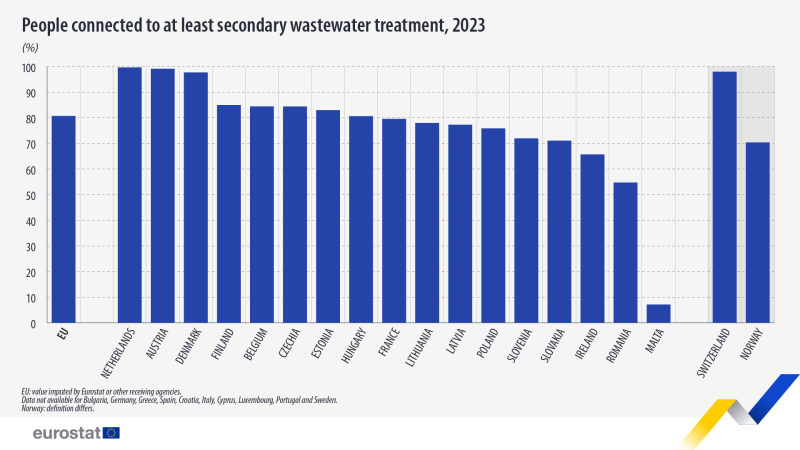
According to the latest Eurostat report, 80.7% of the EU population was connected to wastewater treatment systems offering at least secondary treatment in 2023. The Netherlands led at 99.6%, followed closely by Austria at 99.1% and Denmark just below full coverage. Finland, Belgium, and Czechia were clustered in the mid-80% range, helping keep the bloc's average comfortably above four-fifths of the population.
These differences matter because wastewater treatment is closely tied to environmental standards, public health systems, and the broader pace of infrastructure investment across Europe.
Malta posted the weakest result at 7.1% - by far the lowest in the EU. Romania stood at 54.7%, and Ireland remained below many of its regional peers at around two-thirds coverage. For context, Switzerland came in near full coverage while Norway sat at roughly 70%, confirming that the gaps are not simply an EU-versus-non-EU story.
Infrastructure Gaps Persist Despite Regional Progress
The 80.7% EU average reflects genuine progress at the regional level, but the range of outcomes - from near-universal access in some states to single-digit connectivity in others - points to deep structural disparities. Countries at the lower end of the ranking face not just environmental compliance issues but broader public health and investment challenges tied to how quickly they can modernize their treatment networks.
The data comes alongside other Eurostat infrastructure benchmarks tracking EU-wide progress, from energy consumption to rail network modernization. Taken together, these datasets suggest that while top performers are reaching saturation in key infrastructure categories, the bloc's weakest links are still catching up - and in some cases, the gap remains very wide. EU rail infrastructure data similarly reflects this pattern, with Luxembourg hitting 100% ETCS coverage while others lag well behind.
 Eseandre Mordi